
Social Prefetcher: Turbocharging CDNs via Social Cascade Intelligence
Improving Multimedia Content Delivery via Augmentation With Social Information: The Social Prefetcher Approach
The paper introduces "Social Prefetcher," a dynamic Content Delivery Network (CDN) prefetching mechanism that leverages Online Social Network (OSN) data to predict multimedia content popularity. By analyzing social cascades on Twitter and YouTube, the method achieves near-optimal content placement, significantly reducing response times for users.
TL;DR
The "Social Prefetcher" approach revolutionizes how Content Delivery Networks (CDNs) handle multimedia by using social media data (like Twitter) to guess what you'll watch next. By moving videos closer to a user’s social circle before they even click "Play," this method reduces wait times by as much as 40% and optimizes server storage by focusing on geographic social cascades.
Background: Why Your Video Buffers
In the age of viral videos, traditional CDNs face a dilemma: Push vs. Pull.
- Pushing everything everywhere wastes massive bandwidth and storage.
- Pulling only when requested causes a "first-viewer" delay (latency) and ignores the predictable nature of social sharing.
The "Social Prefetcher" seeks the middle ground. It recognizes that if Bob in London shares a video, his friends in London (and perhaps a few in Athens) are the most likely next viewers.
Problem & Motivation: The Social Traffic Spike
Most HTTP traffic today is driven by bandwidth-heavy multimedia linked within Online Social Networks (OSNs). Prior work often treated content delivery as a pure networking problem, ignoring the human element. The author identifies three core gaps:
- Infrastructure costs vs. performance trade-offs.
- The "where and what" of content diffusion.
- The "when" (temporal) factor of viral hits.
The insight here is simple but powerful: Social cascades are like epidemics. If we can track the "infection" (the link sharing), we can prep the "hospitals" (surrogate servers) in advance.
Methodology: The Social-Aware Architecture
The Social Prefetcher integrates directly into a CDN simulator (CDNsim) and uses a dual-logic approach:
1. Influence Measurement
Not all users are equal. The system calculates user importance using:
- HITS (Hubs and Authorities): Identifying users who act as social bridges.
- Lobby-index: A metric quantifying a node’s connection to high-degree neighbors.
2. Selective Prefetching Logic
When a request arrives, the system checks the "timer" of the cascade. If the content is trending, it selects target regions based on:
- Mutual Followers: Users who follow each other have a 6x higher likelihood of sharing the same video.
- Geographic Proximity: Cascades usually happen between people in similar time zones.
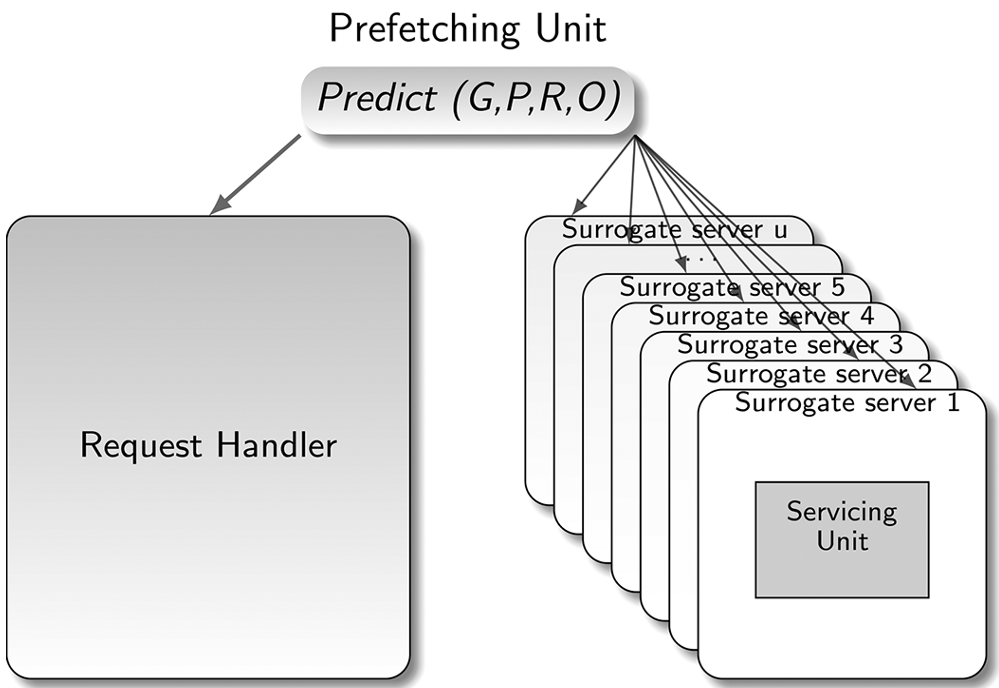 Figure 1: The Social Prefetcher decision flow for incoming CDN requests.
Experiments & Results
The author tested this using a realistic dataset: 37 Million Twitter users and over 1 Million YouTube videos.
Key Metrics:
- Mean Response Time (MRT): Dropped by ~40%.
- Hit Ratio: Increased significantly, peaking when using the Lobby-index metric.
- Storage Efficiency: By using a 24-48 hour "cascade window," the system avoids clogging the cache with old, non-viral content.
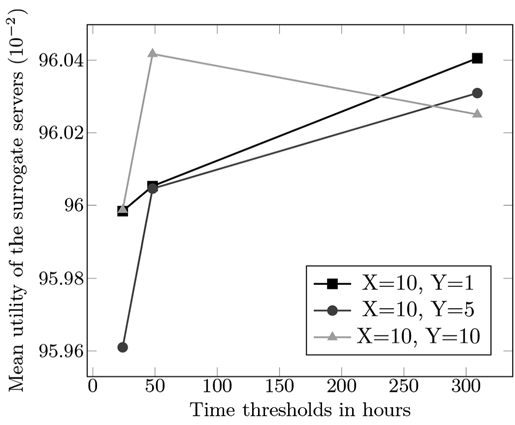 Figure 2: Impact of time thresholds on response times using different centrality metrics.
The study also found an "optimal point" for replication. Copying content to too many time zones eventually increases response time due to the management overhead of the copies themselves (as seen in Figure 16).
Critical Insight & Future Outlook
The Social Prefetcher proves that context is king. By moving away from "black-box" CDN policies and toward "socially-aware" systems, providers can save costs while keeping users happy.
Future Directions:
- Contextual Awareness: Integrating "time-of-day" logic (e.g., prefetching during off-peak hours for peak-hour consumption).
- Machine Learning: Replacing static heuristics with dynamic neural predictors for cascade paths.
Conclusion
As multimedia continues to dominate the web, the bridge between social behavior and network infrastructure will only grow more vital. The Social Prefetcher is a significant step toward a more "human-centric" internet architecture.