
The Power of Cohesion: Optimizing Social Topologies for Sybil Defense
Improving Social Network-Based Sybil Defenses by Rewiring and Augmenting Social Graphs
This paper introduces a topological framework to enhance Sybil defenses by improving the "mixing time" of social graphs. The authors propose a set of graph augmentation and rewiring heuristics based on k-core degeneracy to transform slow-mixing social networks into fast-mixing ones, thereby strengthening decentralized identity verification.
TL;DR
Many decentralized systems use social networks to stop Sybil attacks (where one person creates thousands of fake accounts). These defenses rely on a property called fast-mixing. The problem? Most real social networks are actually "slow-mixing" because they have isolated clusters. This paper proves that "k-core" structures determine mixing speed and introduces X-A-A+, a method to rewire graphs to make them 300% more efficient for security protocols.
The "Fast-Mixing" Fallacy
In the world of decentralized security, we often assume social networks are like a well-shaken deck of cards: if you take a few random steps (a Random Walk) from one person, you could end up anywhere in the network. This is "fast-mixing."
If a network mixes quickly, Sybil nodes—who are usually poorly connected to the "honest" part of the graph—are easy to isolate. However, the authors point out a harsh reality: real-world graphs (especially those based on face-to-face interaction) have deep, sticky communities that trap random walks. This makes traditional Sybil defenses like SybilLimit incredibly slow and computationally expensive.
The Insight: k-Cores and Connectivity
The researchers asked a fundamental question: What makes a graph fast or slow mixing?
By analyzing various datasets (DBLP, Physics collaboration graphs, Wiki-vote), they identified Graph Degeneracy (k-coreness) as the smoking gun.
- Slow-mixing graphs fragment into many tiny, disconnected cores as you prune low-degree nodes.
- Fast-mixing graphs maintain a single, massive "Major Core."
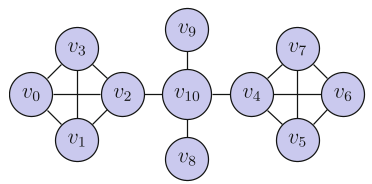 Figure 1: Illustration of how pruning nodes leads to the discovery of hidden core structures.
Methodology: Core Wiring
The authors propose "wiring" the graph back together to prevent this fragmentation. They tested four primary heuristics:
- X-1-C: Minimalist approach; adds one edge between a "minor" core and the "major" core.
- X-A-A: The "aggressive" approach; adds multiple edges across various cores.
- X-A-A+ (The Winner): A rewiring strategy. Instead of just adding new edges (which changes graph density), it moves existing edges from inside dense communities to bridge the gaps between cores.
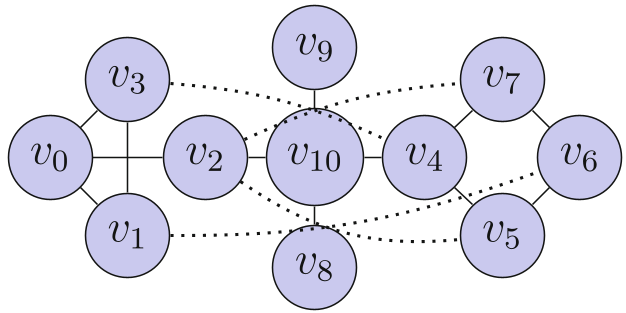 Figure 2: Using the k-core decomposition (X-A-C) to strategically place auxiliary edges that bridge community gaps.
Performance: 70% Better Security
The results are striking. In the "Physics 1" dataset, applying these heuristics dramatically shifted the distribution of (the distance from a perfectly random state).
- Speed: In SybilLimit, the walk length required for 99% accuracy dropped from 38 steps to just 7 steps.
- Security: By bridging cores, the "honest" part of the graph becomes so tightly knit that Sybil nodes find it much harder to "mimic" honest behavior.
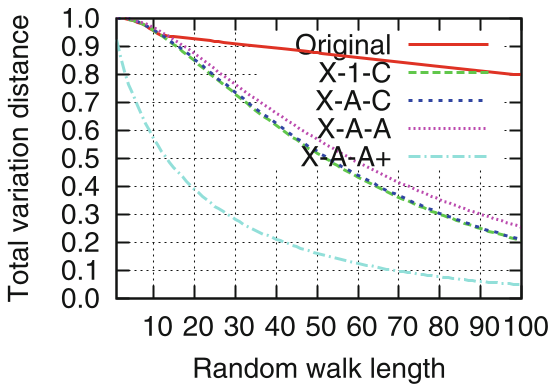 Figure 3: Comparing Max and Mean mixing times across different heuristics. X-A-A+ consistently achieves the fastest convergence.
Critical Insight & Limitations
This work demonstrates that we don't have to accept a "bad" social graph as a given. We can perform Link Recommendation or Virtual Edge Creation to manually "fix" the topology for security purposes.
The Catch? To do this effectively without helping the Sybils, you need a small set of "known honest" nodes to start the wiring process. Furthermore, while the paper focuses on Sybil defenses, this core-wiring logic has massive potential for improving information diffusion and decentralized search in any network.
Conclusion
By looking at the k-core structure, Aziz and Mohaisen have provided a roadmap for making identity verification in decentralized systems practical. If we want faster, more secure networks, we need to stop just walking the graph and start re-engineering it.