
Decoupling Privacy: Can DRM Save Your Social Media Content?
Improving user content privacy on social networks using rights management systems
The paper proposes a user-centric content privacy framework for social networks using a Digital Rights Management (DRM) system called OpenSDRM. It enables users to maintain full sovereignty over their shared media (photos, videos) by decoupling access control from the social network platform's native settings.
CL;DR
Social networks act as "walled gardens" that effectively own the content you share. This paper introduces a user-centric DRM architecture—built on the OpenSDRM framework—that shifts the power of privacy from the platform back to the individual. By encrypting content before it ever hits Facebook or Twitter and managing keys via an independent license server, users gain the "right to be forgotten" and granular control that survives even if they delete their social accounts.
The Core Tension: Platform Control vs. User Sovereignty
The fundamental flaw in modern social platforms is a lack of Inductive Bias toward user privacy. We currently rely on "Trust-based Systems":
- Native ACLs are Flimsy: Privacy settings are coarse-grained and vary wildly between platforms.
- Data Persistence: Deleting a post doesn't guarantee its removal from the platform's back-end or offline caches.
- The Monetization Conflict: Social networks are incentivized to keep your data "public" by default to feed advertising algorithms.
The authors argue that the only way to solve this is to make the social network a mere carrier of encrypted data, while the logic of who sees what resides elsewhere.
Methodology: The OpenSDRM Architecture
The proposed solution utilizes the OpenSDRM (Open and Secure Digital Rights Management) platform. Unlike traditional DRM used to stop piracy, this "Social DRM" is used to enforce personal privacy.
The Workflow of a Protected Share
- Preparation: A user instals a browser extension (the "Wallet"). When sharing a photo, the Wallet generates a unique Content Encryption Key (CEK).
- Encryption & Hosting: The photo is encrypted (AES) and uploaded to the authors' Media Delivery Service (MDS). The social network only receives a "Special URL."
- Licensing: The user defines a license (using ODRL or MPEG-21 REL standards) specifying that only Bob can see this photo 5 times before Dec 31st.
- Enforcement: When Bob views the post on Facebook, his Wallet extension detects the OpenSDRM URL, fetches the license, decrypts the content, and renders it directly in his browser UI.
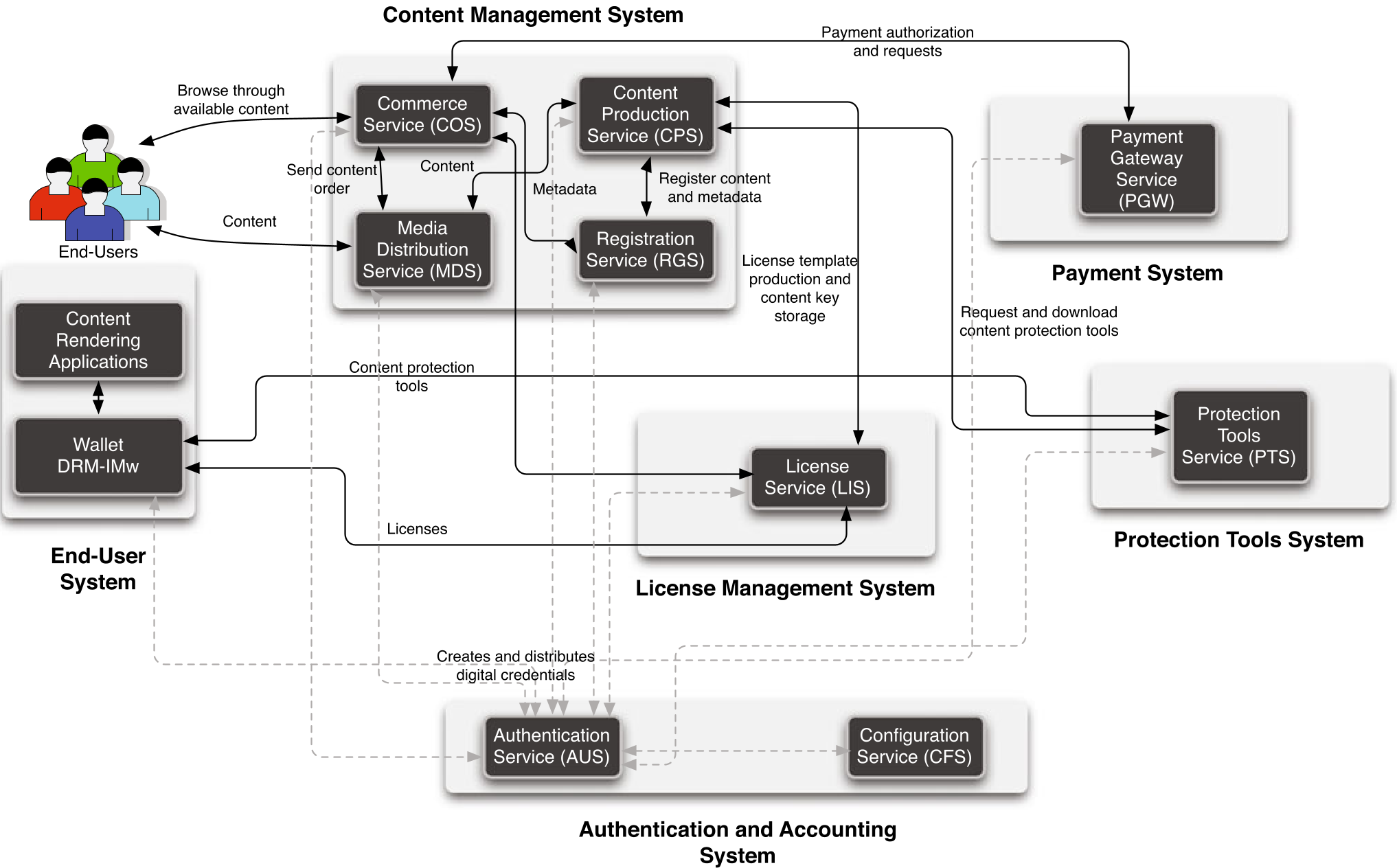 Figure 1: The standard content distribution chain adapted for social privacy.
Experiments and Logic Validation
The authors validated this through a prototype integrated with the Facebook API. By using a browser extension, the "user experience" remains transparent.
Key Insights from the Prototype:
- Revocation Power: If the user deletes the photo from OpenSDRM, the Facebook post becomes a broken link immediately. The social network cannot "leak" what it cannot decrypt.
- Platform Independence: The same OpenSDRM link can be posted to Twitter or Google+ simultaneously, maintaining the same centralized privacy policy across the web.
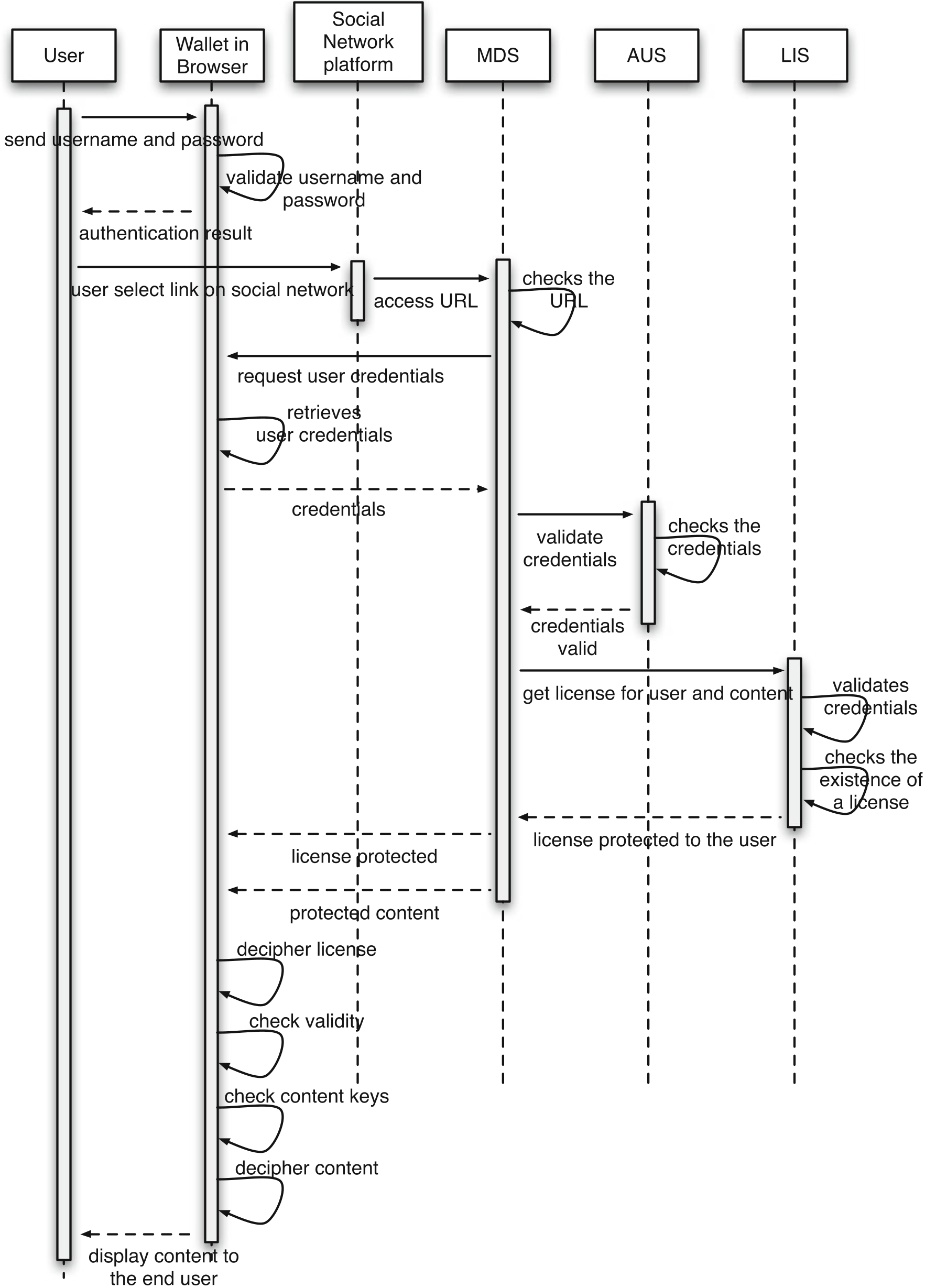 Figure 2: The sequence for accessing governed content, showing the background license verification.
Critical Analysis: The "Analog Hole" and Metadata
While the technical mechanism is robust, two challenges remain:
- The "Analog Hole": Once a legitimate recipient (like Bob) decrypts and views the photo, nothing stops him from taking a screenshot. The authors suggest "tampering artifacts" (watermarking) to discourage this, but it remains a limitation of any DRM system.
- Meta-Data vs. Content: To keep social networks happy (and profitable), the system still allows them to read Metadata. This is a pragmatic compromise: the platform can still serve relevant ads based on tags like "mountain" or "biking" without ever seeing the actual private image.
Conclusion: A Future for User-Centric Privacy
This paper serves as a vital proof-of-concept for Content Sovereignty. By repurposing DRM—a technology often viewed as "restrictive"—to serve as a "Privacy Shield," the authors provide a technical roadmap for a more secure social web. As users become increasingly wary of data harvesting, "Third-Party Privacy Enforcers" like OpenSDRM may become the new standard for digital interaction.