
Reclaiming Data Sovereignty: A DRM Approach to Social Media Privacy
Improving user content privacy on social networks using rights management systems
The paper introduces a user-centric privacy protection framework for social networks by integrating a Digital Rights Management (DRM) system called OpenSDRM. It empowers users to encrypt shared content and manage access through independent licenses, bypassing the native, often permissive, privacy controls of platforms like Facebook.
TL;DR
Social networks like Facebook and Twitter act as "data silos" where user privacy is a mere suggestion rather than a guarantee. This paper proposes a radical architectural shift: using OpenSDRM (Digital Rights Management) to encrypt user content before it ever hits the social network. By moving the "Keys to the Kingdom" from the platform to the user, individuals can finally control who sees their photos and posts—and for how long—independent of the social network's terms of service.
Background & Motivation: The Illusion of "Privacy Settings"
In the current social media landscape, privacy is a centralized feature. When you set a post to "Friends Only," you are asking the platform to be a "honest broker." However, this creates three critical vulnerabilities:
- Platform Distrust: The platform can still mine your data for ads or be compelled by subpoenas.
- Persistence: "Deleted" content often lingers in caches or offline backups.
- Coarse Granularity: Native ACLs (Access Control Lists) offer little flexibility in terms of expiration dates or "view-only" constraints.
The authors' insight is simple but powerful: Treat user-generated content (UGC) like premium digital media (like a movie or song). If we can protect a movie with DRM, why not protect a private family photo?
Methodology: The OpenSDRM Integration
The system relies on a decoupling of the Social Layer (the UI of Facebook/Twitter) and the Security Layer (OpenSDRM).
The Architecture
The workflow involves three main phases: Registration, Protection, and Consumption.
- The Wallet: A browser extension that handles the user's private keys and manages the storage of licenses.
- Content Preparation Service (CPS): This component encrypts the content and registers it with a unique ID (CID).
- The License: Instead of a simple "yes/no" access rule, the system generates XML-formatted licenses (ODRL) that can define complex conditions (e.g., "User X can view this photo 3 times until Friday").
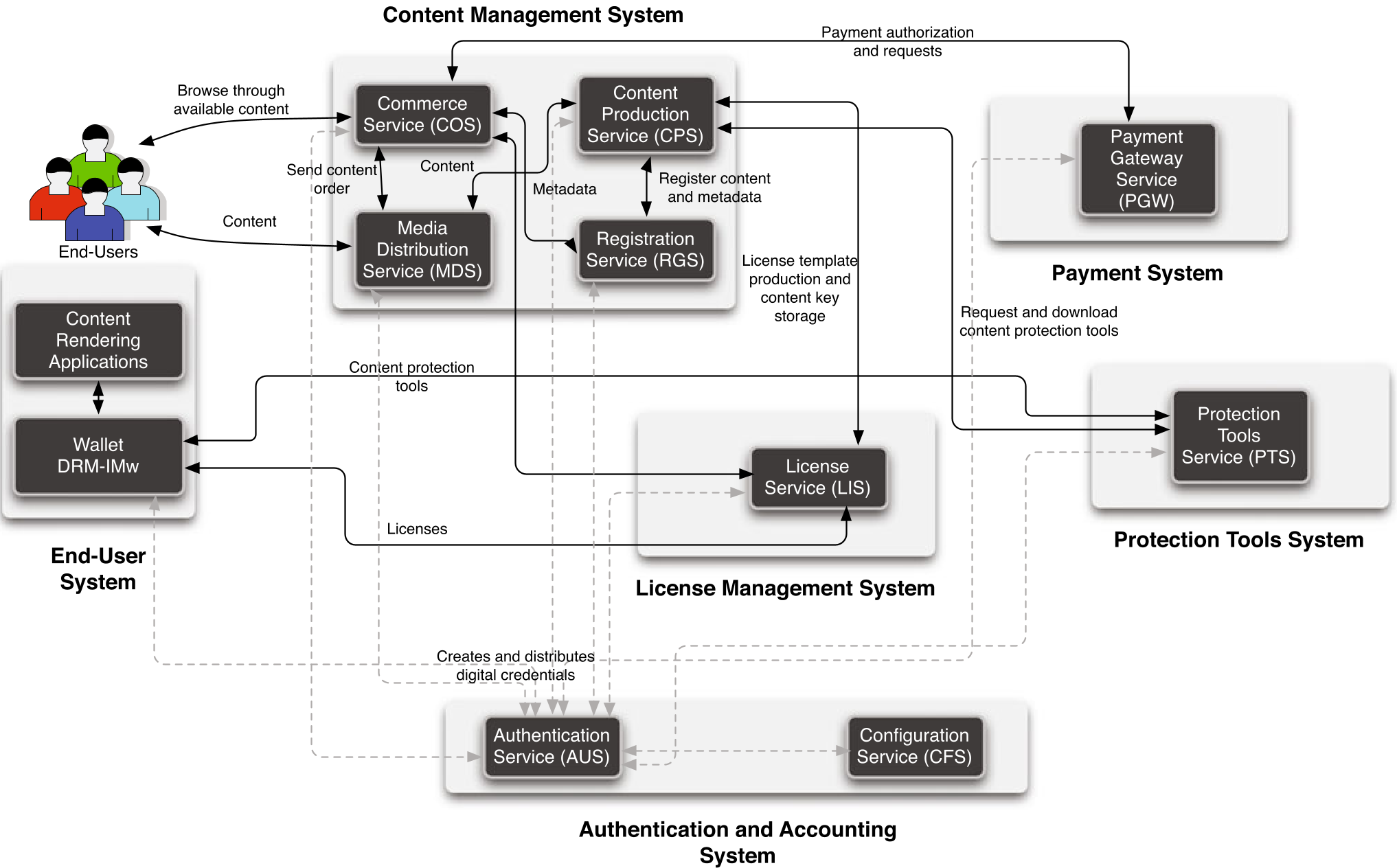 Figure 1: The OpenSDRM framework depicting the flow between content production and usage.
The Sharing Loop
When a user shares a photo, they don't upload the image to Facebook. Instead:
- They upload to OpenSDRM.
- OpenSDRM returns a Special URL.
- The user posts this URL on Facebook.
- Only users with the OpenSDRM extension and a valid license can see the actual image "injected" into the Facebook feed.
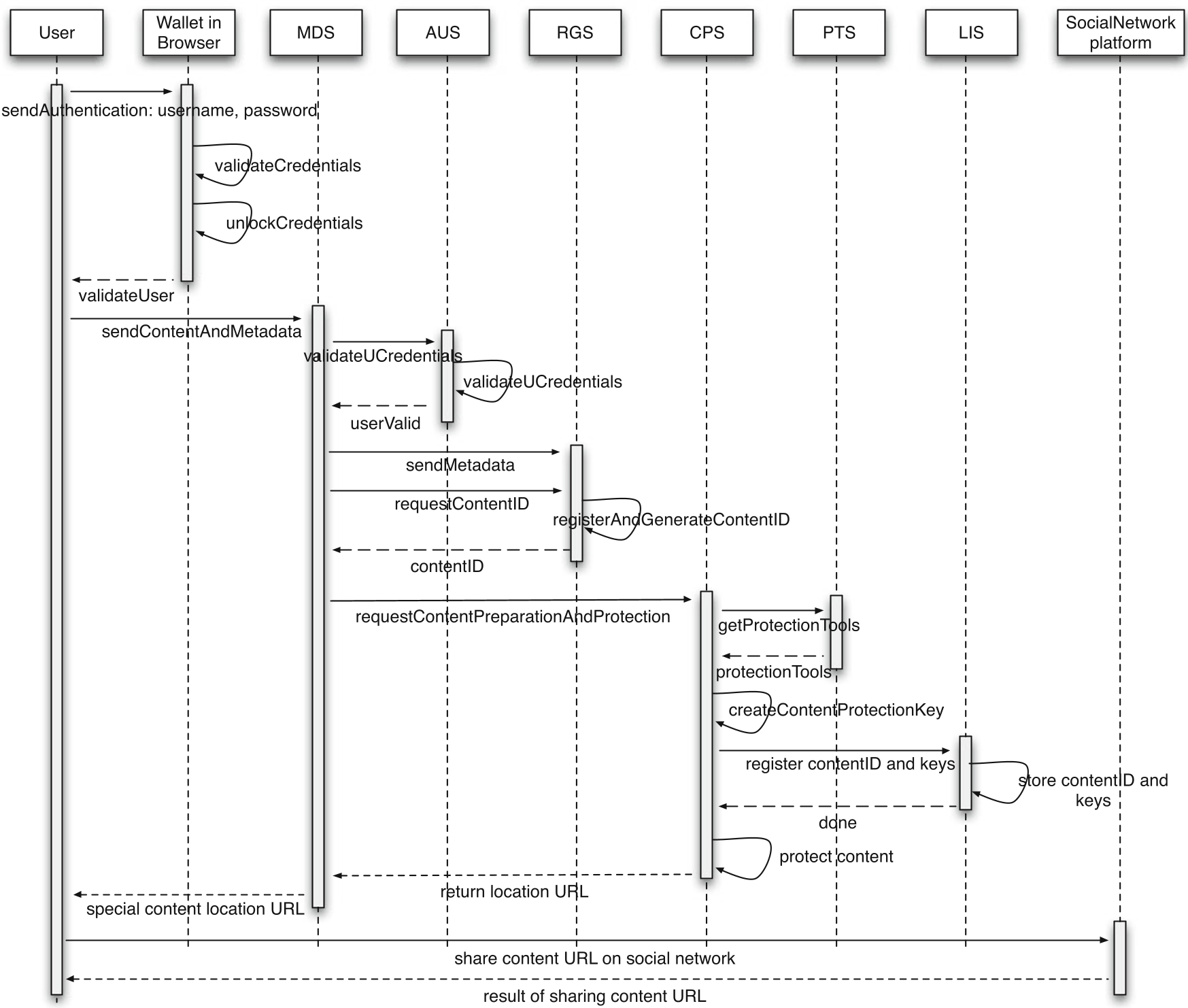 Figure 2: The content registration and protection sequence.
Experiments & Real-World Application
The authors validated the concept with a Facebook-integrated prototype. By leveraging Facebook's API, the system can pull a user's friend list to make license creation easier (e.g., "Share with Group: Close Friends").
Crucial Insight: The "Delete" Capability
Unlike standard social media where deletion is a request, in this system, the user can simply revoke the decryption key or delete the content from the OpenSDRM server. Even if Facebook has a cached copy, it remains an unreadable scrambled file.
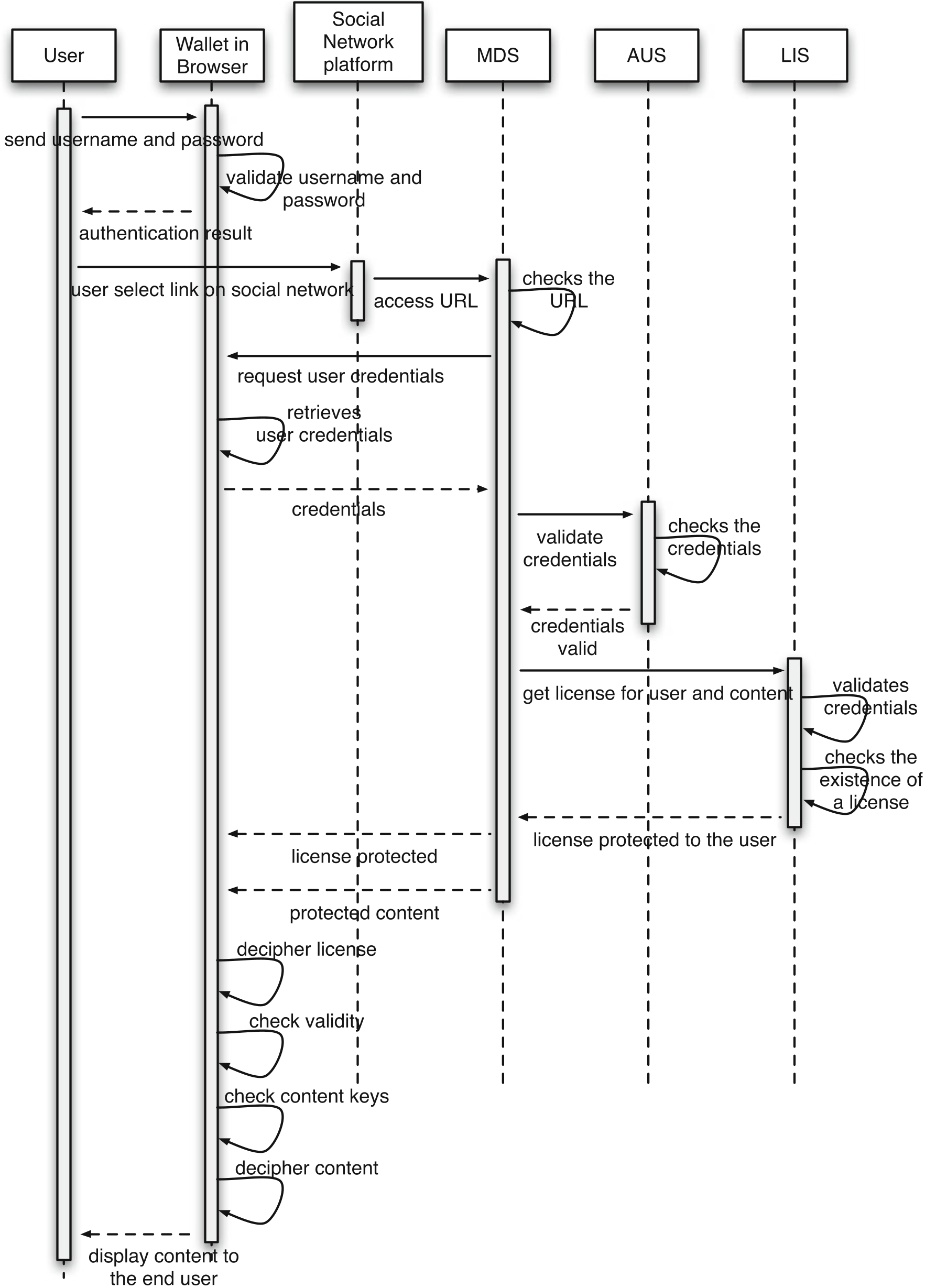 Figure 3: The process of a third-party user accessing governed content via the browser extension.
Critical Analysis & Conclusion
The Conflict of Interest
The paper acknowledges a major hurdle: Social networks hate this. Most platforms' revenue models depend on "reading" user content to serve targeted ads. If all content is encrypted, the platform becomes a "dumb pipe." The authors suggest a compromise where users share some metadata for ads while keeping the core content encrypted.
Limitations
- Analog Hole: Once an authorized friend views the photo, they could technically take a screenshot.
- Friction: Requiring all users to install a browser extension is a significant barrier to adoption.
Takeaway
This research is an early and vital step toward User-Centric Privacy. It proves that we don't have to wait for social network giants to "fix" privacy; we can build a technical overlay that enforces our rights mathematically. In an era where data is the new oil, this DRM approach provides the "tanker" to keep that oil under the owner's control.