
In Transit: How Social Networks Shred and Re-weave in the Migration Hubs of Turkey and Greece
In transit: Changing social networks of sub-Saharan African migrants in Turkey and Greece
This paper investigates the dynamic nature of transnational social networks among sub-Saharan African migrants in the transit hubs of Turkey and Greece. Using a longitudinal ethnographic approach combined with Personal Network Analysis (SNA), the authors propose the "Individual Opportunity Structure" (IOS) framework to explain how critical events drive fluctuations in network composition and usage over time.
TL;DR
Social networks are often romanticized as the "engine" of migration—a reliable map and bank for those on the move. However, this study reveals a much more volatile reality. By following 40 sub-Saharan migrants through the "transit hubs" of Istanbul and Athens, Wissink and Mazzucato show that these networks are in a constant state of flux, breaking and rebuilding in response to police raids, emotional trauma, and shifting business opportunities.
The "Static Network" Fallacy
Most academic literature treats a migrant's network like a fixed infrastructure: you have a brother in Germany, so you go to Germany. But for irregular migrants trapped in the "in-between" spaces of Turkey and Greece, networks are not static. The authors argue that the volatility of these environments creates critical events—losing a job, a failed border crossing, or a referral to a remote "satellite city"—that force migrants to radically reorganize who they talk to and why.
Methodology: Beyond the Snapshot
The researchers didn't just interview migrants once; they followed them for 17 months (some for up to four years). They combined Ethnography (selling watches alongside informants) with Social Network Analysis (SNA).
Using a tool called EgoNet, they visualized the "ego" (the migrant) and their "alters" (their contacts). By comparing these maps over a year, they could see ties disappearing (represented by dashed lines) and new ones appearing, revealing a "shuffling" of social capital that a single interview would never catch.
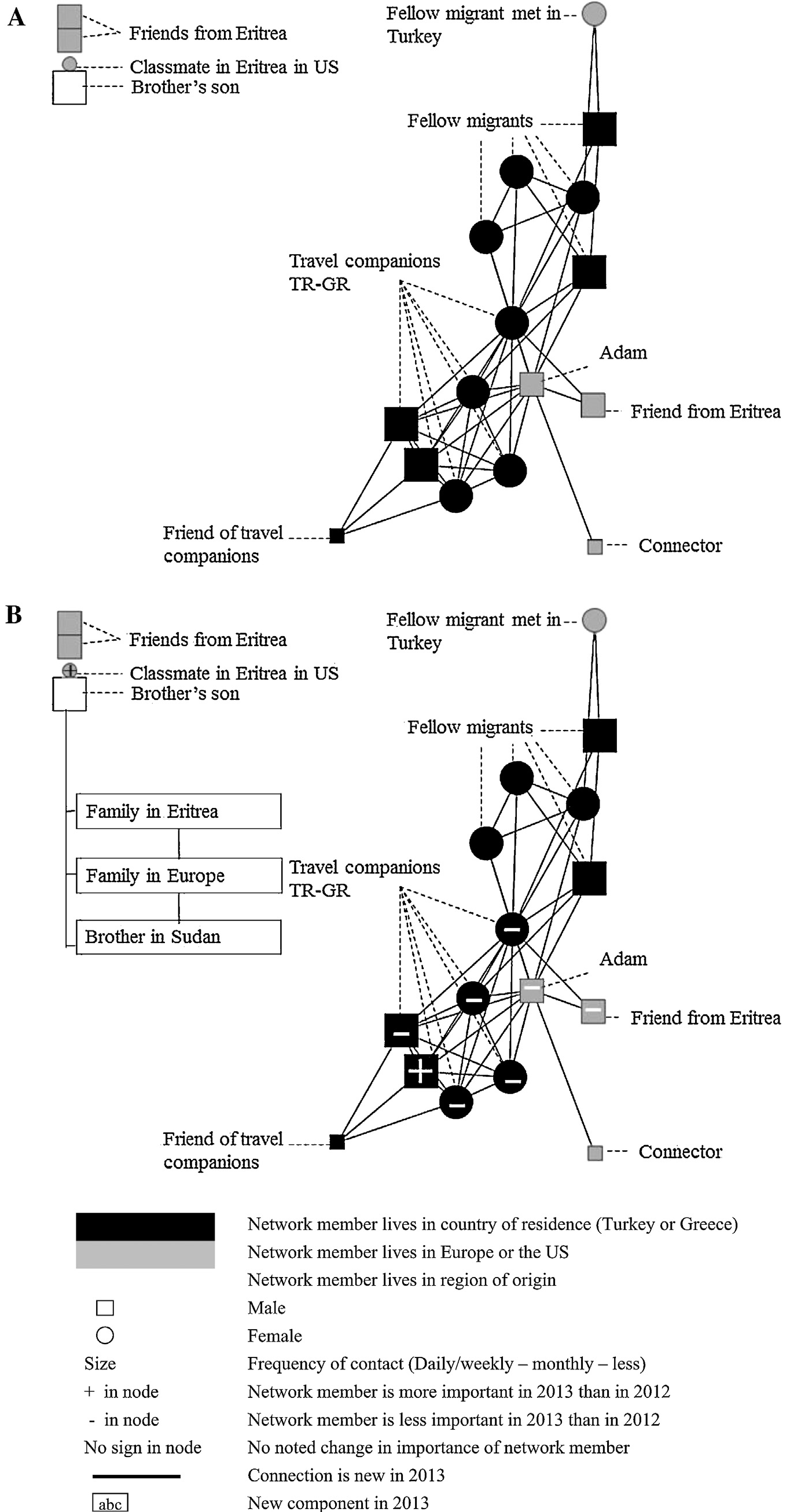 Figure 1: Visualizing the total reconfiguration of Senait's network between 2012 and 2013.
The Core Theory: Individual Opportunity Structure (IOS)
Why does one person strengthen their family ties after a failed border crossing, while another cuts them off entirely? The authors propose the Individual Opportunity Structure (IOS), a triad of factors:
- Communication Infrastructure: Can you actually reach people? Referrals to remote "satellite cities" in Turkey often lack an established "black community" or internet cafes, effectively severing ties.
- Resources: What do you need right now? Does your cousin have information on a new smuggler, or do you just need emotional support?
- Relationship Preferences: This is the "agency" factor. Migrants often choose to go silent. For example, Senait closed her Facebook account to avoid the shame of explaining to her family why she hadn't reached the UK yet.
Case Study Snapshots: Mohamed and Senait
- Mohamed (The Strategist): When his dream of reaching Greece was delayed by rising smuggler fees, Mohamed leaned into local "cargo" businesses in Istanbul. His network shifted from "transit-oriented" (family/smugglers) to "business-oriented" (local traders), demonstrating how economic survival re-wires social ties.
- Senait (The Cycle of Retreat): Senait's journey shows the emotional toll of transit. She initially cut off her family to avoid the "burden of expectation." However, as her local friends in Athens were arrested or successfully moved on, she found herself isolated. This "critical event" (isolation) caused her to revive her family ties abroad for emotional survival.
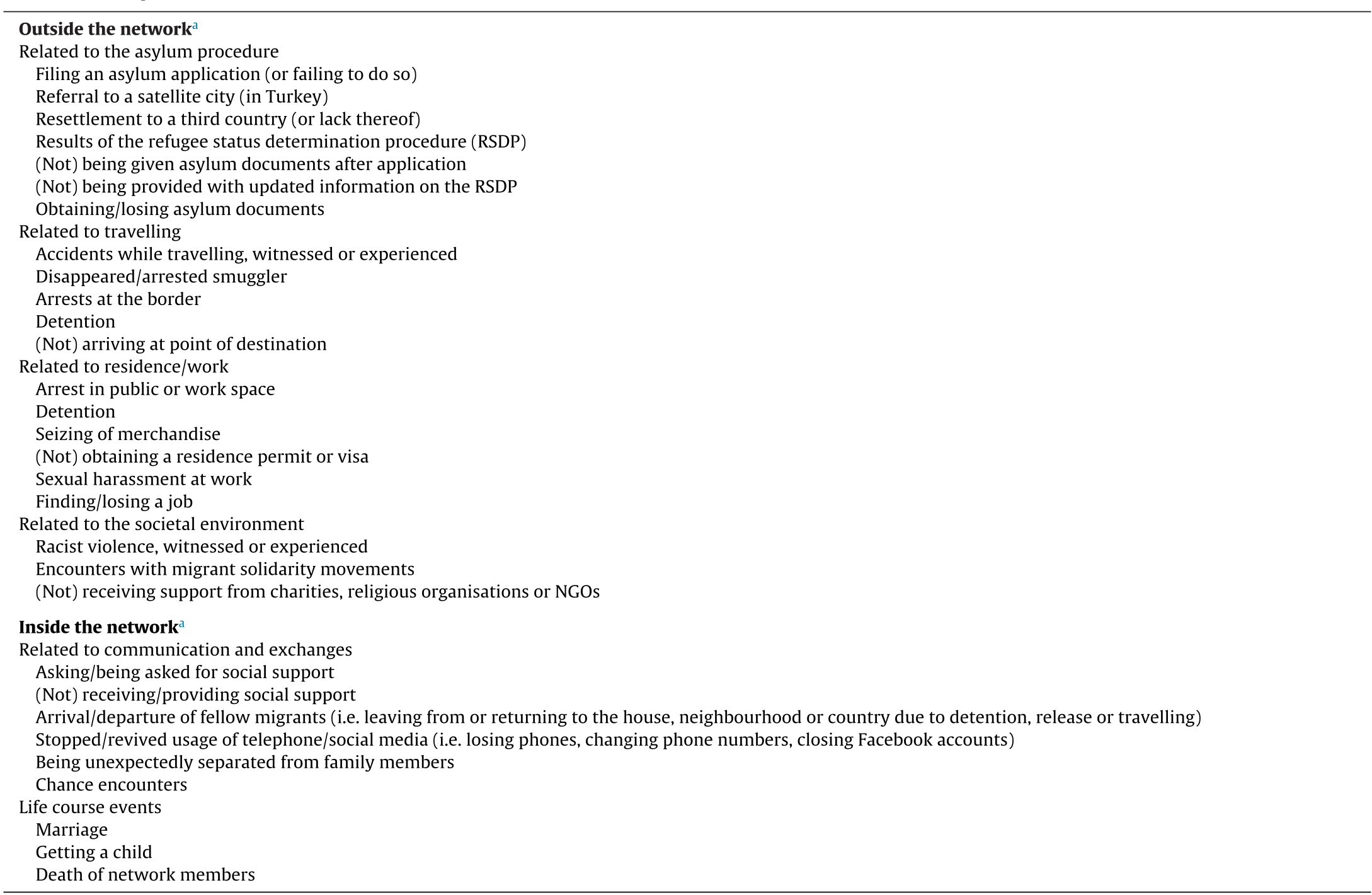 Table 1: A taxonomy of events—from asylum results to "chance encounters"—that trigger network shifts.
Deep Insight: Networks as "Fluctuating Assets"
The most striking takeaway is the feedback loop. A change in the network (e.g., losing a sister’s financial support) becomes a "critical event" in itself, which then forces the migrant to change their behavior again.
The study concludes that we cannot predict a migrant's trajectory just by looking at their initial contacts. Instead, we must look at the transit hub as a pressure cooker that continuously shapes and reshapes the "individual opportunity structure."
Conclusion & Limitations
This work challenges the "step-wise" model of migration (Origin -> Transit -> Destination). It proves that transit isn't just a waiting room; it's a transformative period where social identities are forged and discarded.
While the sample size (40) is small for a quantitative study, the "thick description" provided by the 17-month longitudinal data offers a rare, high-resolution look at the invisible social mechanics of the Mediterranean migrant crisis. Future research should apply this IOS model to more diverse demographic groups to see how gender or religion further modifies these "opportunity structures."