
ITL: Strategic Task Placement and Budget Allocation in Spatial Crowdsourcing
Incentive-aware Task Location in Spatial Crowdsourcing
The paper introduces the Incentive-aware Task Location (ITL) problem, a novel spatial crowdsourcing task where a platform must strategically place location-unspecific tasks and distribute a fixed budget across multiple sites. To solve this NP-hard problem, the authors propose three heuristic algorithms—Even Clustering, Uneven Clustering, and Greedy Location—to maximize worker participation.
TL;DR
Most spatial crowdsourcing research assumes tasks have fixed locations. This paper breaks that assumption by introducing the Incentive-aware Task Location (ITL) problem. By intelligently splitting a budget and placing tasks at multiple strategic locations, the authors demonstrate how platforms can maximize worker participation. They prove the problem is NP-hard and provide efficient clustering and greedy heuristics to solve it.
Context: When Locations Aren't Fixed
In the world of Uber, Meituan, or Gigwalk, we usually think of the task (picking up a passenger, delivering a meal) as having a fixed coordinate. But what if the "task" is simply to increase user engagement at Points of Interest (POIs) or to collect data in a general city area? In apps like Pokémon GO or Foursquare, the platform chooses where to place "tokens" or "rewards."
The dilemma is a spatial version of the "Quality vs. Quantity" trade-off:
- Spread them out: You cover more ground and get closer to more workers.
- Concentrate them: You offer a higher reward per task, making it more tempting for workers to travel further.
The ITL Challenge: A Balancing Act
The authors identify three core complexities that make ITL difficult:
- Worker Heterogeneity: Workers aren't just points on a map; they have different travel tolerances () and minimum reward expectations ().
- Budget Dilution: If you split a $100 budget into 100 tasks of $1, you might find that no one is willing to get off their couch for a single dollar.
- Spatial Coverage: Placing tasks in worker-dense areas is obvious, but overlapping coverage areas lead to "reward duplication" that wastes budget.
Methodology: Three Paths to Participation
The authors formalize ITL and reduce it to the Maximum Coverage Location Problem (MCLP) to prove its NP-hardness. They propose three core strategies:
1. Even Clustering (K-Means Based)
This method assumes a uniform distribution of the budget. It uses K-means to find worker clusters. To prevent "dilution," it caps the number of clusters () so that the budget per task () never falls below the average minimum acceptable reward.
2. Uneven Clustering (Hierarchical Based)
Recognizing that some areas are denser than others, this approach uses hierarchical clustering. It allocates budget proportionally to the cluster's population. It filters out "micro-clusters" that wouldn't receive enough budget to meet workers' minimum reward thresholds ().
3. Uneven Greedy Location
Perhaps the most robust method, the greedy approach starts with zero tasks. In each iteration, it asks: "Should I create a new task at a new site , or should I add $1 to an existing task?" It chooses whichever action yields the highest increase in new worker participation per dollar.
 Figure 1: Conceptual visualization of the spatial distribution and task-worker matching.
Experimental Insights
Using a massive dataset from Didi Chuxing (5.5 million records in Chengdu), the researchers tested their methods against a "Single Task Location" baseline.
- Participation Scores: All ITL methods significantly outperformed the baseline. In the baseline, workers further than a certain distance are "orphaned" regardless of reward. By splitting the task, ITL brings the work to the worker.
- Sensitivity to Budget: As the total budget increases, the ITL methods see a linear growth in participation, whereas the baseline plateaus because once a single location is "saturated," more money doesn't attract distant workers.
- Scalability: Despite the NP-hard nature, the greedy and clustering heuristics are highly efficient, completing 10k-worker scenarios in less than 8 seconds.
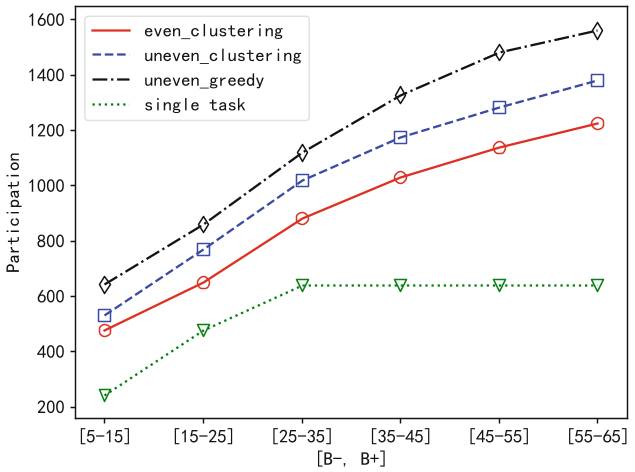 Figure 2: Performance metrics across different numbers of workers.
Critical Perspective: Beyond Geometric Distances
While the paper provides a solid mathematical foundation for ITL, there are a few real-world factors worth considering:
- Temporal Dynamics: Workers move. A high-density area at 9:00 AM might be empty by noon. Future work could integrate "time-unspecific" tasks.
- Competition: The model assumes a single requester. In reality, multiple requesters compete for the same pool of workers, which would require a game-theoretic extension of ITL.
Conclusion
The ITL problem is a significant step forward in making spatial crowdsourcing more flexible and cost-effective. By shifting the perspective from "How do we find workers for this task?" to "Where should we put this task to find the most workers?", the authors provide a vital tool for the next generation of Gig Economy platforms.