
ICAHC: De-Noising Patient Intent with Inception-Style Autoencoders
An Inception Convolutional Autoencoder Model for Chinese Healthcare Question Clustering
The paper introduces ICAHC (Inception Convolutional Autoencoder for Chinese Healthcare question clustering), an unsupervised feature learning model designed to categorize non-professional medical inquiries. By integrating Inception-style multi-scale kernels and skip connections within a convolutional autoencoder, the system achieves superior clustering accuracy (ARI) over traditional baselines like k-means and Sparse Subspace Clustering.
TL;DR
The Inception Convolutional Autoencoder (ICAHC) is a novel unsupervised framework designed to solve the "messy data" problem in Chinese medical Q&A platforms. By utilizing a "Kernel Selection" mechanism and multi-scale feature ensembles, it organizes non-professional symptoms and questions into clean, professional medical categories without requiring expensive human labels.
Problem & Motivation: The Chaos of Colloquial Medicine
In the world of Healthcare Question Answering (HQA), patients don't speak like doctors. A query like "My child's chest hurts but the checkup was normal" is high-dimensional, sparse, and filled with "noise"—non-professional language that trips up standard algorithms.
Prior works often fail because:
- Fixed Granularity: Using a single kernel size in CNNs misses either fine-grained keywords or broad contextual semantics.
- Label Dependency: Supervised models are too expensive to scale across thousands of medical sub-disciplines.
- Feature Sparsity: Simple k-means clustering can't handle the latent relationships in complex Chinese medical sentences.
The authors' insight? Apply the Inception principle—using multiple kernel sizes simultaneously—to capture "everything from keywords to context" in an unsupervised Autoencoder.
Methodology: The Architecture of Intelligence
The ICAHC model moves away from "one-size-fits-all" features. Its workflow involves three core stages:
1. The Kernel Selection Algorithm
Instead of guessing kernel sizes, the authors uses Algorithm 1 to calculate a "Goodness Score." This score balances Quality (how well does this kernel cluster data on its own?) and Diversity (how different is this kernel's view from the others?).
2. Deep Ensemble Strategies
Once kernels (e.g., 1x1, 2x2, 3x3) are selected, ICAHC uses one of four merging operators to fuse information:
- IC (Irrelevant Coalescence): Simply adds features if they are independent.
- IS (Irrelevant Serial): Concatenates features to increase depth.
- AC/AS: More complex fusions for interdependent features.
3. Identity Mappings (Skip Connections)
To ensure the deep encoder doesn't "forget" the original input tokens, skip connections are added, allowing the network to retain fine-grained details while learning abstract medical concepts.
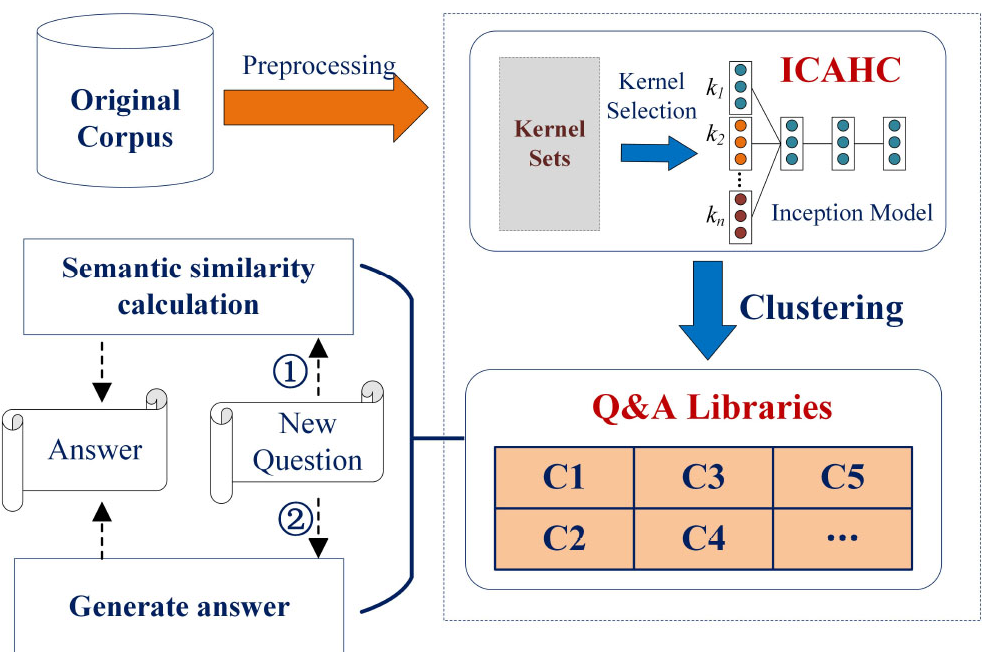 Figure 1: The overall workflow from patient question to semantic clustering.
Experiments: Proving the Value
The model was tested against nearly a dozen baselines, including k-means, Sparse Subspace Clustering (SSC), and Denoising Autoencoders.
Key Performance Gains:
- ARI Improvement: The ICAHC with Skip Connections (ICAHC+Res) achieved an ARI of 0.143, a massive leap over baseline k-means (0.091).
- Robustness to Noise: While standard AEs struggled with colloquial phrasing, the multi-scale kernels successfully mapped "scar pain" to "Dermatology" even when the context mentioned "caesarean section" (which usually confuses models toward OB/GYN).
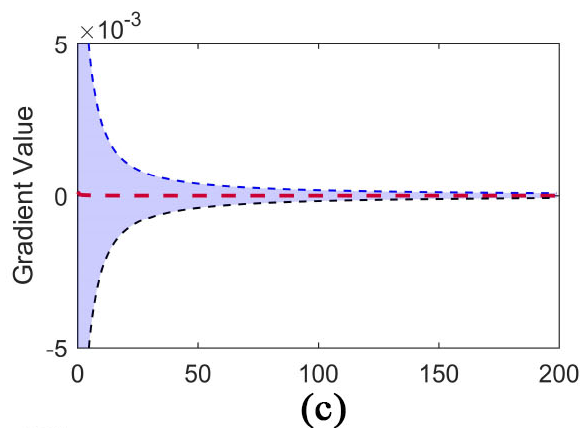 Figure 2: Convergence analysis showing the 4-layer architecture (blue line) reaching stability faster than shallower or deeper counterparts.
Critical Analysis & Conclusion
Why it Works
The secret sauce is the Diversity Index. By forcing the model to select kernels that "see" different things (e.g., one kernel focusing on a single medical term like "Anemia," another focusing on the patient's history), the resulting ensemble is far more robust than any single-scale CNN.
Limitations
While the model is excellent for clustering, it still operates in an unsupervised vacuum. The authors note that the next step is incorporating Knowledge Graphs (doctor-curated knowledge) to refine the latent space.
Takeaway
ICAHC demonstrates that for specialized domains like healthcare, architecture matters more than just "going deeper." Intelligent kernel selection and ensemble strategies can turn noisy, non-professional text into structured medical insights, paving the way for the next generation of automated triage systems.