
Beyond the Star Rating: Why "Messy" Reviews Actually Boost Online Sales
Examining the moderating effect of inconsistent reviews and its gender differences on consumers’ online shopping decision
This study investigates the moderating impact of inconsistent online reviews (a mix of positive and negative feedback) on consumer purchase decisions. Utilizing the trust-based acceptance model, it identifies that inconsistent reviews significantly strengthen the link between emotional trust and purchase intention, particularly among female consumers.
TL;DR
Counter to the common fear that negative reviews kill sales, this study reveals that a mix of positive and negative reviews (Inconsistent Reviews) actually makes consumer trust a more powerful predictor of purchase. By forcing shoppers to think more deeply (Systematic Processing), these inconsistencies solidify the link between "feeling secure" and "clicking buy"—a phenomenon that is significantly more pronounced in female consumers.
The "Negativity Bias" Trap
For years, e-commerce managers have operated under a simple, fearful logic: negative reviews are more "diagnostic" and "informative" than positive ones, thus they must be suppressed. However, the authors argue that this perspective is too one-dimensional. In the real world, consumers are savvy enough to expect a mix of opinions. When they encounter only positive reviews, they might be skeptical; when they encounter a mix, their brain switches from "autopilot" (Heuristic) to "deep dive" (Systematic) mode.
Methodology: The Trust-Based Lens
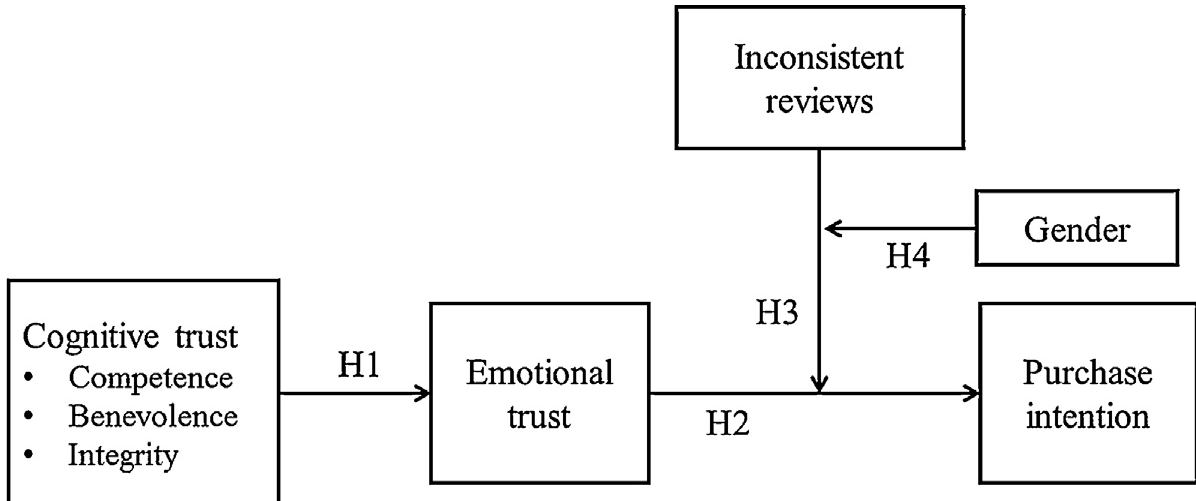
The research utilizes the Trust-Based Acceptance Model, breaking trust down into:
- Cognitive Trust: Your rational belief in a retailer's competence, benevolence, and integrity.
- Emotional Trust: That gut feeling of being "comfortable" or "secure" with the transaction.
The authors hypothesized that once cognitive trust builds emotional trust, the presence of inconsistent reviews acts as a "catalyst" that makes that emotional state much more likely to result in a final purchase.
Core Insight: The Power of Inconsistency
The experiment showed that when consumers view inconsistent reviews, they engage in higher information elaboration. This intense thinking makes their newly formed attitude (emotional trust) more accessible and consistent.
Key Findings:
- Emotional Trust is King: It fully mediates the relationship between a retailer's integrity and the consumer's intention to buy.
- The Interaction Effect: In the "Treatment" group (exposed to inconsistent reviews), the R² of Purchase Intention jumped to 52.3%, compared to only 37.2% in the control group.
The Gender Gap: Systematic vs. Selective
One of the paper's most fascinating contributions is the application of the Selectivity Hypothesis:
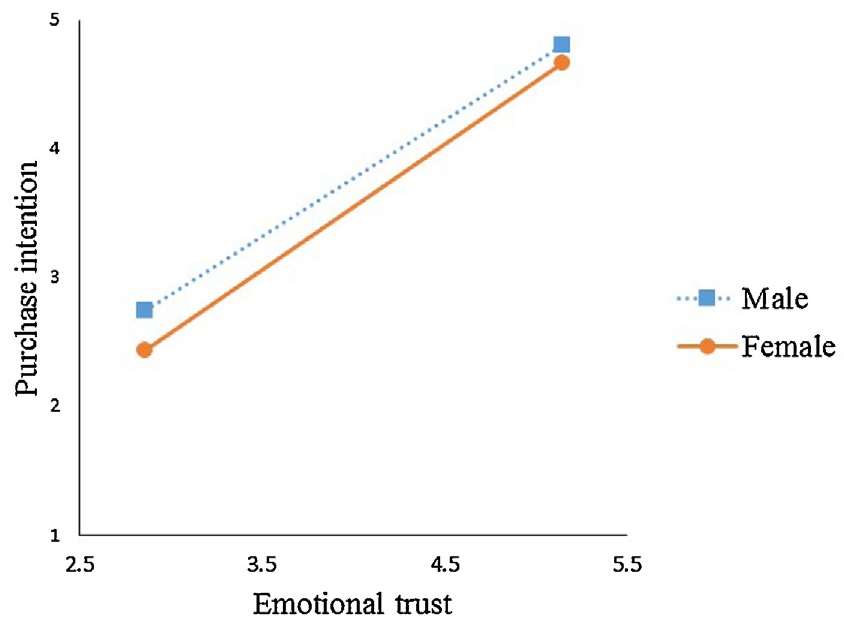
- Males (Selective Processors): Tend to focus on a few highly relevant cues to make a quick decision.
- Females (Comprehensive Processors): Tend to integrate all available information more holistically.
Under the "messy" conditions of inconsistent reviews, female consumers showed a significantly stronger path from emotional trust to purchase intention (Path 0.798) compared to males (Path 0.650). For women, the inconsistency was not a deterrent, but a prompt to build a more comprehensive—and thus more actionable—foundation of trust.
Critical Analysis & Conclusion
This paper serves as a strategic wake-up call for e-commerce practitioners. Instead of manipulating reviews to show a "perfect" 5-star record, retailers should:
- Show the Mix: Use UI elements that highlight the diversity of feedback.
- Engage Publicly: Respond to negative reviews with competence and integrity. This builds "Cognitive Trust" which, as the study shows, is the fuel for the emotional trust that drives sales.
Limitations: The study used a student sample and a hypothetical gift-giving scenario. Future research using eye-tracking technology could provide even more granular proof of the "Cognitive Effort" involved when consumers wrestle with conflicting reviews.