
SoTeRiA: Mastering the Hidden Causal Chains of Organizational Risk
Incorporating organizational factors into Probabilistic Risk Assessment (PRA) of complex socio-technical systems: A hybrid technique formalization
This paper introduces Socio-Technical Risk Analysis (SoTeRiA), a "hybrid" framework designed to integrate organizational factors into traditional Probabilistic Risk Assessment (PRA). By combining System Dynamics (SD), Bayesian Belief Networks (BBN), and Event Sequence Diagrams (ESD)/Fault Trees (FT), it quantifies how fundamental management decisions and safety culture dynamically influence technical failure rates in complex systems like aviation.
Executive Summary
TL;DR: Most industrial accidents aren't "bad luck"; they are the inevitable outcome of deep-seated organizational failures. This paper presents SoTeRiA (Socio-Technical Risk Analysis), a hybrid framework that bridges the gap between high-level management decisions (hiring, training, finance) and low-level technical failures (engine malfunctions, pilot error). By integrating System Dynamics with Bayesian networks, the authors provide a "weather forecast" for safety risk.
Academic Positioning: This work moves beyond "First Generation" (Hardware) and "Second Generation" (Human Performance) risk models into a holistic "Organizational" generation of PRA. It represents a shift from observing what went wrong to modeling why the organization allowed it to happen.
The "Safety Complacency" Paradox
The core insight of the research is a warning to every CEO: A period of perfect safety is often the most dangerous time for a company.
Existing models fail to account for the "Sea Anchor and Adjustment" effect. When accident rates are low, management naturally shifts focus toward financial profitability (the "sea anchor"). This shifts the organization's trajectory toward lower training budgets and higher time pressure. The SoTeRiA model treats safety culture as a dynamic variable that decays and recovers in cycles, rather than a fixed "score."
Methodology: The Hybrid Architecture
The researchers argue that no single mathematical language can describe a socio-technical system. Instead, they propose a three-tiered hybrid architecture:
- System Dynamics (SD): Captures "Deterministic" flows. Think of this as the physics of the organization—how money flows, how experience levels accumulate in workers over years, and how delays in hiring affect fatigue.
- Bayesian Belief Networks (BBN): Captures "Uncertainty." How much does a "Poor" safety climate actually increase the probability of a technician skipping a step? BBNs handle these "soft" causal links mathematically.
- HCL (Hybrid Causal Logic): The engine that links the SD "state" to the technical Fault Trees.
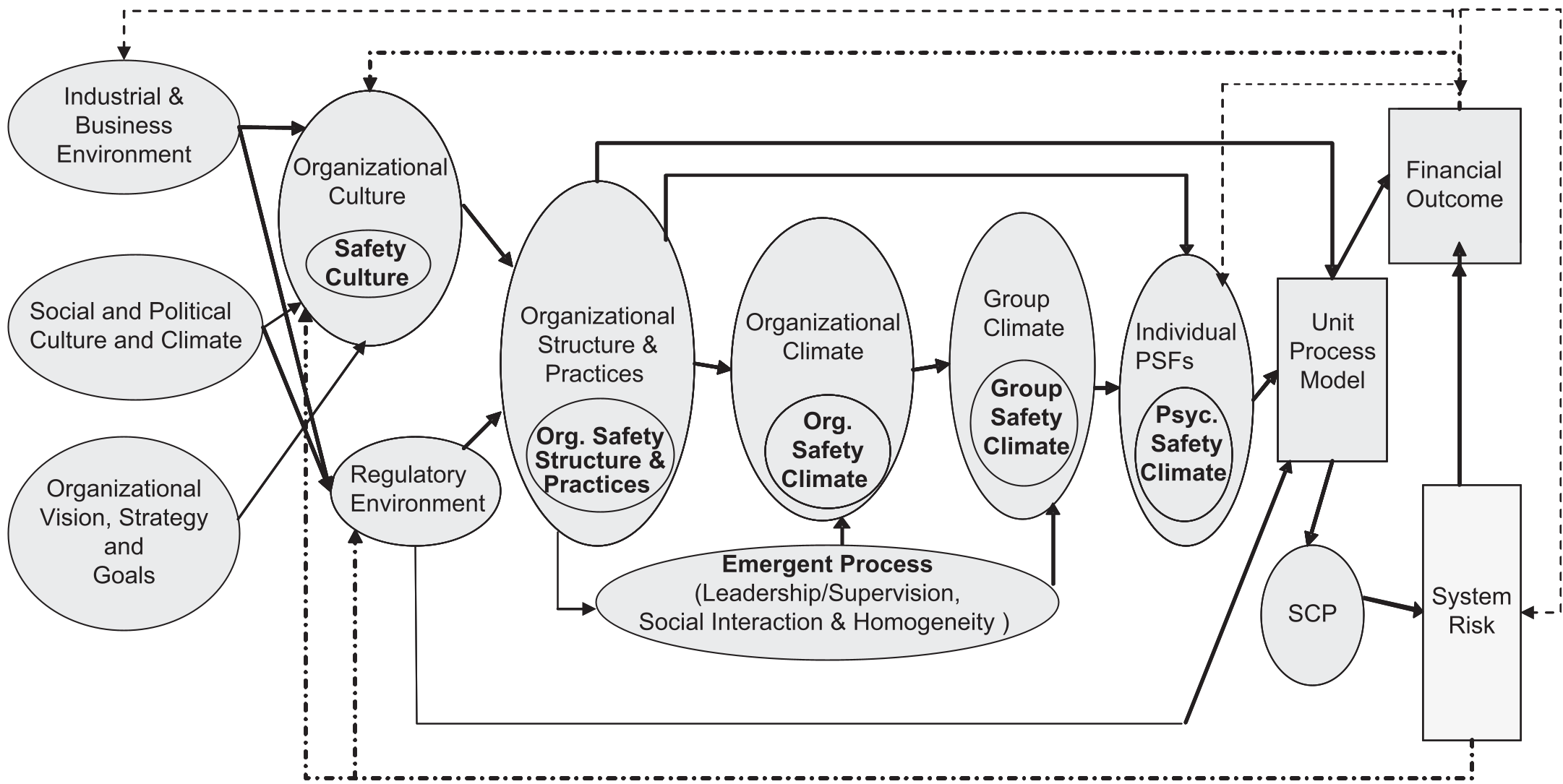 Figure 1: The SoTeRiA framework structure—connecting the social (left) to the technical (right).
Converting Process to Probability
One of the paper's most elegant contributions is the conversion of IDEF0 (SADT) process models into BBNs. By taking a standard workflow (Input, Control, Output, Mechanism) and assigning conditional probabilities to each link, a standard business process map becomes a quantitative risk-prediction tool.
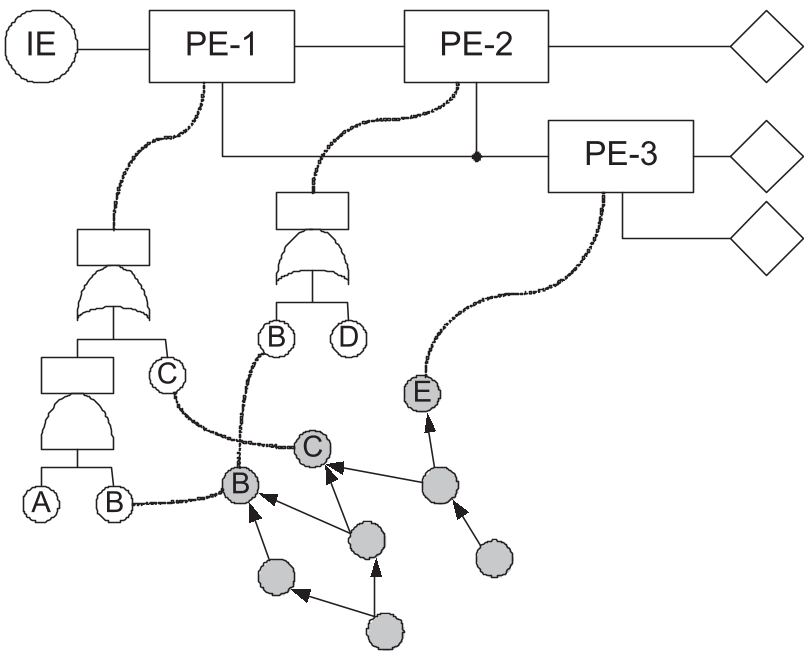 Figure 2: Turning qualitative business processes into rigorous probabilistic nodes.
Real-World Application: The Aviation Context
The authors validated SoTeRiA using an airline maintenance model. They integrated the Altman Z-score (a classic financial distress metric) into the safety model.
Key Findings from Simulation:
- Financial Drift: As Z-scores drop (financial distress), "Management Commitment" drops exponentially.
- Experience Gaps: Hiring新人 (rookies) does not immediately lower risk due to the "time to gain experience" lag.
- Dampened Propagation: Interestingly, high-reliability organizations have enough "buffering" (technical resilience) that small fluctuations in management don't always trigger immediate crashes, but they do increase the likelihood of "risk spikes."
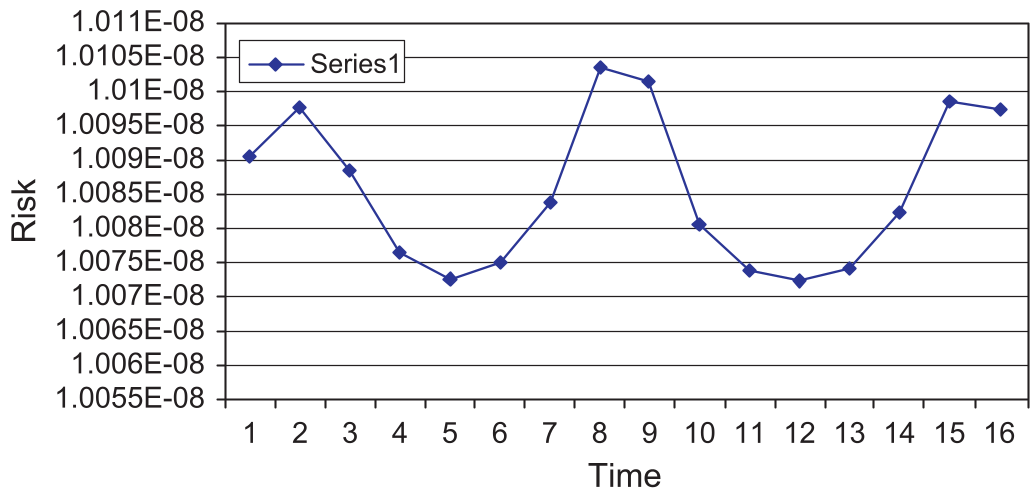 Figure 3: 15-year simulation showing the oscillations between management attention, technician commitment, and error rates.
Critical Insight & Conclusion
The Takeaway is clear: Risk is a function of time and organizational metabolism. Managers can no longer manage safety through audits alone; they must manage the dynamics of the organization.
Limitations: The model is data-hungry. To work effectively, an organization needs deep "measurement bases"—subjective surveys (climate) and objective audits. Furthermore, the model currently assumes certain linear relationships in the "Human Reliability" module that may be more chaotic in reality.
Future Outlook: The next frontier for SoTeRiA is the integration of real-time "Safety Sensors"—using AI to detect shifts in organizational sentiment or financial pressure and adjusting the PRA models in real-time to provide an "Early Warning System" for catastrophic failure.