
Windows Live in the Classroom: How Social Networking Transforms Elementary Computer Education
Incorporation of Windows Live Social Network into Elementary School Instruction
This study investigates the integration of the Windows Live social network platform into elementary school computer science education. Utilizing a quasi-experimental design, it demonstrates that social learning environments significantly outperform traditional instruction in improving student learning outcomes.
TL;DR
This research validates the shift from traditional "broadcast-style" teaching to a "socially-networked" classroom. By integrating the Windows Live platform, elementary students in Taiwan showed a significant improvement in computer science grades (approx. 8% higher than traditional methods), driven largely by active participation and time spent in the digital social ecosystem.
Problem & Motivation: The "Static" Classroom Bottleneck
In typical elementary settings, the burden of content creation falls entirely on the teacher. Many educators, despite wanting to adopt digital trends, are hindered by limited time and technical barriers. This often results in a regression to traditional, less engaging instructional methods.
The researchers hypothesized that by using a pre-existing social infrastructure (Windows Live), they could bypass the technical "cold start" problem for teachers while leveraging students' natural inclination toward social interaction to drive learning.
Methodology: Beyond Just a Website
The study utilized a quasi-experimental design involving 124 sixth-graders. The core intervention replaced traditional lectures with a social-interaction-heavy curriculum hosted on Windows Live.
Key Technical Advantages of the Platform:
- Integrated Ecosystem: Combined email, blogging, and instant messaging (Messenger) in one environment.
- Low Bandwidth Barriers: Used the "Writer" tool for offline content creation, crucial for school environments with restricted concurrent internet speeds.
- Social Connectivity: Allowed students to view, comment on, and critique each other’s work, fostering a "Learning Community."
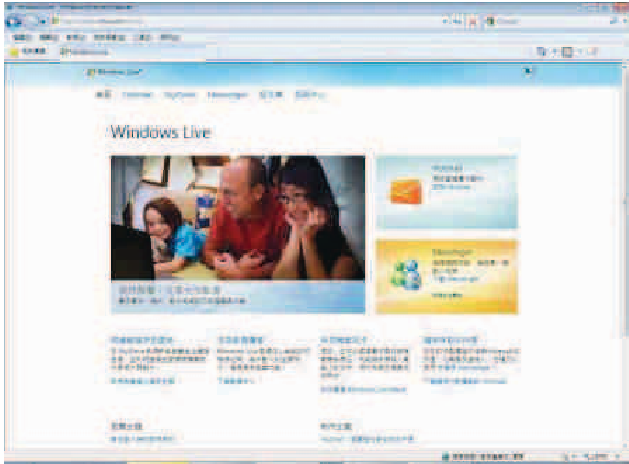 Figure 1: The Windows Live interface used as the primary instructional medium.
Experiments & Results: Data-Driven Success
The experimental data reveals a clear correlation between digital social engagement and academic performance.
1. Traditional vs. Social Learning
The experimental group not only had higher mean scores (86.03 vs. 79.57) but also showed lower standard deviation. This suggests that the social network platform helped "bridge the gap" for students who might struggle in a traditional lecture-only format.
2. The Engagement-Performance Loop
The study found that learning outcomes were directly proportional to:
- Active Time: Students spending over 2 hours on the platform significantly outperformed those spending less than 1 hour.
- Interaction Frequency: There was a linear trend where students who responded to more peer posts achieved higher grades.
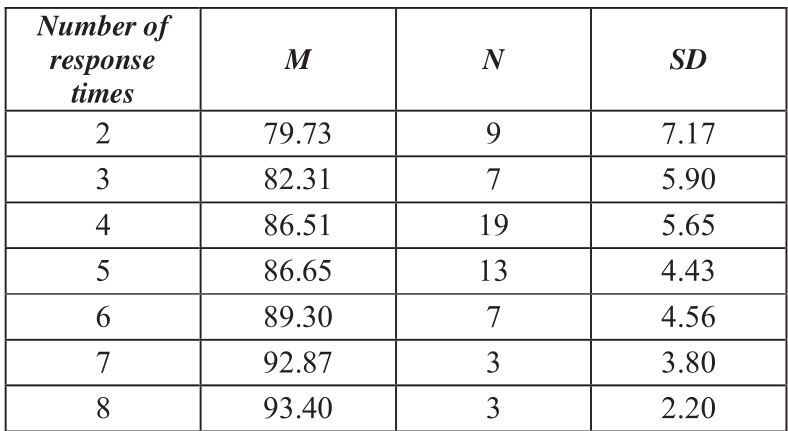 Table: The positive correlation between social interaction (Response Times) and final grades.
Critical Analysis: The Double-Edged Sword
While the results are overwhelmingly positive regarding Learning Effects, the authors provide an honest critique of the practical implementation:
- Distraction Management: A notable percentage of students used the platform to chat or browse unrelated sites, potentially diluting the instructional time.
- Multimedia Limitations: At the time of the study, the platform struggled with seamless video and animation integration, which the authors noted as a pedagogical constraint.
- Gender Neutrality: Interestingly, the study found no significant difference in performance between boys and girls, suggesting that social-based digital learning is an equitable tool across genders.
Conclusion: The Future of the "Social" Classroom
The success of this intervention highlights a fundamental shift in educational technology: The platform is the pedagogy. By using a social network, the classroom transforms into a decentralized network of learners. For future implementations, researchers suggest implementing stricter monitoring to curb distractions while expanding the use of multimedia-rich social tools to further enhance student immersion.