
Catalyzing Collective Intelligence: The Role of Trust and Reputation in Organizational Networks
Towards an Increase of Collective Intelligence within Organizations Using Trust and Reputation Models
This paper explores the enhancement of Collective Intelligence (CI) in organizations by integrating trust and reputation models within Multi-Agent Systems (MAS). The authors propose a cognitive-computational framework and utilize NetLogo simulations based on the "Preferential Attachment" hypothesis to demonstrate how trust-based networking facilitates complex problem-solving.
Executive Summary
TL;DR: This paper argues that the secret to high-performing organizations lies not in the sum of individual IQs, but in the "Collective Intelligence" (CI) emergent from social trust. By modeling agents with subjective trust capitals and simulating their behavior via Preferential Attachment, the authors show how reputation-based networking creates a "Collective Mental Map" capable of solving problems that no single agent could tackle alone.
Context: This work bridges the gap between sociology and computational cybernetics, positioning trust as the "bonding energy" required for Multi-Agent Systems (MAS) to transition from chaotic interactions to organized, intelligent inference.
The Core Challenge: Why Individual IQ is Not Enough
Modern organizations face problems that exceed the cognitive limits of any single human or software agent. While theories like "The Wisdom of Crowds" suggest that groups are smart, they often fail to explain how agents decide whom to listen to or collaborate with in a noisy environment.
The authors identify a critical gap: Trust is the mental counterpart of delegation. Without a formal model to quantify reputation and trust, collective intelligence remains a theoretical ideal rather than an engine for organizational efficiency.
Methodology: Formalizing Relational Capital
The paper shifts the focus from "what an agent knows" to "who an agent trusts." It introduces several mathematical formalisms to quantify this:
- Subjective Trust Capital (STC): A measure of how an agent is perceived by others regarding their ability and willingness to perform tasks.
- Potential for Negotiation (PN): A function of direct and indirect dependencies, calculating an agent's leverage within a network.
The authors specifically define the Subjective Potential for Negotiation (SPN) as:
Where represents belief, represents ability, represents willingness, and accounts for competition. This reveals the "physics" of trust: it is a product of perceived capability and perceived intent.
The Agent Architecture
The authors utilize a Cognitive Model of Trust where agents are endowed with goals, beliefs, and resources.

Simulations: Preferential Attachment at Work
Using NetLogo, the researchers tested the "Preferential Attachment" hypothesis—the idea that agents prefer to connect with "hubs" (agents who are already well-connected and thus have high reputation).
Key Simulation Rules:
- Intelligence Homophily: Agents only connect if their intelligence values are within a range of 10 units.
- Reputation Dynamics: Reputation is a variable , where values closer to 1 are earned through increased connectivity.
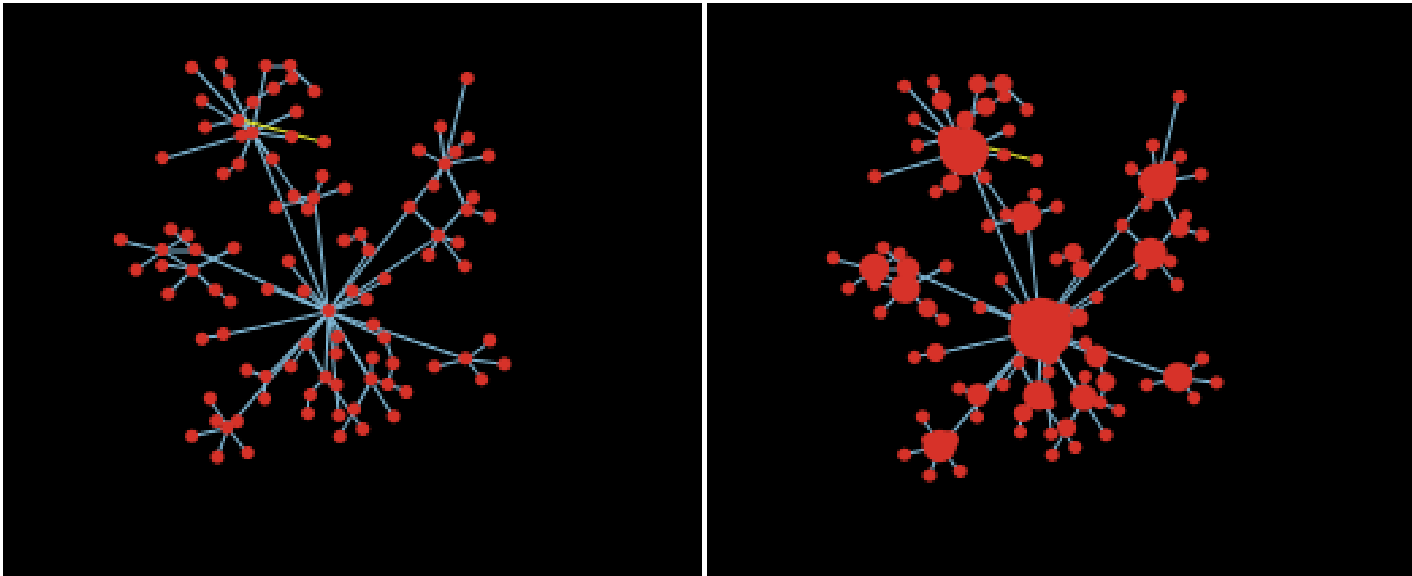 Figure 1: NetLogo simulation showing the emergence of clusters based on intelligence proximity and reputation.
Results & Deep Insight
The simulations revealed a fascinating social dynamic: Reputation is the primary filter for complexity.
- The "Rich-get-Richer" Effect: The first agents in the system typically maintain the highest reputation because they become the "foundational" hubs for newer agents seeking reliable partners.
- Balanced Clustering: Agents don't just pick the smartest partner; they pick the most reputable partner that is intellectually accessible (within the Intelligence range).
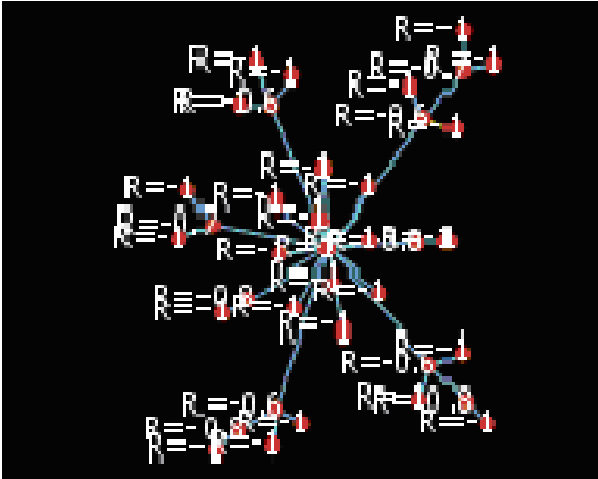 Figure 2: Distribution of reputation across the agent population.
The study concludes that "Collective Performance" is maximized when trust is distributed effectively. Interestingly, an isolated agent with high intelligence but zero reputation remains useless to the collective—they must be "drawn back into the crowd" by forging trust-based links.
Critical Analysis & Future Outlook
Takeaway
For leaders and system architects, this paper suggests that the architecture of interaction (how we track and reward reputation) is more important than the individual hiring/selection of "geniuses." Trust reduces the "transaction costs" of delegating tasks, allowing the organization to operate as a single, massive neural network.
Limitations
- Static Intelligence: In the simulation, intelligence is fixed. In real organizations, agents learn, and their intelligence should ideally increase through their connections.
- The Dark Side of Reputation: Preferential attachment can lead to "echo chambers" or stagnant hierarchies where new, talented agents cannot break through the "reputation barrier."
Future Work
The authors aim to extend NetLogo simulations to include dynamic attributes like "learning rate" and "deception," exploring how organizations can protect their Collective Intelligence from bad-faith actors or "untrustworthy" agents.