
Engineering Intuition: The "Brain Shaking" Method for the Digital Native Era
How to Increase Intuition for Entrepreneurship Spirit in Innovation Process?
The paper introduces "Intelligence, Creativity & Intuition" (ICI), a multi-sensory teaching methodology designed to boost the entrepreneurial spirit and intuition of "Digital Native" engineering students. It leverages musical breaks, "zapping" video sequences, and kinesthetic exercises to reclaim student attention and foster innovation-driven decision-making.
TL;DR
As digital distractions turn classrooms into "laptop ramparts," researchers at the University of Angers have developed the ICI (Intelligence, Creativity & Intuition) method. By combining music, "zapping" video breaks, and kinesthetic exercises, they have successfully trained a generation of engineering students who are not just technically proficient, but are 100% patent-holding inventors.
Background: The Attention Crisis in Generation Y
The "Digital Native" (Generation Y/Z) student is a different biological entity in the classroom. Born with a tablet in hand, their decision-making processes are faster, yet their attention spans are fragmented by the constant pull of social networks.
The authors argue that the classical "top-down" lecture model is obsolete. To reach these students, educators must transition from being information providers to rhythm orchestrators.
The "Brain Shaking" Methodology
The core of the paper is a 7-step pedagogical sequence designed to dismantle mental barriers and tap into the "instinctive center" of the student.
1. The Auditory Break (Musical Introduction)
The course begins not with a syllabus, but with 2-3 minutes of music. This acts as a "decompression chamber." Neurobiologically, this triggers the reward circuitry, releasing dopamine and oxytocin, which prepares the brain for synaptic plasticity and reduces the "mental fatigue" of the previous hour.
2. The Power of "Zapping"
To combat the "army of computers," the authors use a technique called Zapping. They intentionally interrupt the technical lecture with a 1-3 minute video on a completely different topic (e.g., courage, fear, or presence).
- Why it works: It imposes a rhythm change that synchronizes with the student's natural "surfing" habits, forcing an attention reset.
- The Result: Students close their laptops and re-engage with the physical presence of the teacher.
 Figure: Students engaging in peer-to-peer exploration of Gardner’s Multiple Intelligences.
Connecting Physiology to Innovation
Perhaps the most radical part of the ICI method is the use of Cymatics and Kinesthesia.
- Vibrational Awareness: Using Jenny’s studies on cymatics, students observe how sound waves shape physical matter (water).
- Pulse Monitoring (The VAS Signal): Students are taught to monitor their own radial pulse variations while contemplating decisions. Based on the work of Dr. Nogier, this "Vascular Autonomic Signal" acts as a physiological barometer for intuition—helping students "feel" if a project direction is positive or negative.
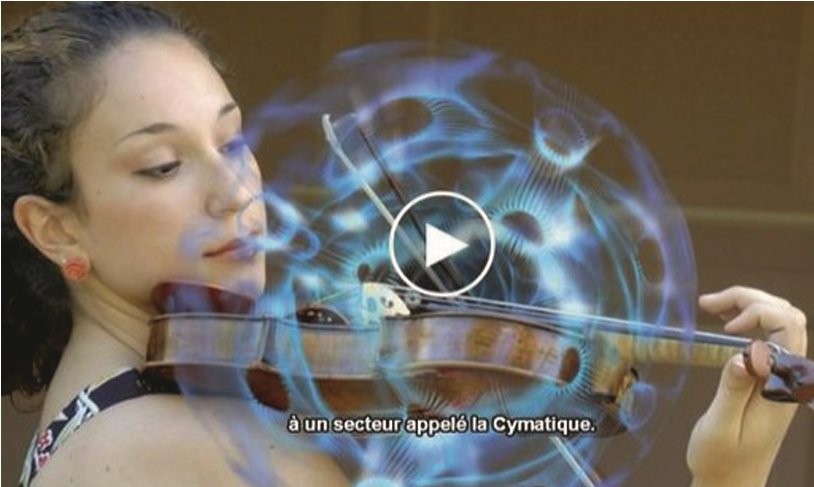 Figure: The interplay between musical vibrations and brain plasticity as a foundation for learning.
Results: From Students to Inventors
The impact of this "inverted" teaching—where practice and feeling precede theory—is striking:
- Increased Engagement: Immediate shut-down of distracting digital devices.
- Intellectual Property: In the innovation option track, 100% of students became inventors of a license or patent via their collective projects over a three-year period.
- Global Scalability: The method has been successfully piloted in France, Egypt, Belgium, and Vietnam.
Critical Insight & Conclusion
The ICI method suggests that Intuition is a trainable skill. By acknowledging that students are 70% water and highly sensitive to external "rhythms," the authors move pedagogy from a cognitive-only discipline to a holistic, bio-social experience.
The Takeaway: To foster the next generation of entrepreneurs, we must stop fighting the "digital distraction" and start using it as a cue to vary the classroom's rhythm. The goal is to move the student from being an "extra" in the room to a "fully alive" participant.
Limitations: While the patent success rate is impressive, the method's reliance on specific physiological sensations (like the radial pulse) may require significant teacher training and a "leap of faith" from students accustomed to strictly rationalist engineering frameworks.