
WoM MCS: Leveraging Social and Physical Intimacy for Resilient Crowdsourcing
Increasing Awareness of Physical, Cyber, and Social Interactions
The paper introduces "Word-of-Mouth Mobile Crowdsourcing" (WoM MCS), an extension of traditional mobile crowdsourcing that leverages both Internet-scale social networks and local-scale physical encounters. By allowing crowdworkers to recursively recruit others, the system enhances the efficiency of time- and location-constrained tasks, such as finding lost children or environmental sensing.
TL;DR
Mobile Crowdsourcing (MCS) is evolving beyond simple task-platform interactions. This paper explores Word-of-Mouth Mobile Crowdsourcing (WoM MCS), a paradigm where participants act as both workers and recruiters. By exploiting social graphs and physical proximity through Device-to-Device (D2D) communication, WoM MCS solves the "last-mile" problem of time-sensitive and location-constrained tasks that traditional centralized platforms fail to address.
Beyond Direct Recruitment: The Motivation
Traditional MCS follows a "Direct Mode"—a central server broadcasts tasks to a pool of users. However, this lacks contextual agility. If you lose a child in a crowded mall, waiting for a central server to find and alert users is too slow.
The authors argue that the person most likely to help is already at the scene and, more importantly, they are connected to others nearby through physical encounters or social ties. The core insight is to transform crowdsourcing into a viral process, where the task itself "travels" through the crowd via "solicitation."
The Dual-Mode Architecture
The paper defines a research architecture that splits WoM MCS into two operational scales:
- Internet-Scale: Utilizing online social networks (OSN) for broad coverage.
- Local-Scale: Exploiting physical encounters and proximal D2D links (Bluetooth, Wi-Fi Direct).
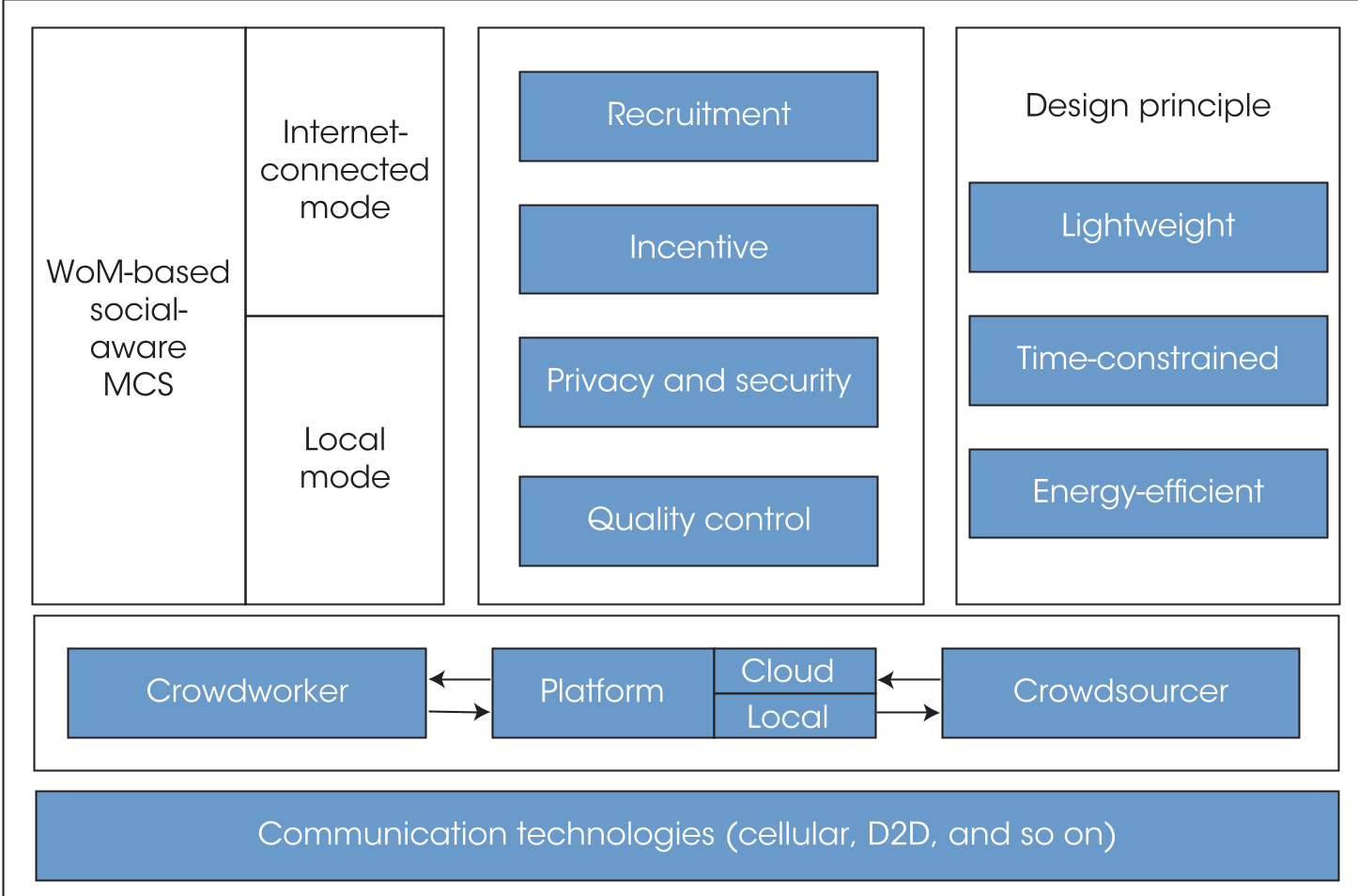 Figure 1: The architecture involves three stakeholders (Platform, Crowdsourcer, Crowdworker) and bridges the gap between cyber and physical social interactions.
Technical Core: The Four Pillars
To make WoM MCS viable, the authors identify four fundamental challenges:
1. Peer Recruitment
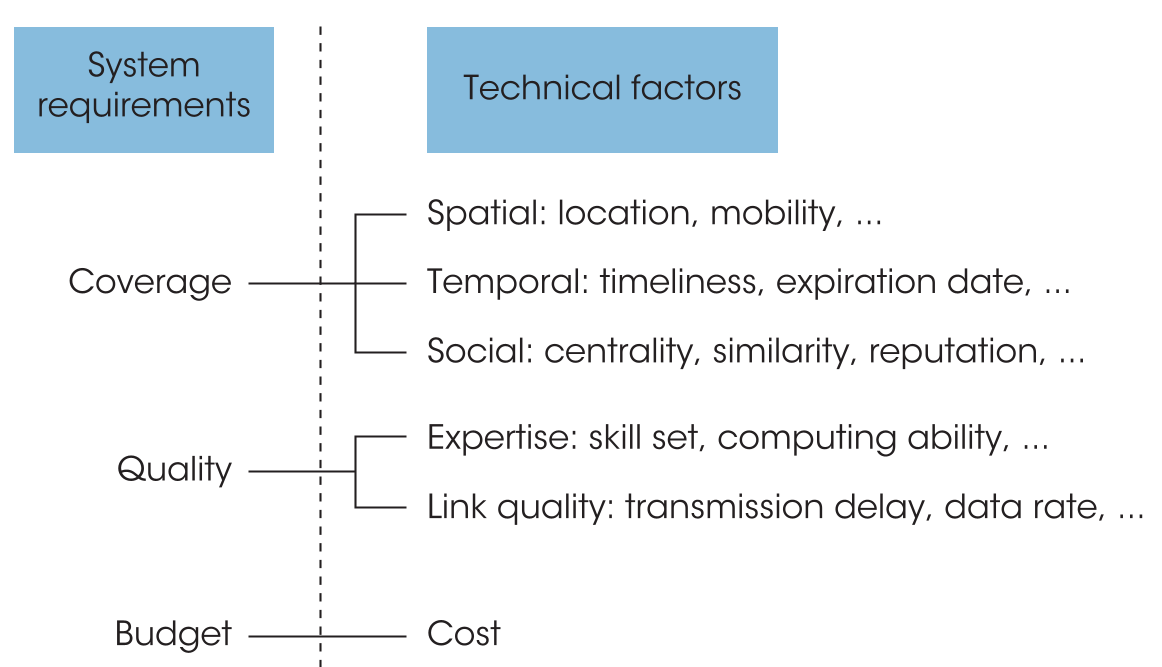
Moving beyond random selection, WoM MCS uses Social-Physical Awareness. Recruitment factors include spatial-temporal proximity, social centrality (how "connected" someone is), and expertise.
2. Incentive Design: The "Multi-Level Marketing" of Tasks
Why would a worker recruit others? The authors discuss Incentive Trees. Unlike simple payments, these mechanisms reward the "solicitor" when their "invitee" completes a task. This prevents selfish behavior and encourages the expansion of the participant pool.
3. Privacy vs. Trust
In local WoM, revealing location is necessary but risky. The paper discusses P3Coupon, a probabilistic sampling method that records only one forwarder in a chain to preserve anonymity, and "Incentive Tickets" which use lightweighted encryption for accountability without draining mobile batteries.
4. Quality Control
In a chain of recruitment, how do we trust the final data? The authors propose that reputation propagates through the graph. If an invitee provides bad data, it reflects poorly on the recruiter, creating a self-policing ecosystem.
Real-World Applications
From atomic tasks (like the DARPA Red Balloon challenge) to viral tasks (like charitable donations), WoM MCS is uniquely suited for:
- Emergency Search & Rescue: Finding lost persons in real-time.
- Urban Sensing: Using "Human-as-a-Sensor" to map air quality or traffic crashes via opportunistic SCF (Store-Carry-Forward) networking.
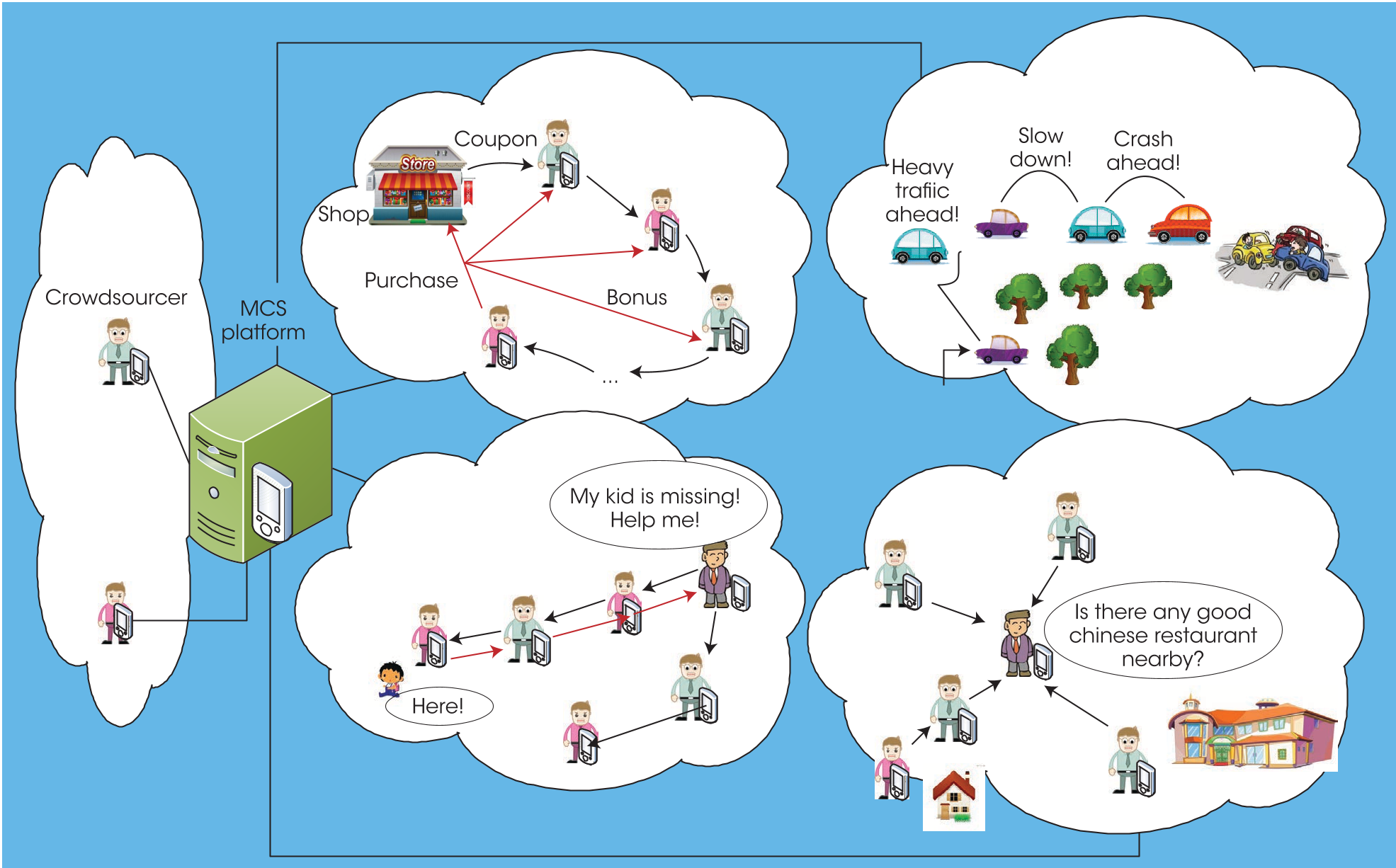 Figure 2: Practical applications ranging from finding local restaurants to notifying commuters of nearby car crashes.
Critical Insight & Future Outlook
The most striking takeaway is the behavioral complexity of WoM MCS. Unlike machine nodes, humans are not "perfectly rational." The authors suggest that future incentive designs must incorporate Behavioral Economics (like Prospect Theory) to understand why people choose to invite certain friends over others.
While the paper outlines a robust framework, the "Privacy vs. Performance" tradeoff remains the primary hurdle. As mobile devices become more powerful, the integration of Zero-Knowledge Proofs (ZKP) or Federated Learning could potentially solve the privacy leaks inherent in social-physical recruitment.
Conclusion
WoM MCS isn't just a technical upgrade; it's a social-technical shift. By acknowledging that our devices inherit our social relationships, we can create crowdsourcing systems that are as dynamic and interconnected as human society itself.