
Deciphering Customer Loyalty in the B&B Industry: A Decision Tree Approach to Social Media Marketing
Increasing customer loyalty in internet marketing
This study identifies key social media marketing factors for the Bed and Breakfast (B&B) industry in Taiwan using a C5.0 Decision Tree algorithm as an embedded feature selection tool. It pinpoints specific techniques like Advertisement, Interaction Quality, and Altruism that significantly impact customer loyalty and revisiting probability.
Executive Summary
TL;DR: This research tackles the resource constraints of Bed and Breakfast (B&B) enterprises by identifying the most impactful social media marketing factors through machine learning. By applying the C5.0 Decision Tree algorithm to survey data from Taiwan, the study winnows down 16 potential marketing techniques to 8 crucial drivers of customer loyalty, including interaction quality and altruism.
Positioning: This work bridges the gap between high-level e-Marketing theory and the practical, limited-resource reality of small-scale tourism enterprises, transitioning from "doing everything" to "doing what matters."
The Resource Dilemma: Why Small B&Bs Struggle
The rise of Electronic Word of Mouth (e-WOM) has made social media the primary battleground for travelers' decisions. However, B&B owners face a paradox: while 89% of marketers see increased exposure through social media, only 50% see a direct correlation with sales.
The problem is twofold:
- Resource Scarcity: Small B&Bs lack the dedicated marketing teams that large hotels possess.
- Insight Gap: There is a significant disconnect between what B&B owners think attracts customers (e.g., purely "unique characteristics") and what customers actually value (e.g., "pricing" and "responsiveness").
Methodology: Feature Selection via Decision Trees
The core innovation of this paper lies in using Decision Trees (DT) not just for prediction, but as an Embedded Feature Selection tool. Instead of assuming all social media activities are equal, the authors look for "Information Gain" to see which variables actually move the needle on loyalty.
The 6-Step Workflow
- Factor Definition: Distilling 16 candidate factors (Q1-Q16) from literature.
- Survey Design: Capturing stakeholder views from both customers and owners.
- Data Collection: 210 valid samples across diverse demographics.
- Feature Selection (C5.0): Using 10-fold cross-validation to ensure model robustness.
- Rule Extraction: Converting the tree logic into readable "IF-THEN" marketing rules.
- Synthesizing Conclusions.
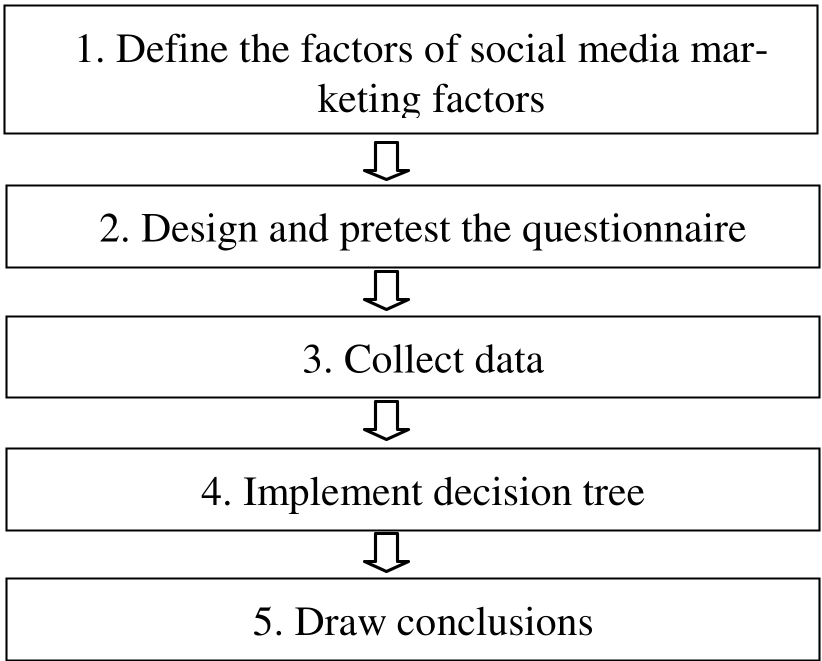 Figure 1: The research procedure illustrating the data-to-insight pipeline.
Key Results and Discovered Rules
The study evaluated 10 different "folds" of data to find the most accurate model. Fold #2 emerged as the winner with the lowest error rate (28.6%), yielding a set of actionable rules.
The Critical Eight Factors
The model identified 8 factors as the "Minimal Viable Marketing" set for B&Bs:
- External Reach: Advertisement (Q4).
- Engagement: Beacons/Polls (Q6) and Interaction Quality (Q10).
- Psychological Appeal: Altruism (Q13), Socialization (Q14), and Relaxation (Q15).
- Presentation: Aesthetics and Visual Quality (Q9).
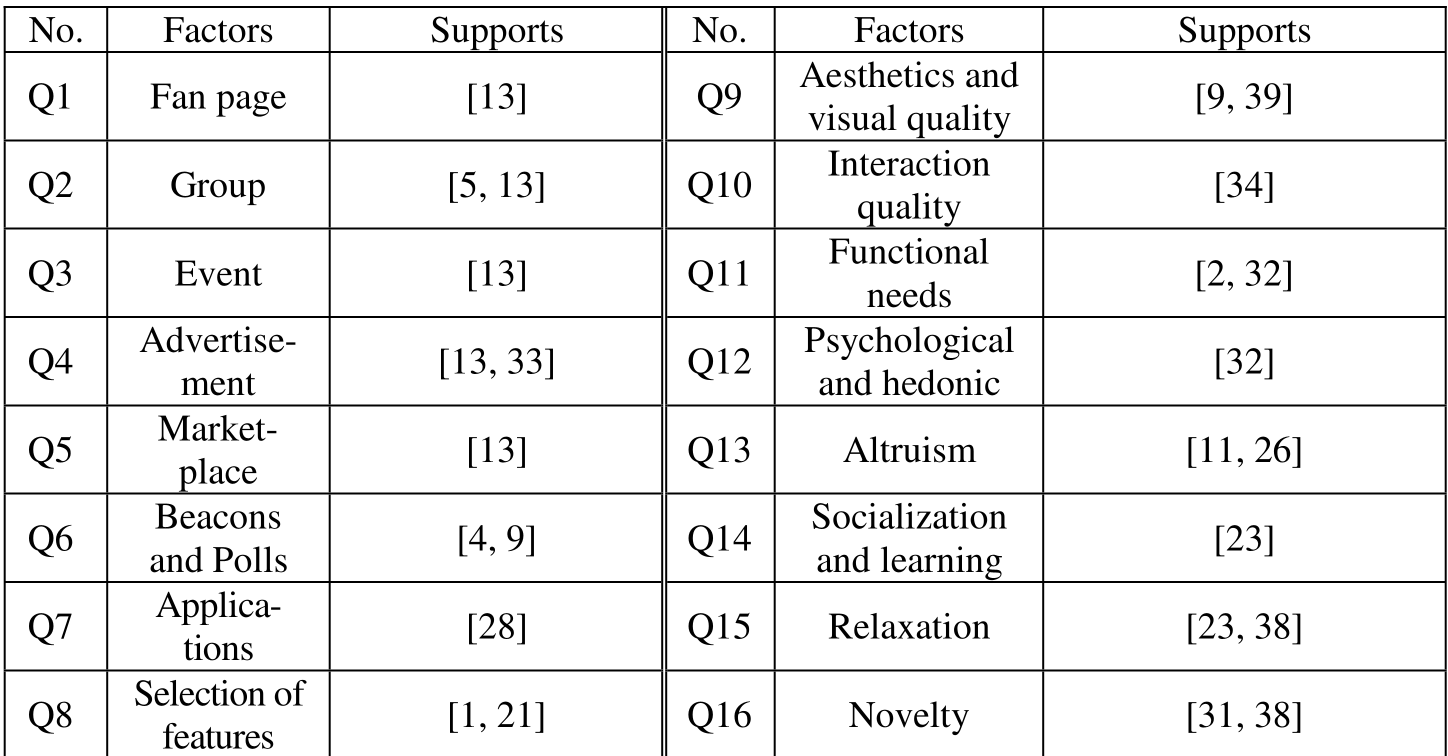 Table 1: The 16 candidate factors analyzed by the Decision Tree.
One of the most striking findings was the Time Gap: 88% of B&B owners spend less than 3 hours a week on social media, whereas a significant portion of customers are searching for information much more actively. This "interaction deficit" is a primary barrier to building long-term loyalty.
Critical Analysis & Industry Impact
Takeaway for Practitioners
If you are a B&B owner, stop trying to manage every platform. This study proves that focusing on Interaction Quality (Q10) and Visual Aesthetics (Q9) on a single platform like Facebook is more effective than a thin presence across multiple channels.
Limitations
- Regional Bias: The data is centered on Taiwan's B&B market; cultural nuances in social media usage (e.g., Instagram vs. Facebook) might change the weight of visual factors.
- Static Snapshot: Consumer loyalty in the digital age is highly volatile; the 2013 data context may not account for modern short-video trends (TikTok/Reels).
Future Outlook
Future research should integrate Sentiment Analysis of the actual comments (e-WOM) alongside these structural factors to provide a 360-degree view of the customer's "Voice."