
Deciphering Customer Loyalty: A Decision Tree Approach to B&B Social Media Marketing
Increasing customer loyalty in internet marketing
This study identifies key social media marketing factors for the Bed and Breakfast (B&B) industry in Taiwan using a C5.0 Decision Tree algorithm for feature selection. By analyzing survey data from both customers and enterprises, the research isolates critical drivers of customer loyalty, achieving a classification accuracy of up to 73.7%.
TL;DR
In the hyper-competitive tourism landscape of Taiwan, Bed and Breakfast (B&B) owners struggle to balance hospitality with digital marketing. This research employs the C5.0 Decision Tree algorithm to cut through the noise, identifying that factors like Interaction Quality and Aesthetics are the true pivots of customer loyalty, while also exposing a critical "time-gap" between how much owners invest in social media versus what customers expect.
Background & Positioning
Electronic Word of Mouth (e-WOM) has become the lifeblood of the travel industry. For B&Bs—often micro-enterprises with limited budgets—the question isn't whether to be on social media, but how to be there efficiently. This paper positions itself as a pragmatic bridge between machine learning (Feature Selection) and niche business management, moving beyond theoretical marketing to provide an actionable roadmap for resource-constrained entrepreneurs.
The Core Challenge: The Resource Bottleneck
Previous literature has long lauded the power of social media, but it often assumes a level of corporate resources that small B&Bs simply do not possess. The authors identify two primary pain points:
- Human Resource Scarcity: B&B owners are usually busy with daily operations and lack the hours needed for constant digital interaction.
- Technique Overload: With dozens of features (Fan pages, ads, polls, groups), owners don't know which specific "buttons" to push to actually drive repeat visits.
Methodology: Decision Trees for Feature Selection
Instead of a simple statistical mean, the authors used an Embedded Feature Selection approach. By building decision trees, the model inherently identifies the most "informative" variables—those that best split the data into categories of high and low customer loyalty.
The Workflow:
- Factor Definition: 16 candidate factors (Q1-Q16) were derived from literature.
- Data Collection: Surveys from 210 respondents (193 customers, 17 enterprises).
- Cross-Validation: 10-fold cross-validation was used to ensure the model wasn't just memorizing data (overfitting).
- Tree Induction: The C5.0 algorithm generated rules to predict the "Probability of Revisiting."
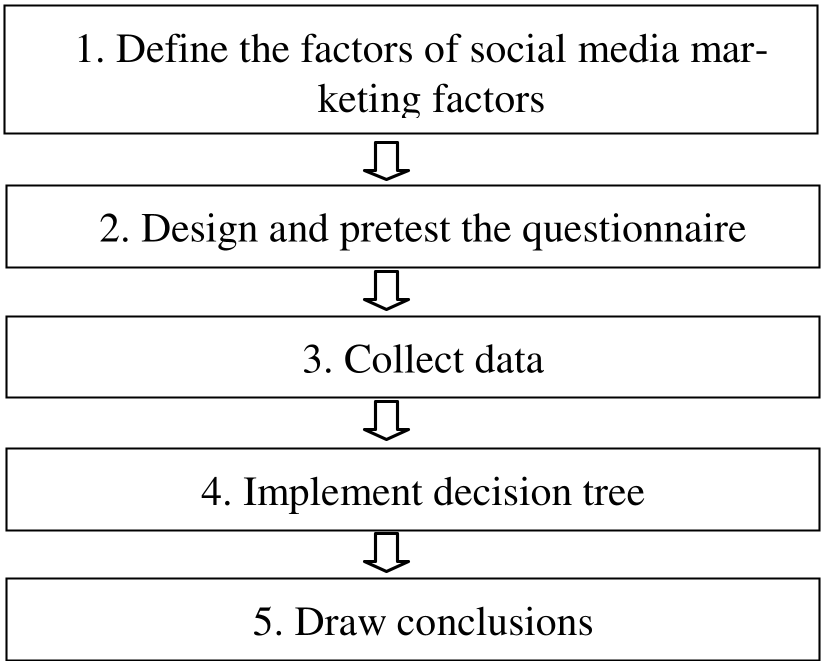 Figure 1: The research methodology flowchart, from factor definition to conclusion.
Key Insights and Results
The findings revealed a stark disconnect between what owners think and what customers want. While owners focused heavily on "Unique Characteristics," customers were equally concerned with "Pricing" and "Interaction Quality."
The "Vital Few" Factors
Out of 16 factors, the following emerged as the most critical for building loyalty:
- Q9 (Aesthetics & Visual Quality): High-quality photos and professional design are non-negotiable.
- Q10 (Interaction Quality): It’s not just about posting; it’s about responding.
- Q15 (Relaxation): The content must evoke the feeling of a getaway.
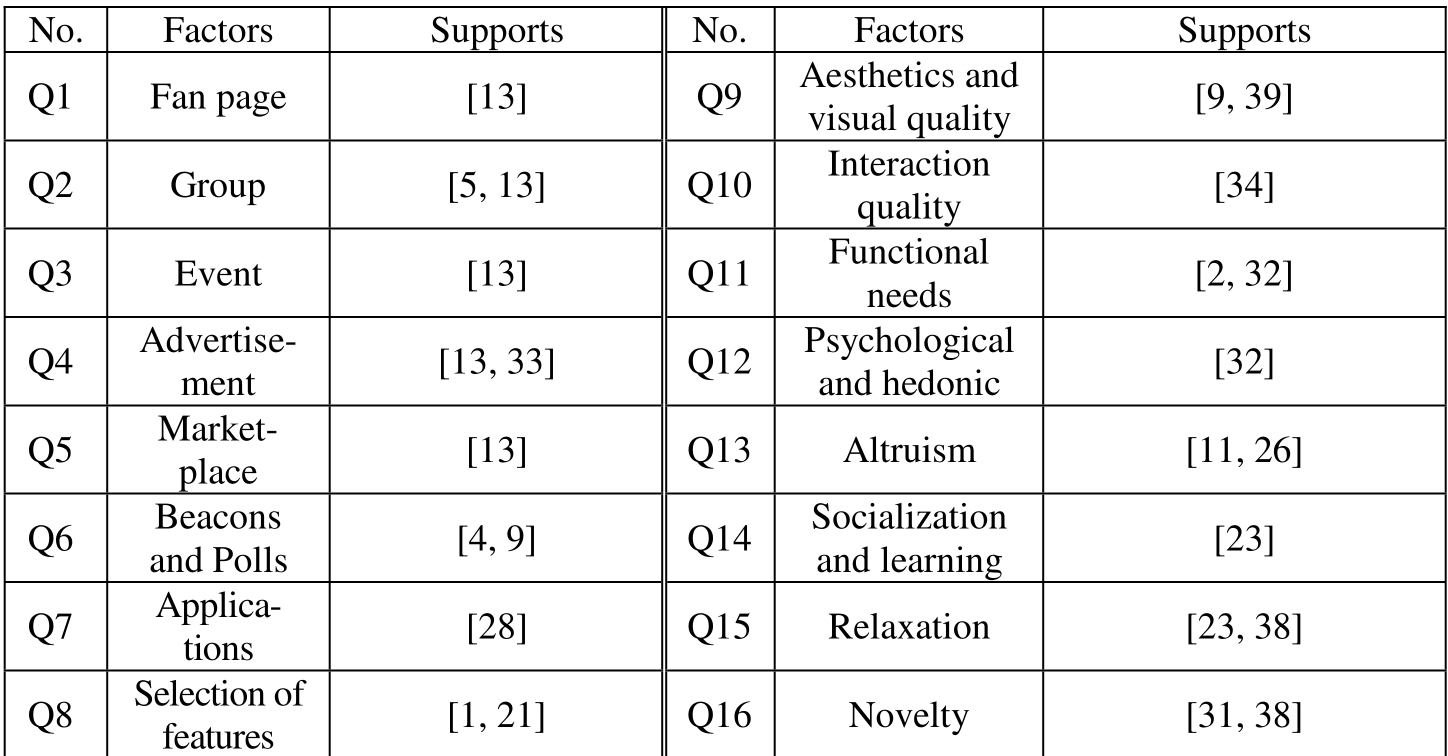 Table 1: The 16 candidate social media marketing factors analyzed in the study.
The decision tree for Fold #2 performed the best, generating rules such as:
- Rule 1: If Selection of features (Q8) is low, but Aesthetics (Q9) and Relaxation (Q15) are high, the probability of loyalty is HIGH.
Synthesis & Takeaways
The paper’s most sobering finding is that 88% of B&B owners spend less than 3 hours a week on social media, while the performance of social media marketing is directly proportional to the time invested.
Strategic Recommendations:
- Quality Over Quantity: If time is limited, focus on high-quality visuals (Aesthetics) rather than managing complex applications or marketplaces.
- Automation for Interaction: Since Interaction Quality is key, owners should leverage tools that help them respond to queries faster.
- Bridge the Gap: Owners must recognize that "Pricing" and "e-WOM" are as important to customers as the "Unique Characteristics" of the property.
Limitations
The sample size for B&B enterprises (n=17) is relatively small compared to customers (n=193), which might introduce bias in the comparison. Future research should look into automated sentiment analysis of actual social media comments to supplement survey data.