
Designing for Truth: A New Framework for Information Auditability in Social Networks
Increasing Information Auditability for Social Network Users
This paper introduces a comprehensive catalog of characteristics for "Information Auditability" in social networks to combat misinformation. It utilizes the NFR (Non-Functional Requirements) Framework to define a structured set of interface mechanisms—such as URL traceability and reputation systems—designed to help users critically evaluate the veracity of online content.
TL;DR
As misinformation continues to plague digital ecosystems, simply "fact-checking" isn't enough. This paper argues for a fundamental shift in interface design: Information Auditability. By integrating a structured catalog of 16 key characteristics into social media architectures, the authors provide a roadmap for building interfaces that empower users to validate, trace, and control the information they consume and share.
The "Sharing Paradox": Why Misinformation Spreads So Fast
In the traditional media landscape, editors and journalists acted as gatekeepers. Today, social media has democratized content creation, but it has also stripped away the filters of veracity. The authors highlight a critical "Sharing Paradox": features that make social networks successful—like one-click sharing and clean, low-friction interfaces—are the same ones that facilitate the spread of hoaxes.
The problem is not just "bad people" spreading "bad info"; it is a systemic lack of auditability. Most current interfaces do not allow a user to see where a link came from, who validated it, or how its content has changed over time.
Methodology: The Auditability Catalog
The researchers didn't just propose a list of ideas; they built a formal Non-Functional Requirements (NFR) catalog. They redefined Auditability as a "Softgoal" that can be broken down into actionable technical requirements.
The Core Pillars of Auditability
- Traceability: The ability to follow the provenance of a piece of information.
- Verifiability: Mechanisms to check if a profile or a piece of data is legitimate (e.g., verified badges).
- Accountability: Providing reasons for system operations and guiding users on how to resolve informational doubts.
- Validity: Testing the "correctness" of information through experimentation or social observation.
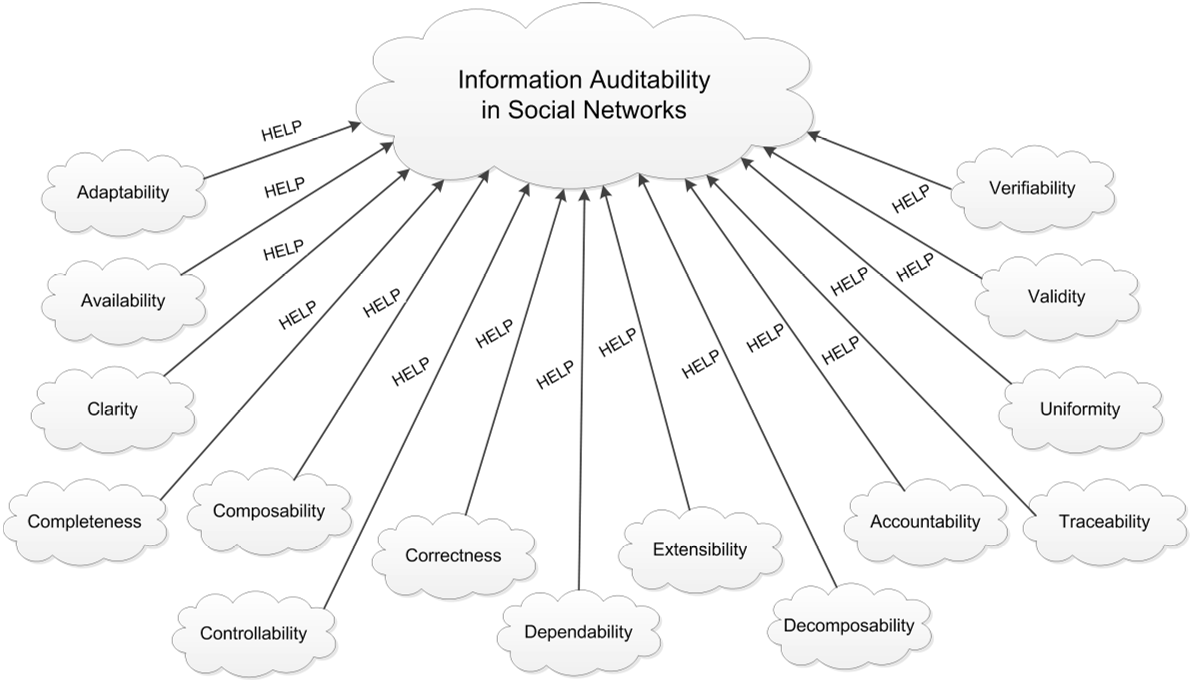 Figure 1: The Softgoal Interdependency Graph (SIG) showing how specific characteristics like Clarity, Dynamism, and Completeness support the top-level goal of Auditability.
Turning Theory into Interface: The Auditability Mechanisms
The most impactful part of this research is the translation of abstract requirements into Implementation Mechanisms. For example, to achieve "Traceability," the authors suggest:
- URL Pre-processing: Using web crawlers to check if a website follows web standards (unreliable sites often don't).
- Metadata Extraction: Automatically showing the site title and Page Rank within the social feed so users don't have to click a suspicious link to know its value.
- Reputation Systems: Displaying the reputation score of friends who interacted with the post.
| Operationalization | Implementation Mechanisms |
|---|---|
| Identification of origin | Show original URL, highlight HTTPS |
| Metadata Visualization | URL preview, auto-hashtags, Page Rank check |
| Node Identification | Reputation systems to validate user interaction |
Prototyping the Future News Feed
The authors propose a redesigned news feed that makes the "skeletons" of information visible. Instead of a simple image and a "Like" button, the audit-friendly feed includes:
- Automated Tags: Keywords pulled from the source metadata.
- Social Trust Indicators: Visual cues showing which friends have interacted with the content and their respective "reputation" scores.
- Transparency Dialogs: Easy feedback loops for users to report broken or suspicious links.
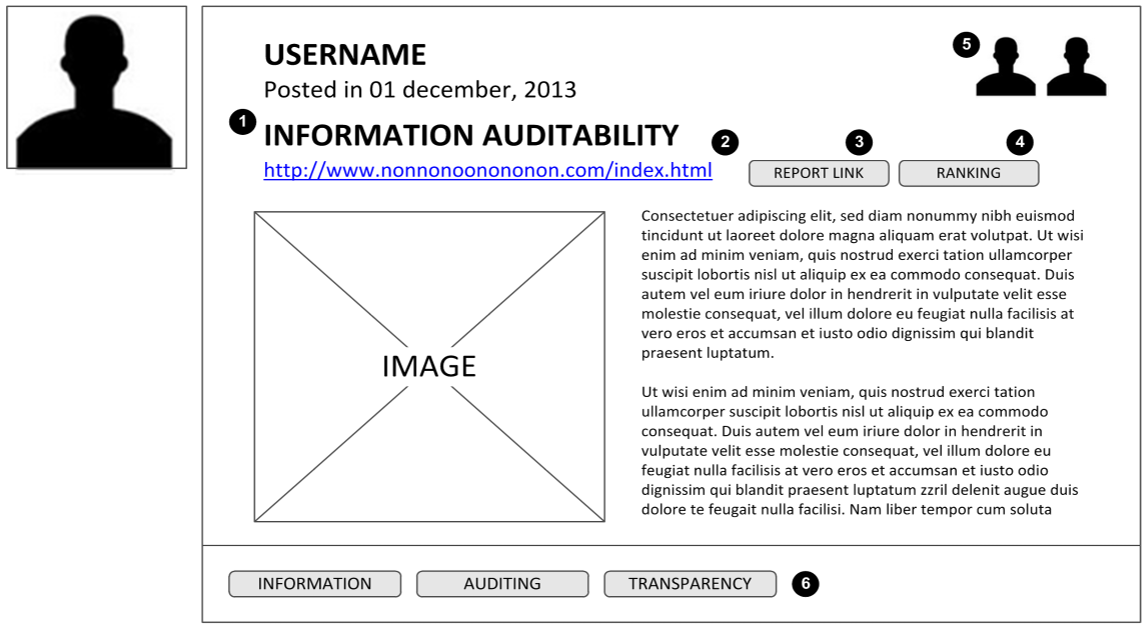 Figure 2: A prototype of an auditable post interface featuring metadata titles, reputation markers, and automated tagging.
Critical Insight & Conclusion
The fundamental takeaway of this work is that Transparency is a multi-dimensional quality. You cannot achieve a "truthful" social network by just hiring more fact-checkers. Instead, you must build the "Auditor" into the user.
Limitations: While the framework is robust, its success relies heavily on user participation and the accuracy of automated crawlers. Additionally, there is a risk of "information overload"—if we show too much audit data, users might ignore it all.
Future Outlook: The next step for this research is to establish international interface standards. Much like we have standards for accessibility (WCAG), we may soon need a Standard for Auditable Design to ensure that "The Truth" isn't a premium feature, but a structural guarantee.