
Beyond Static Graphs: Incremental Three-Way Concept Discovery in Social Networks
Incremental construction of three-way concept lattice for knowledge discovery in social networks
This paper introduces a pioneering framework for the incremental construction of Three-Way Concept Lattices (3WCL) specifically designed for dynamic social networks. By leveraging a combination of three-way decisions and Formal Concept Analysis (FCA), the authors propose the SNS-AE and SNS-OE algorithms, achieving state-of-the-art efficiency in knowledge discovery for evolving formal contexts.
TL;DR
In the era of massive social data, static analysis is no longer sufficient. This paper introduces the first incremental framework for Three-Way Concept Analysis (3WCA), tailored for dynamic social networks. By introducing the SNS-AE and SNS-OE algorithms, the researchers have managed to slash computation time by up to 28%, enabling real-time discovery of polarized groups and hidden knowledge patterns as networks grow.
The "Static" Bottleneck in Knowledge Discovery
Formal Concept Analysis (FCA) is a bedrock of data mining, but it traditionally follows a binary logic: an object either has an attribute or it doesn't. Three-Way Concept Analysis (3WCA) improved this by adding a "neutral" or "uncertain" zone, mirroring human decision-making (e.g., Voting: For, Against, Abstain).
However, current 3WCA algorithms act as if the world is frozen. If a new user joins a social network, these algorithms must rebuild the entire concept lattice from scratch. In a network like Twitter or Facebook, this is computationally suicidal. The authors recognized that social networks are unique: they are symmetric (if A is a friend of B, B is a friend of A) and incremental.
Methodology: The AE/OE Composite Strategy
The core innovation lies in how the authors handle "Increments." Instead of re-calculating the whole lattice, they focus on two types of expansion:
- Attribute-Incremental (AE): When new features or interaction types are added.
- Object-Incremental (OE): When new users join the network.
The authors defined a Composite Operator that selectively merges the concept lattices of the original context () and its complement ().
The Mathematical Intuition
The "magic" happens in Theorem 6. The authors proved that in social networks (represented by symmetric adjacency matrices), the Attribute Export (AE) concepts and Object Export (OE) concepts are mirrors of each other.
- Insight: If you know the AE concepts, you can derive the OE concepts just by flipping the labels. This effectively halves the required computation.
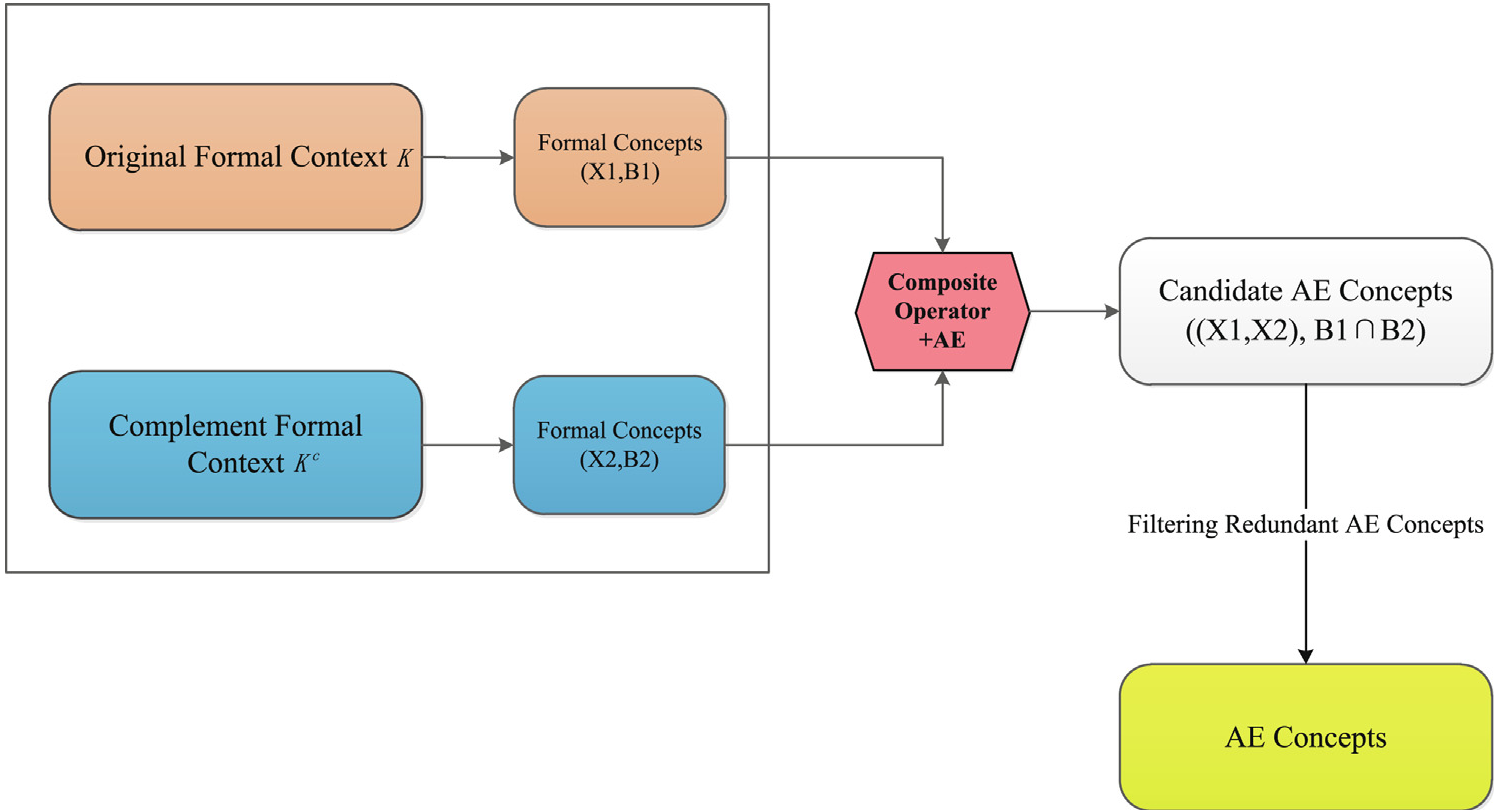 Fig 1: The composite operator workflow for balancing original and complement concepts.
Experiments: Speed Meets Scaling
The researchers tested their algorithms, SNS-AE and SNS-OE, against the current SOTA (Yang’s non-incremental method).
- Efficiency: The incremental approach showed an 18% to 28% speedup.
- Symmetry Factor: By using the optimized symmetry theorem, the social-incremental runtimes dropped even further, proving that theoretical properties directly translate to hardware performance.
 Table 1: Runtime comparison highlighting the superiority of incremental updates over static rebuilding.
Case Study: Detecting Polarized Groups
To prove real-world utility, the authors analyzed the AdjWordNet (a network of synonyms and antonyms). The algorithm successfully identified "Polarized Groups." For example, it could partition words into two sets where one set contains synonyms (e.g., refined, smooth) and the opposite contains their antonyms (e.g., raw, rough, rude).
This suggests that 3WCA is not just a mathematical curiosity—it is a powerful tool for Natural Language Processing (NLP) and Opinion Mining.
Critical Insight & Future Work
The beauty of this work is its recognition of Symmetry. While many FCA researchers focus on general contexts, focusing on the specific topology of social networks allowed for an optimization (the extent-intent swap) that general-purpose algorithms missed.
Limitations: Currently, the model assumes "1" and "0" relations. However, real social relations are often weighted (e.g., frequency of interaction). Future research should extend this incremental approach to Fuzzy Three-Way Concepts to capture the strength of social ties.
Conclusion
This paper marks a transition from descriptive social network analysis to real-time cognitive inference. By making 3WCA incremental, we can now track the birth and death of social communities as they happen, rather than looking at a snapshot of the past.