
Digital Beat: How Facebook is Redefining Community Policing in Urban India
9041_Social networks for police and residents in India exploring online communication for crime prevention.
This study investigates the use of Online Social Networks (OSN) for community policing in a developing nation Context. By analyzing the Bangalore City Police (BCP) Facebook page, the researchers demonstrate how Facebook serves as a platform for residents to share actionable crime data and interact with law enforcement. The work shows that OSN can transition policing from individualistic reporting to collective community action.
TL;DR
This research explores the digital frontier of public safety by analyzing how the Bangalore City Police (BCP) uses Facebook to interact with citizens. Moving beyond mere announcements, the study finds that residents provide high-value, "actionable" crime data—including specific times and locations—while using the platform to hold the police accountable. This marks a shift from private, individual complaints to public, collective community action.
Contextualizing the Digital Shift
In many developing nations, the police are often viewed through the lens of the "coercive arm of the state." Historically, this image has led to under-reporting and a lack of trust. However, the rise of Online Social Networks (OSN) has created a new, transparent middle ground. Unlike previous studies that focused on "event-driven" social media use (like Hurricane Sandy), this paper dives into the routine, day-to-day interactions that define the relationship between 10 million residents and their local law enforcement.
The "Actionable" Insight: Beyond General Complaints
One of the most significant findings is that social media posts aren't just "noise." They contain high-density information that can be used for operational decision-making.
Methodology & Architecture
The researchers analyzed the communication flow using two primary lenses:
- Victimization Theory: Understanding if people report crimes they personally experienced (Direct) or witnessed (Indirect).
- Communication Dynamics: Analyzing whether the interaction is "Instrumental" (task-oriented) or "Expressive" (relationship-oriented).
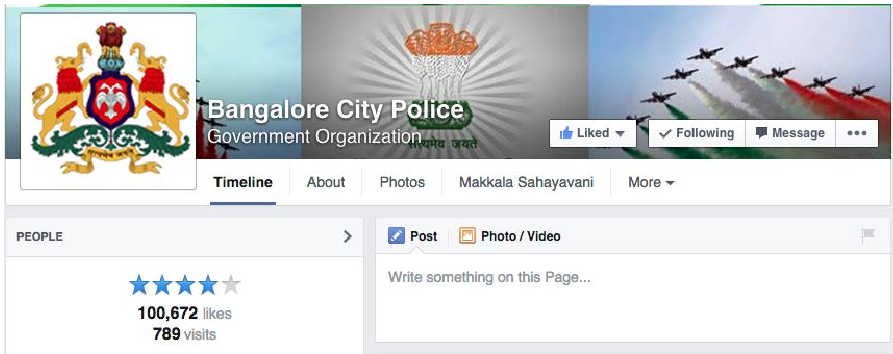 Figure 1: The Bangalore City Police Facebook page serves as the digital hub for over 100,000 residents.
Key Findings: Accountability in the Public Eye
The study highlights a fascinating contrast in communication styles. While residents frequently use informal language, slang, and emotional appeals ("Please help," "Kudos"), the police maintain a strictly formal and polite tone.
- The Accountability Loop: By posting publicly, residents force a level of transparency. When a resident asks "Where is our police?" following a crime, the subsequent police response (or lack thereof) is visible to the entire community.
- Spatial Awareness: Residents often include precise landmarks and times (e.g., "Saturday evening... between Freedom Park and Cubbon Park"), essentially providing the police with a real-time heat map of crime concerns.
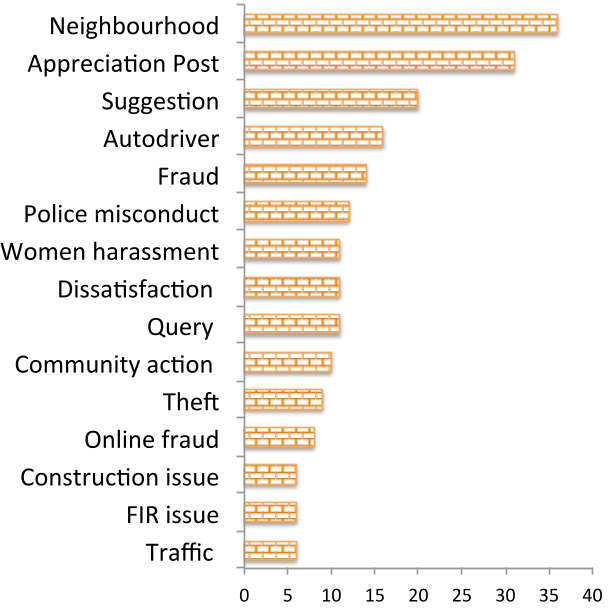 Figure 2: Analysis of spatial data provided by residents in their Facebook posts.
Understanding the "Fear of Crime"
Through lexical analysis (Word Trees), the authors identified that "fear" and "worry" are primary drivers for OSN engagement. Interestingly, OSN acts as a support system; when an individual posts about being victimized, other residents chime in with support and solutions, effectively turning an isolating experience into a collective community response.
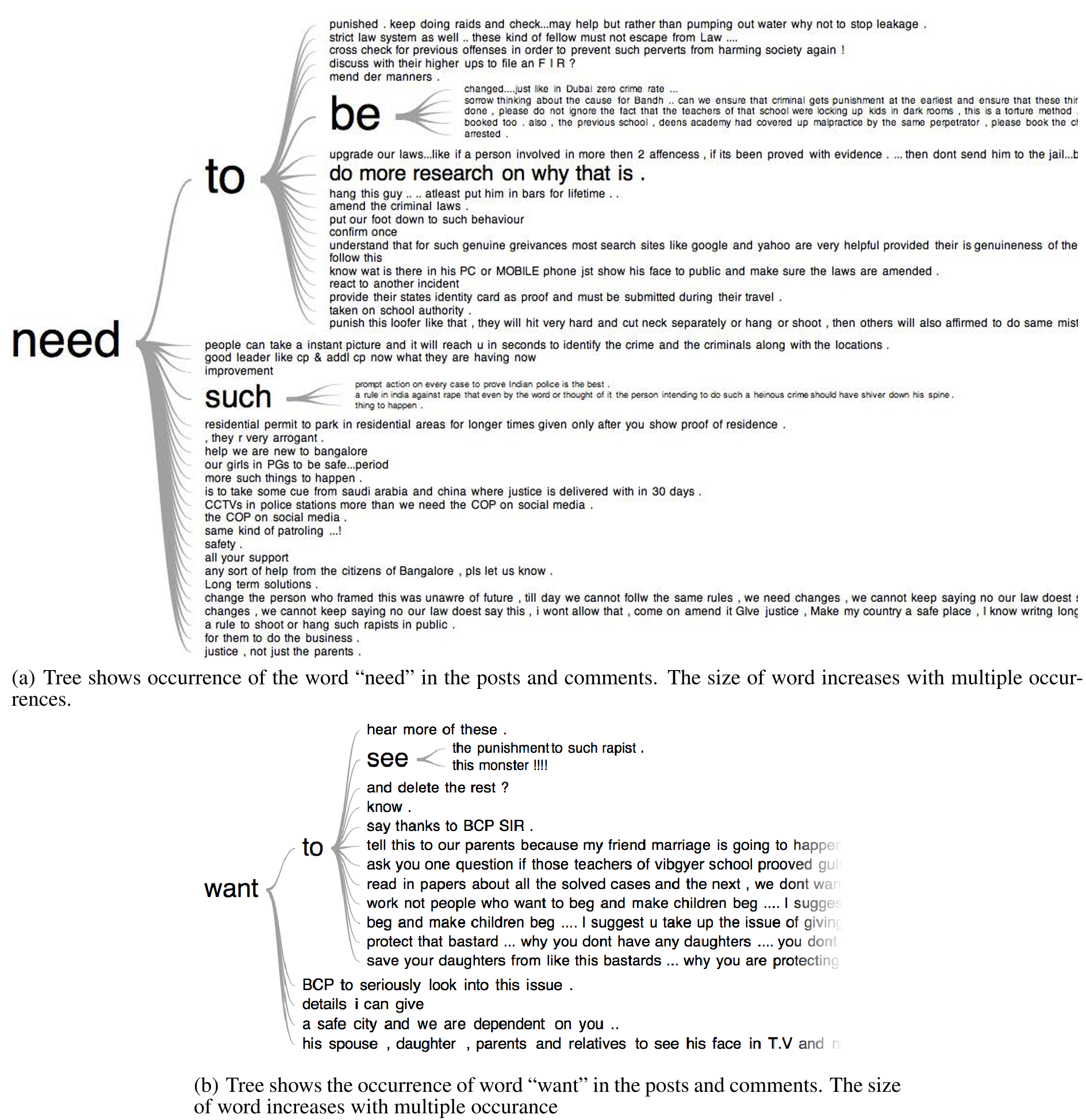 Figure 3: Word Tree visualization showing the primary "Needs" and "Wants" expressed by the community.
Critical Insight & Conclusion
The study concludes that for OSN to be a truly effective tool for crime prevention in developing countries, it must become more "observable."
Takeaway for Future Systems: Technologists need to build tools that help police filter "actionable" messages from "acknowledgments" and "appreciation." Currently, crime-critical data can get lost in the noise. Furthermore, while the police's "instrumental" (formal) approach maintains professional boundaries, incorporating a more "expressive" style could potentially further increase community trust.
Limitations: The study is limited to Facebook and a specific one-month window. Future work is needed to compare these dynamics across platforms like Twitter (X) and YouTube, where the target demographics may vary significantly.