
Beyond Unicode: Restoring Indigenous Identity through Cultural-Value Emojis
Developing an Indigenous Cultural Values Based Emoji Messaging System: A Socio-Technical Systems Innovation Approach
This paper introduces a socio-technical systems approach to develop an Indigenous Cultural Values Based Emoji Messaging System. By digitizing the "Oroo'" sign language of the Penan community in Borneo, the authors aim to combat the Western cultural hegemony of universal Unicode emojis.
TL;DR
While the world communicates through a standardized set of Unicode emojis, indigenous communities face a unique form of "digital imperialism." This paper proposes a Socio-Technical Systems Innovation approach to bridge this gap, specifically working with the Penan community of Borneo to transform their traditional Oroo’ sign language into a modern, culturally-resonant digital messaging system.
The Problem: The Invisible Hegemony of the Smiling Face
The "universal" emoji is not as universal as we think. Existing research highlights a critical pain point: Ambiguity. While basic emotions like fear or anger might be cross-cultural, complex social values like respect, guilt, or pride are deeply culturally determined.
For the indigenous youth in places like Malaysian Borneo, the adoption of standard mobile platforms creates a "generational divide." As they embrace global digital culture, they inadvertently disconnect from their traditional roles and the authority of elders. The authors argue that current ICT4D (Information and Communication Technologies for Development) efforts fail because they focus on Hardware rather than Humanity.
Methodology: The TRIZ Framework for Cultural Preservation
The core of this research is a shift from Etic (outsider-led) to Emic (insider-led) design. Instead of simply drawing "local versions" of existing emojis, the researchers used a TRIZ-based Socio-Technical Model:
- Control System: Defining design parameters through co-creation with community stakeholders.
- System Resources: Digitizing the Oroo’ symbols—a traditional Penan language made of twigs and leaves used for forest communication.
- Transmission/Flow: Mapping how storytelling constructs and cultural interactions flow through digital Instant Messaging Services (IMS).
- Working Unit: The final messaging app that grants the Penan ownership over their digital narrative.
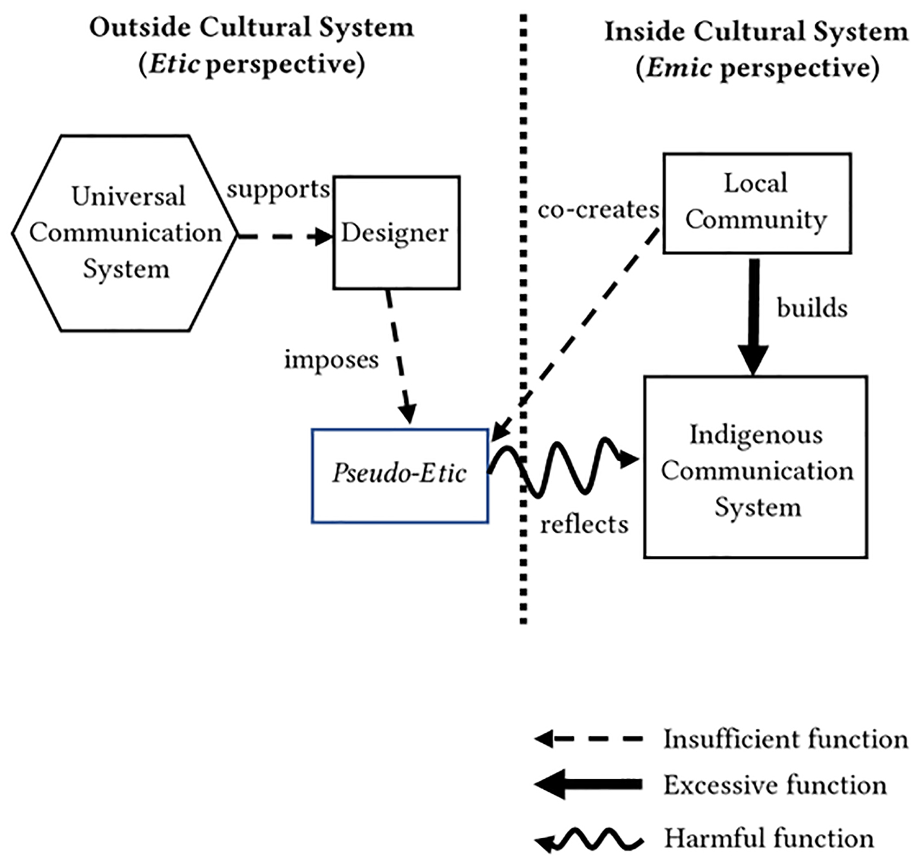 Figure 1: The collaborative model shifting from outsider-driven (Etic) to insider-driven (Emic) design.
Visualizing the Knowledge: The Oroo’ System
The Penan community uses Oroo’, a sophisticated visual language. For example, a specific arrangement of natural materials can mean: "You are invited to put up a night in this hut." By archiving these symbols, the project creates a "Legacy Archive" that serves as the "fuel" for the new emoji system.
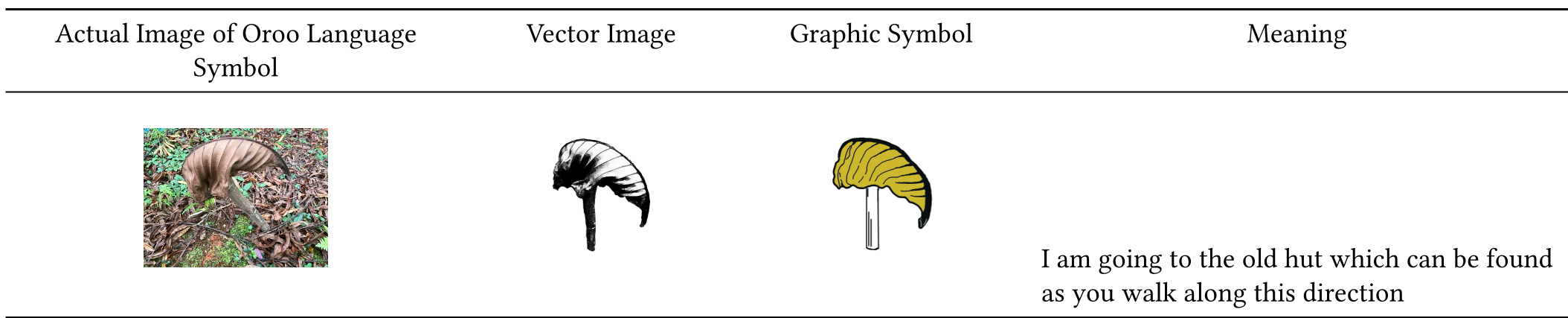 Table 1: Example of a traditional Oroo’ sign and its deep contextual meaning.
Impact and Results
By categorizing indigenous communication into five distinct forms—including Folk Media and Deliberate Instruction—the researchers ensured the system didn't just support "chatting" but also tribal governance and elders' instructions.
- Cultural Resilience: Prevents the "identity shift" where youth lose touch with traditional values.
- Effective Communication: Removes the ambiguity of Western facial expressions that don't translate to tribal social norms.
- Digital Humanism: Moves the needle from ICT4D 2.0 (participation) to ICT4D 3.0 (ownership).
Critical Insight: Who Shapes Whom?
The most profound takeaway from this work is the challenge to the status quo: "Should technology shape humans, or should humans shape technology?"
By breaking the Unicode monopoly, the authors demonstrate that technical efficiency (speedy messaging) does not have to come at the cost of cultural extinction. However, a remaining challenge (limitation) is the scalability of such bottom-up approaches—how can we empower thousands of diverse indigenous groups without demanding a 20-year commitment for each, as was the case here?
Future Outlook
This work sets a precedent for Indigenous Knowledge Systems (IKS) to be treated as high-level logic for software architecture. We expect to see these "value-based" interaction models applied to AI agents and NLP (Natural Language Processing) for low-resource languages in the near future.