
IDR-Model: Balancing Medical Expertise with Patient Preferences in Social Networks
Individual Doctor Recommendation Model on Medical Social Network
The paper proposes the Individual Doctor Recommendation Model (IDR-Model), a comprehensive framework designed to move beyond simple authority metrics. It combines Time-constraint Probability Factor Graph (TPFG) for relationship mining, Ranking SVM for doctor authority calculation, and a weighted average method to incorporate personal patient preferences.
TL;DR
Finding the "right" doctor is often a trade-off between expertise and logistics. This paper introduces the IDR-Model, which uses probabilistic factor graphs and Ranking SVMs to recommend doctors by harmonizing medical authority with a patient’s unique profile, including their location and budget.
Positioning: This work bridges the gap between traditional Expertise Search (like ArnetMiner for academics) and Medical Informatics, specifically focusing on the social-relational aspect of healthcare.
Problem & Motivation: Beyond the "Best" Doctor
In many healthcare systems, patients suffer from "expert worship," seeking high-ranking doctors for minor issues. This creates two problems:
- Waste of Resources: Experts are bogged down by simple cases.
- Patient Dissatisfaction: High costs and long travel distances often outweigh the benefits of an expert's diagnosis.
The authors argue that a recommendation isn't just about who is the most famous; it's about the Success Rate of that specific doctor helping a specific patient based on economic and regional constraints.
Methodology: The IDR-Model Architecture
The proposed system operates through a five-layer stack. The core innovation lies in how it transitions from raw social network data to personalized advice.
1. Mining Relationships with TPFG
Before recommending, the system must understand who has treated whom. Using the Time-constraint Probability Factor Graph (TPFG), the model identifies doctor-patient edges by looking at the probability that a participant is the doctor for patient within a specific time window .
2. Authority Ranking via SVM
To measure authority (AD-CDs), the authors extract four key features:
- M-index: Measuring technical influence within the medical community.
- DomainRel: How well the doctor's scope matches the disease.
- Activity: Frequency of recent treatments.
- Uptrend: Growth in successful outcomes.
These are fed into a Ranking SVM to learn the weights of importance. Notably, the M-index (weight: 4.82) was found to be the most critical feature in defining a "good" doctor.
 Figure 1: The Joint Probability Factor for TPFG mining.
3. Personalization: The Weighted Average
The final recommendation score is a weighted average of:
- Economy Matching Degree (EMD): Mapping patient salary to estimated hospital costs using a Sigmoid function.
- Medical Domain Matching (MDMD): A vector space similarity between disease symptoms and doctor specialties.
- Region Reference (RR): Prioritizing local proximity.
Experiments & Results
The model was validated using 219 valid questionnaires from a real-world dataset.
- Quality of Ranking: In comparison to Reduced SVM (RSVM), the Ranking SVM approach showed higher precision at top-K results, suggesting that the selected features (M-index, Activity, etc.) are highly representative of medical authority.
- Individualized Performance: A case study involving a student patient with "Coronary Heart Disease" demonstrated that the model correctly prioritized a competent local doctor over a world-class expert who was more expensive and further away.
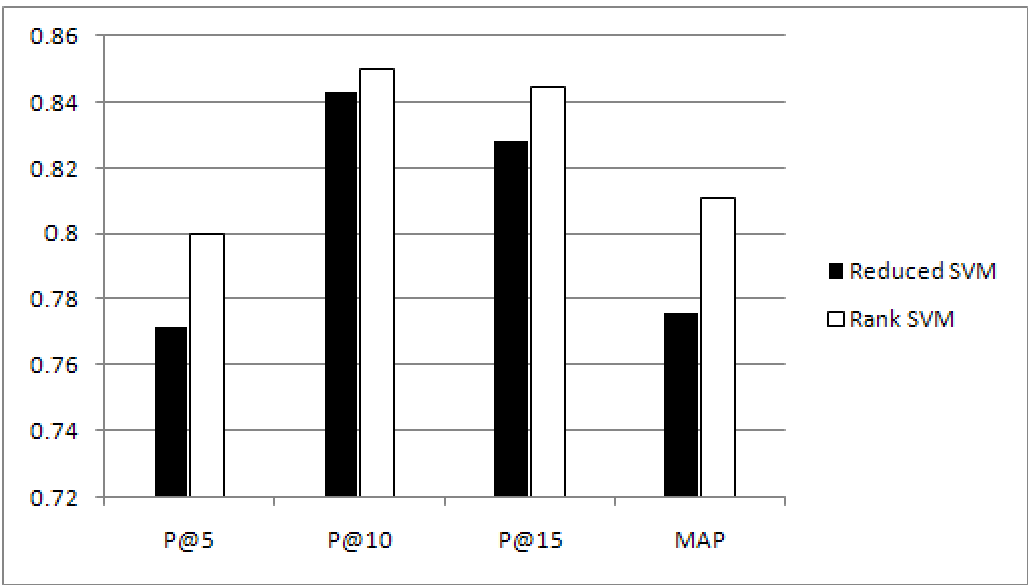 Figure 2: Precision curves (P@k) showing IDR-Model's superiority over baseline methods.
Critical Insight & Conclusion
Takeaway
The IDR-Model successfully demonstrates that "Expertise" is relative. By incorporating Imbalance Ratio (IR) and Kulczinski measures, the model effectively filters social noise to find meaningful medical relationships.
Limitations
- Dataset Scale: The testing was limited to 12 doctors and 256 cases. Real-world medical graphs would be much sparser and noisier.
- Inference Speed: While the authors suggest off-line computation, the Ranking SVM may face scalability issues as the number of doctor pairs grows quadratically.
Future Outlook: Integrating this model with automated symptom extraction (NLP) could create a truly "zero-friction" medical gateway for patients in developing regions where medical resources are scarce.