
Beyond Self-Play: Injecting Social Learning into Evolutionary Checkers
17693_Introducing Individual and Social Learning Into Evolutionary Checkers.
This paper introduces an Individual and Social Learning (ISL) mechanism into an evolutionary Checkers system based on the Blondie24 architecture. By utilizing a "social pool" to store and redistribute high-performing strategies among a population of neural network players, the authors evolved a Checkers player (C10) that significantly outperforms prior evolutionary benchmarks.
TL;DR
Researchers have enhanced the famous "Blondie24" evolutionary Checkers architecture by introducing Individual and Social Learning (ISL). By allowing neural networks to not only evolve through mutation but also "learn from the best" via a collective social pool, they produced a player that dominates previous evolutionary models with over 99% likelihood of superiority.
Background: The Legacy of Blondie24
In the history of AI, "Blondie24" was a milestone—a neural network that learned to play Checkers from scratch without human expert knowledge. However, as critics noted, Blondie's intelligence was "fixed" after training. It could not adapt to new opponents' strategies during its lifetime, nor did it benefit from a collective memory of the best strategies discovered during evolution.
The Problem: The Isolation of Evolutionary Agents
Most evolutionary algorithms treat individuals as isolated entities. A "strong" strategy might be lost if its host individual is mutated poorly or fails to be selected in one generation. Furthermore, there is no "culture" or shared knowledge base for agents to draw upon when they are performing poorly.
Methodology: Individual + Social Learning (ISL)
The authors introduced a structured learning process divided into two frequent cycles:
- Individual Learning (Frequency ): Players play against random opponents to refine their specific weights via an Evolution Strategy (ES).
- Social Learning (Frequency ):
- The Social Pool: The best strategies from each generation are stored in a collective "hall of fame."
- Strategic Adoption: Players with low normalized scores can choose to:
- Copy: Adopt a successful strategy from the pool using roulette wheel selection.
- Innovate: Generate a completely new random strategy to escape local optima.
- Persist: Keep their current strategy in hopes of future improvement.
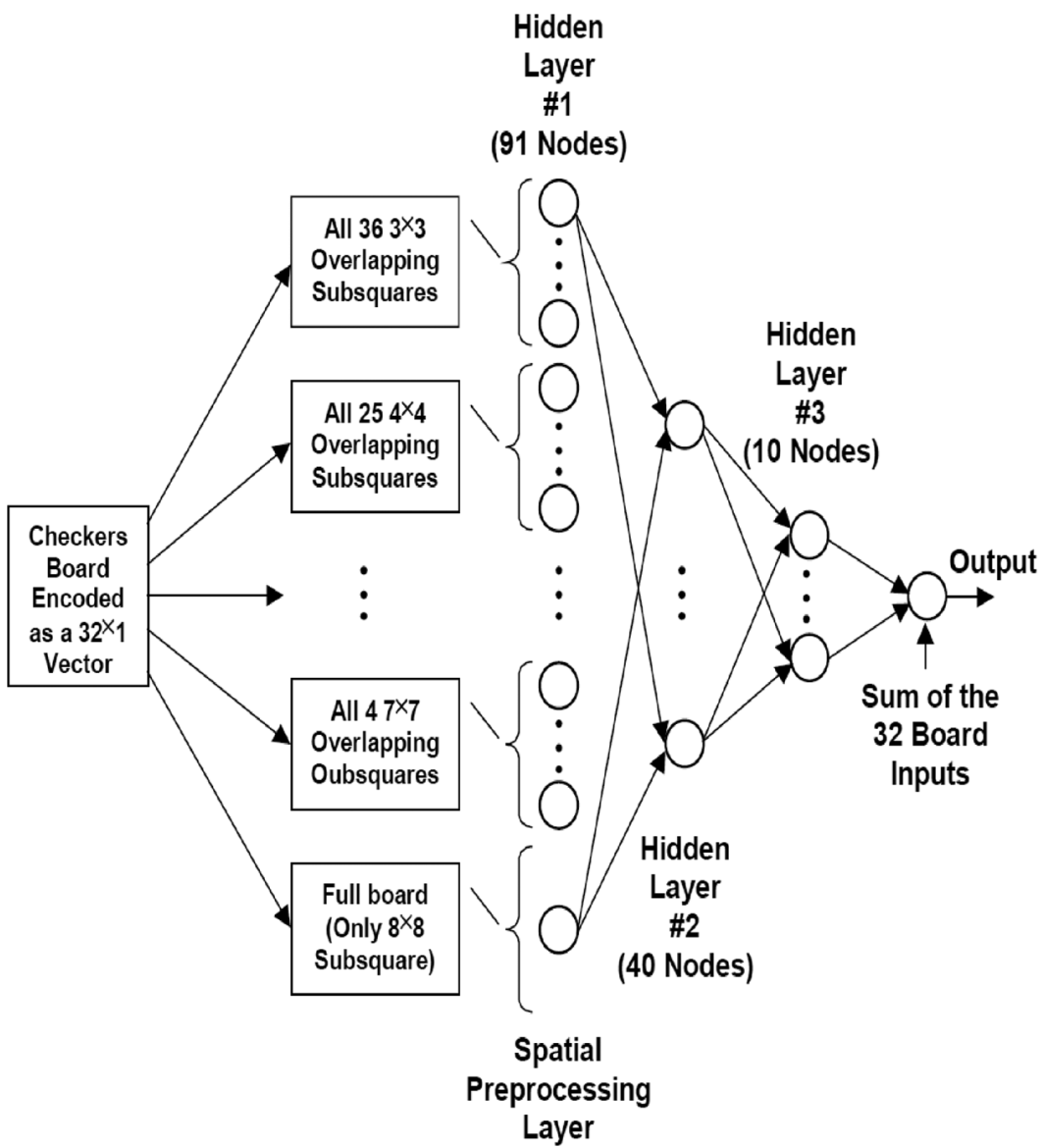 Figure 1: Conceptual overview of the evaluation process in evolutionary Checkers.
Experiments and SOTA Comparison
The authors tested various frequencies for and . The variant named C10 (, ) emerged as the champion.
Key Results:
- Versus Baseline (C0): C10 achieved a 70% win rate across hundreds of games.
- Versus Blondie24-RR: C10 maintained a clear lead, showing that the social pool is more effective than just improving the tournament structure (Round Robin).
- Bayeselo LOS: The "Likelihood of Superiority" for C10 over other social variants was nearly 100% in many trials.
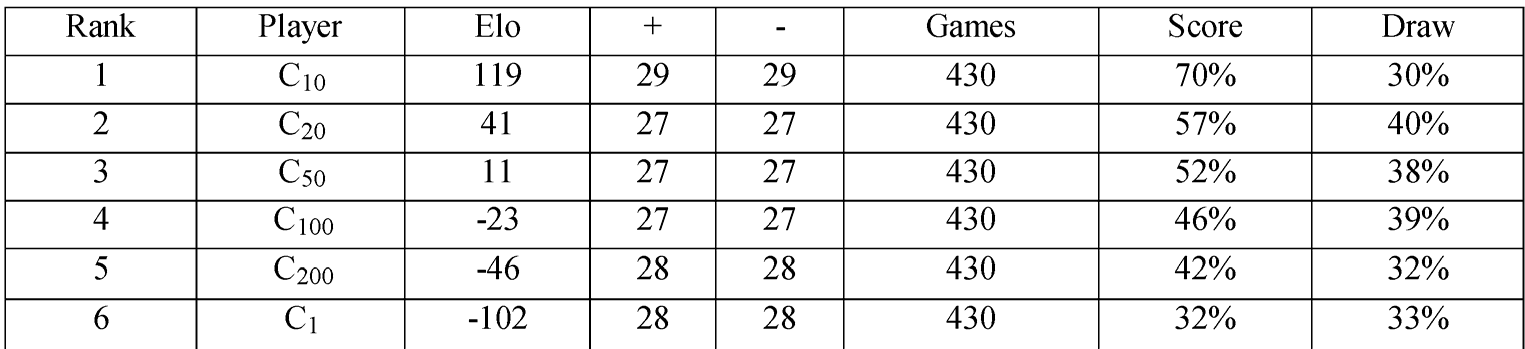 Table XIII: Performance of different social learning configurations showing the dominance of C10.
Critical Insight: Why Social Learning Works
The success of C10 lies in diversity preservation and rapid convergence. By allowing failing agents to "reset" by copying successful ones (Social Learning) or starting fresh (Random Innovation), the algorithm avoids the stagnation often seen in pure self-play. It creates a "cultural memory" that protects the most effective strategic insights from being lost to random mutation.
Conclusion & Future Outlook
This work proves that "social" mechanisms are just as vital for artificial agents as they are for humans. The next frontier, according to the authors, is Continuous Learning: a paradigm where the player continues to update its social pool and weights while playing against humans, effectively creating an AI that evolves in real-time.
Takeaways
- Increasing the social pool size and the frequency of strategy sharing directly correlates with higherElo ratings.
- The Individual/Social Learning mix provides a more robust search of the strategy space than mutation alone.