
Mna: Bridging Isolated Social Silos via Stable Matching
Inferring anchor links across multiple heterogeneous social networks
This paper introduces Mna (Multi-Network Anchoring), a framework for predicting anchor links (one-to-one correspondences) between user accounts across heterogeneous social networks like Twitter and Foursquare. It leverages multi-source features (social, spatial, temporal, and textual) and treats the final alignment as a stable matching problem.
Executive Summary
TL;DR: The paper tackle the "Anchor Link Prediction" problem—identifying if a Twitter handle and a Foursquare account belong to the same person. By combining multi-dimensional features (who you know, where you go, when you post) with a Stable Matching inference engine, the proposed Mna model ensures that every user is uniquely and accurately mapped across platforms, even with minimal labeled data.
Background: This work is a foundational entry in the field of Network Alignment. It moves beyond simple binary classification to a structured prediction framework that respects the physical reality that one person usually has exactly one account per service.
The Core Challenge: Why is Identity Linkage Hard?
Most social networks are "Heterogeneous Information Networks" (HINs). They aren't just lists of friends; they contain timestamps, GPS coordinates, and text. However, prior work suffered from two fatal flaws:
- Feature Isolation: Features like "Common Neighbors" don't work if User A is on Twitter and User B is on Foursquare—their neighbor sets are naturally disjoint.
- Lack of Constraints: Traditional SVMs might predict that one Twitter user matches five different Foursquare accounts. In reality, identity is a one-to-one mapping.
Methodology: Feature Engineering & Global Inference
The authors solve this through a clever two-step pipeline.
1. Extracting Multi-Network Features
To bridge the gap between networks, Mna "extends" classical metrics. For instance, Extended Common Neighbors counts the number of friends in Network A who are already linked (via known anchor links) to friends in Network B.
- Spatial: Shared GPS clusters and average travel distance.
- Temporal: Comparing "online heartbeat" (e.g., does this user post at 2 AM on both platforms?).
- Textual: Bag-of-words similarity using TF-IDF.
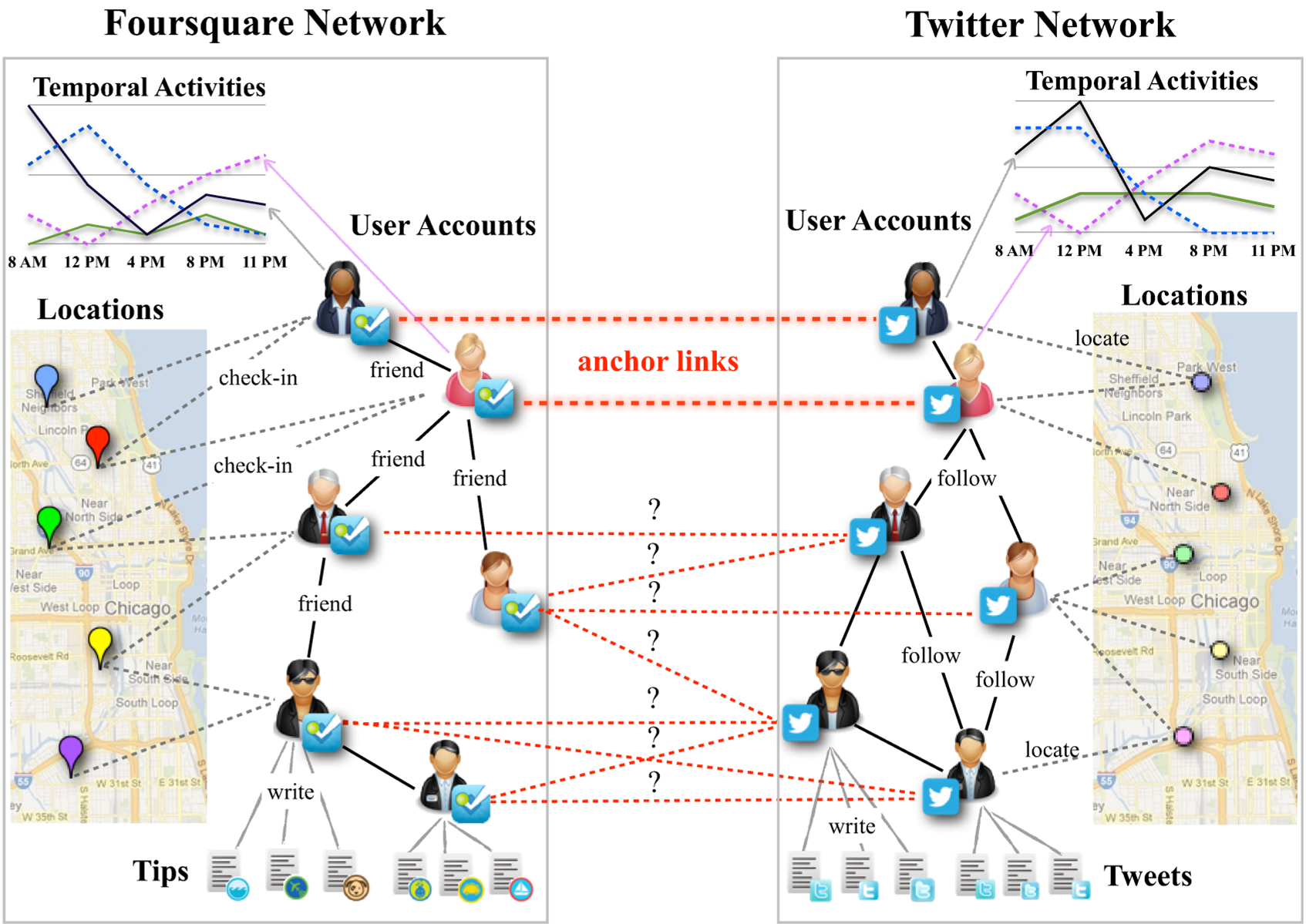 Figure 1: The challenge of aligning accounts across Twitter and Foursquare.
2. The Stable Matching Breakthrough
Instead of just setting a threshold for SVM scores, Mna treats the scores as "Preferences." If User has a higher score with than any other account, "prefers" . By applying the Stable Marriage algorithm, the system ensures there are no "Blocking Pairs"—instances where two users would both prefer to be matched with each other than their current assigned partners. This naturally enforces the one-to-one constraint and handles uncalibrated scores effectively.
Experimental Results
The model was tested on 500 users across Twitter and Foursquare.
- Performance Gain: The "Inference with Constraints" (Mna) provides a massive boost over the constraint-free version (Mna-no). In high imbalance scenarios (ratio 1:40), Mna maintains an F1-score of 0.381 while the baseline collapses to 0.206.
- Ablation Insight: Using all four feature types (Social, Spatial, Temporal, Text) provided the best results, though Social and Spatial features were the strongest individual predictors.
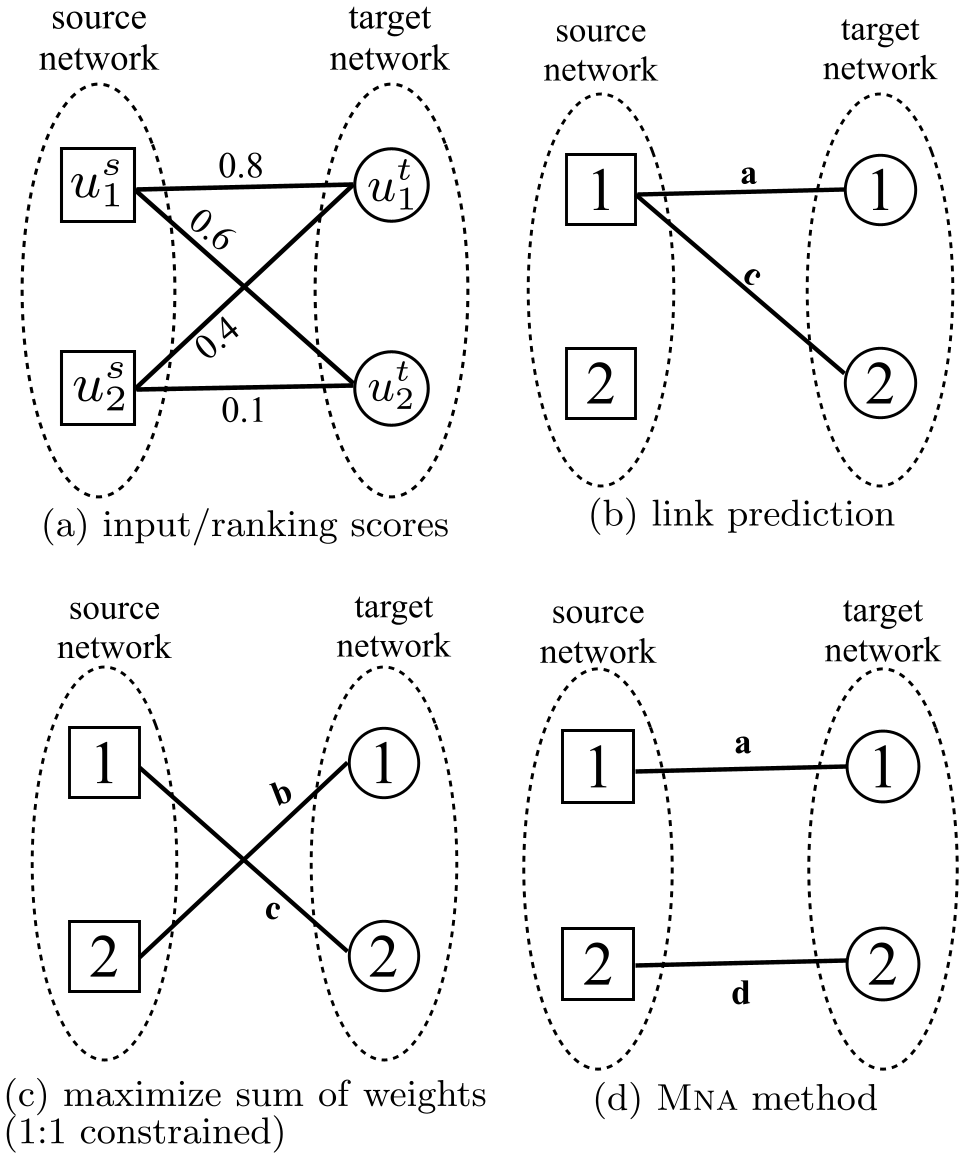 Figure 2: Comparing Fixed Threshold vs. Weighted Matching vs. Stable Matching.
Critical Insight & Conclusion
The true value of this paper lies in its holistic view of user behavior. It recognizes that while our social circles might slightly differ between platforms, our physical constraints (space and time) and linguistic habits (text) are much harder to mask.
Limitations: The model assumes users share some common locations and timestamps. If a user is highly active on Twitter but only checks in on Foursquare once a year, the spatial/temporal features lose their power.
Future Outlook: Modern approaches could replace the manual features here with Graph Embeddings (like Node2Vec or GraphSAGE), but the requirement for a stable matching inference remains a gold standard for ensuring logical consistency in identity resolution.