
Decoding the Fabric of Personality: How AI Infers Who You Are from What You Wear
Inferring intrinsic correlation between clothing style and wearers’ personality
2017-05-11
Summary
Problem
Method
Results
Takeaways
Abstract
This paper investigates the correlation between human personality types (based on MBTI) and clothing styles. It introduces a novel dataset of 10,000 images from 300+ celebrities and proposes a computer vision pipeline—integrating GrabCut, skin detection, and K-means clustering—to predict personality traits through Patch-oriented Mid-level Features (PMF) and SVM classification.
## TL;DR
Researchers have developed an automated system that correlates clothing choices with MBTI personality types. By analyzing colors, patterns, and silhouettes from a dataset of 10,000 celebrity images, the team demonstrated that AI can predict certain personality traits with nearly 70% accuracy, proving that our wardrobe is a quantifiable extension of our inner selves.
## Background: More Than Just Fashion
In the digital age, our "first impression" is often a profile picture or a social media snap. While previous research in computer vision has mastered *what* item someone is wearing, it yields little insight into *who* the wearer is. This paper bridges the gap between **Fashion Psychology** and **Computer Vision**, moving beyond physical attribute detection to deep semantic understanding.
## The Core Challenge: The Semantic Gap
The difficulty lies in the "Semantic Gap"—the distance between low-level data (pixels, RGB values) and high-level concepts (being an Introvert or a Thinker). To solve this, the authors focus on the **Myers-Briggs Type Indicator (MBTI)**, which categorizes individuals into 16 types based on dichotomies like Extraversion (E) vs. Introversion (I).
## Methodology: The Tech Behind the Analysis
The researchers proposed a robust workflow to isolate clothing from noise and extract meaningful data.
### 1. Advanced Image Segmentation
To ensure the AI "sees" the clothes and not the background, the pipeline uses:
* **Face Detection (AAM)**: To establish a spatial anchor.
* **GrabCut Algorithm**: For interactive foreground extraction.
* **Skin Detection**: To filter out skin and focus strictly on the textile area.
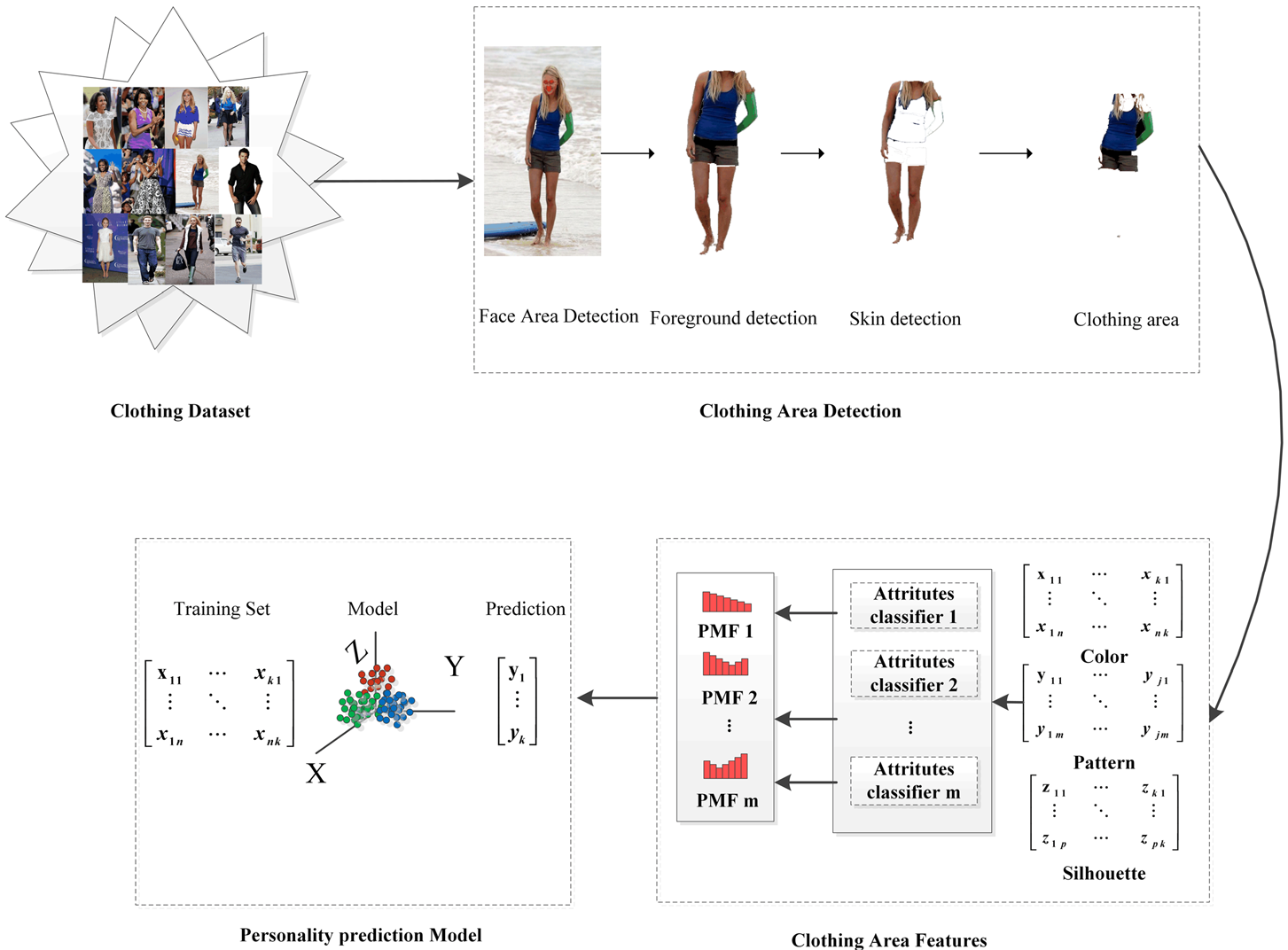
*Fig 1: The proposed workflow from facial detection to SVM classification.*
### 2. Feature Hierarchy
Instead of relying on raw pixels, the study extracts three primary clothing indices:
* **Color (HSV)**: Recognizing that hue and saturation affect human nervous systems and signal mood.
* **Patterns**: Detecting stripes, dots, and plaid which carry subconscious meanings.
* **Silhouette**: Measuring the "outline" (e.g., trim vs. full silhouettes) which impacts perceived power and presence.
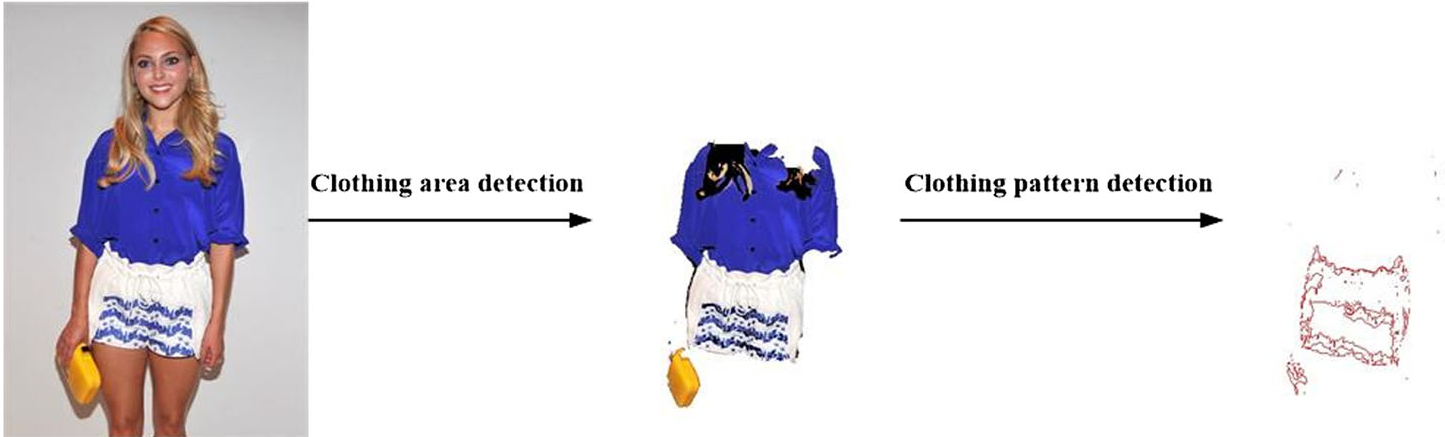
*Fig 2: Clothing pattern features representation (stripes, dots, etc.).*
## Experimental Results: Proving the Connection
The team tested their model on a curated dataset of celebrities (ranging from Mark Zuckerberg to Michelle Obama). By using **Binary Logistic Regression**, they verified which clothing features actually correlate with personality traits.
| Feature Type | Personality Pair | Accuracy (SVM) |
| :--- | :--- | :--- |
| Silhouette | Extraversion - Introversion | **69.36%** |
| Color | Judging - Perceiving | **69.23%** |
| Color | Intuition - Sensing | **68.23%** |
Key findings include:
* **Judging vs. Perceiving (J-P)**: Traits related to order and structure showed the strongest correlation with color and pattern choices.
* **The "Indie Pop" Effect**: Analysis of individuals like Michelle Obama showed a preference for high-value, lower-saturation clothing, signaling a "friendly and positive" personality trait common in the 'Sensing' type.
## Critical Analysis & Future Outlook
**Insight**: The study’s use of **Patch-oriented Mid-level Features (PMF)** is particularly clever. It clusters low-level data into "visual words" that are more representative of style than simple pixel averages.
**Limitations**:
* **Professional Constraints**: The study notes that politicians and military personnel are often forced into uniforms, masking their true personality.
* **Dataset Bias**: Using celebrities ensures high-quality images but might reflect "stylist-chosen" wardrobes rather than purely intrinsic preferences.
## Conclusion
This research provides a scientific foundation for what we’ve intuitively known: our clothes are a non-verbal communication system. For the industry, this opens doors to **"Psychological Recommendation Engines"**—imagine a shopping app that doesn't just suggest what matches your pants, but what matches your *personality*.