
Efficient Influence Maximization: Why Simple Metrics Win in Hub-Sparse Networks
Analysis of Influence Maximization Algorithm in Hub-Sparse Structure Social Network
The paper proposes the concept of "Hub-Sparse Structure Social Networks" and evaluates influence maximization algorithms (Greedy, Degree Centrality, and PageRank) within this specific context. It concludes that Degree Centrality (DC) achieves performance comparable to the Greedy algorithm but with significantly lower computational overhead.
Executive Summary
TL;DR: In specialized social networks (like grain security discussion forums), the structure is uniquely "Hub-Sparse"—characterized by many isolated clusters with single central hubs. This paper demonstrates that in such environments, the computationally intensive Greedy algorithm is unnecessary; the simple Degree Centrality (DC) metric provides nearly identical influence spread with near-zero time cost.
Background: Influence Maximization (IM) is usually treated as an NP-hard problem requiring complex approximations. This work shifts the focus from "general-purpose" algorithms to "topology-aware" selection, identifying a specific class of networks where simple heuristics outperform sophisticated models in ROI.
Problem & Motivation: The Complexity Trap
The standard approach to IM, pioneered by Kempe et al., relies on the Greedy Algorithm. By iteratively selecting nodes that provide the maximum marginal gain in a diffusion model (like Independent Cascade), it guarantees a solution within of the optimal.
However, the authors point out two critical flaws for real-world applications:
- Computational Bottleneck: The complexity of Greedy makes it unusable for large-scale public opinion monitoring.
- Topological Blindness: Most research assumes a highly connected "global" network. In reality, niche thematic networks (e.g., grain security) are fragmented.
Methodology: Highlighting the Hub-Sparse Structure
The core contribution of this paper is the definition of the Hub-Sparse Structure Social Network.
1. Defining the Topology
The authors define this structure via two primary characteristics:
- Group Isolation: Nodes cluster into small groups with few or no links between them.
- Hub Centrality: Each group usually contains only one or a few central points (hubs), while the rest are peripheral "edge nodes."
Quantitatively, they define this via the relationship between edges () and nodes (): And by the ratio of center points () to edge points ():
2. Algorithm Comparison
The study compares three pillars of network analysis:
- Greedy: Local optimization via influence estimation.
- PageRank: Global importance based on link quality and quantity.
- Degree Centrality (DC): Simple local importance based on the number of immediate neighbors.
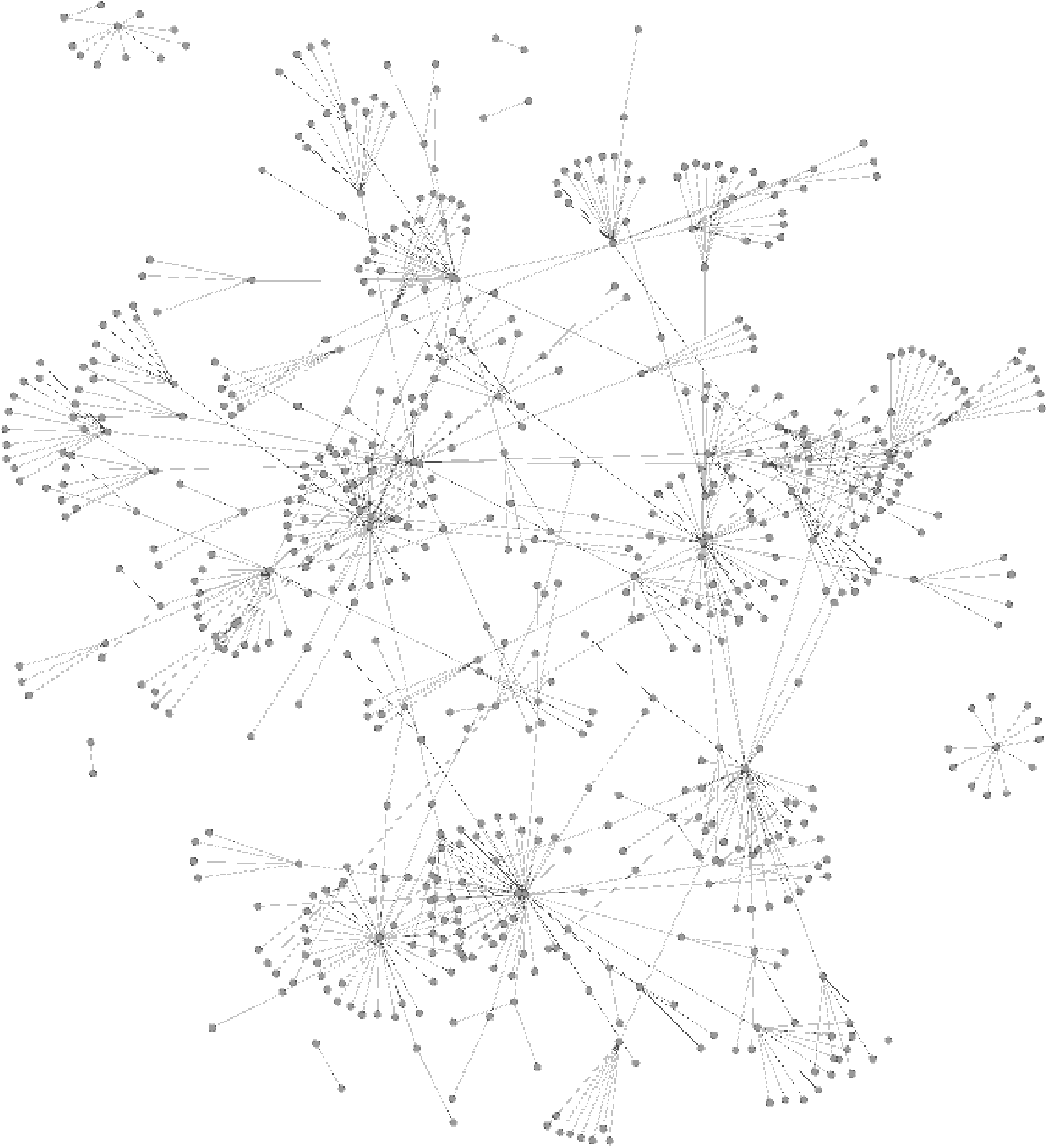 Figure 3: Visualization of the No.1 social network (Tianya Forum data) highlighting the cluster-based distribution.
Experiments & Results
The researchers used real-world data from the Tianya Forum focusing on "grain security" discussions across four network scales.
Spread Range: A Surprising Parity
As shown in the charts below, the spread range for DC, PageRank, and Greedy is virtually indistinguishable across different seed set sizes ().
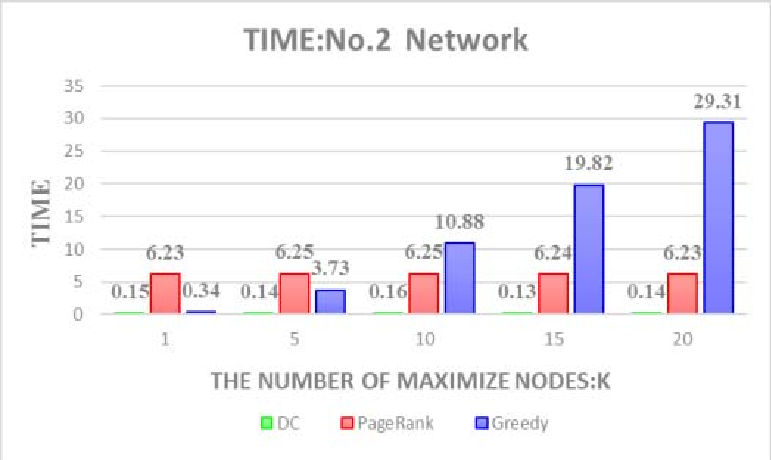 Figure 1: Spread range comparison showing negligible differences between heuristic and greedy methods.
Running Time: The Decisive Factor
The true divergence occurs in efficiency. While Greedy's runtime explodes as increases, DC stays flat.
- DC Complexity:
- Greedy Complexity:
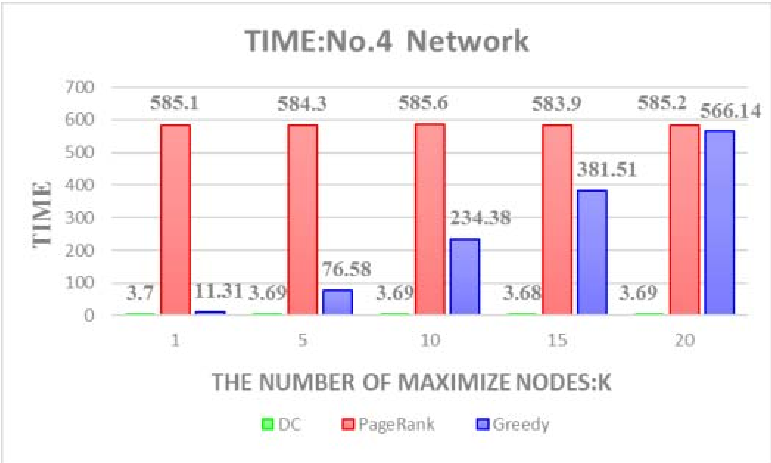 Figure 2: Running time comparison (Log scale). DC is nearly invisible at the bottom, highlighting its extreme efficiency.
Critical Analysis & Conclusion
Why does DC work so well here?
In a "Hub-Sparse" network, the "groups" are so disconnected that the global benefit of the Greedy algorithm (finding nodes that bridge communities) is wasted—there are no significant bridges to find. Influence is determined almost entirely by the immediate neighbors of the few central hubs. Therefore, simply picking the nodes with the highest degree (DC) naturally identifies the hubs of the most significant isolated groups.
Takeaways & Future Work
- Context Matters: Before selecting an IM algorithm, practitioners should perform a basic topological check. If , DC is likely sufficient.
- Limitations: This approach may fail in "Dense-Core" networks where multiple hubs compete for the same neighbors (influence overlap).
- Future Direction: The authors suggest moving toward Graph Neural Networks (GNN) to model the dynamic nature of users joining or leaving topical discussions in real-time.
Conclusion: For specialized public opinion analysis, sometimes the simplest metric is the most powerful. Degree Centrality is the "SOTA" for Hub-Sparse networks when time-to-insight is critical.