
Maximizing Impact in the Shadows: Influence Propagation in Implicit Social Networks
Influence maximization through identifying seed nodes from implicit social networks
This paper introduces a novel influence maximization framework tailored for "Implicit Social Networks," where users are not directly connected. It proposes a Reverse k-Nearest Neighbor (RkNN) approach to quantify Social Network Potential (SNP) and a sequential selection algorithm for seed node identification, achieving significantly higher coverage than random baselines on real-world datasets.
TL;DR
Viral marketing usually depends on "who knows whom." But what if we only know "who likes what"? This paper tackles the Influence Maximization Problem in Implicit Social Networks, proposing a method to find the most influential users in environments like Netflix or Amazon where direct social links are hidden. By using Reverse k-Nearest Neighbor (RkNN) logic, the authors can identify "taste leaders" who drive the decisions of others even without a friend request.
Background: The Visible vs. The Hidden
In traditional viral marketing, we map social circles. If I follow you on Twitter, you might influence me. However, in most online systems, users are connected to products, not people. This creates a bipartite graph where the social structure is "implicit."
The core challenge: How do we measure "centrality" or "importance" when there are no direct edges between users?
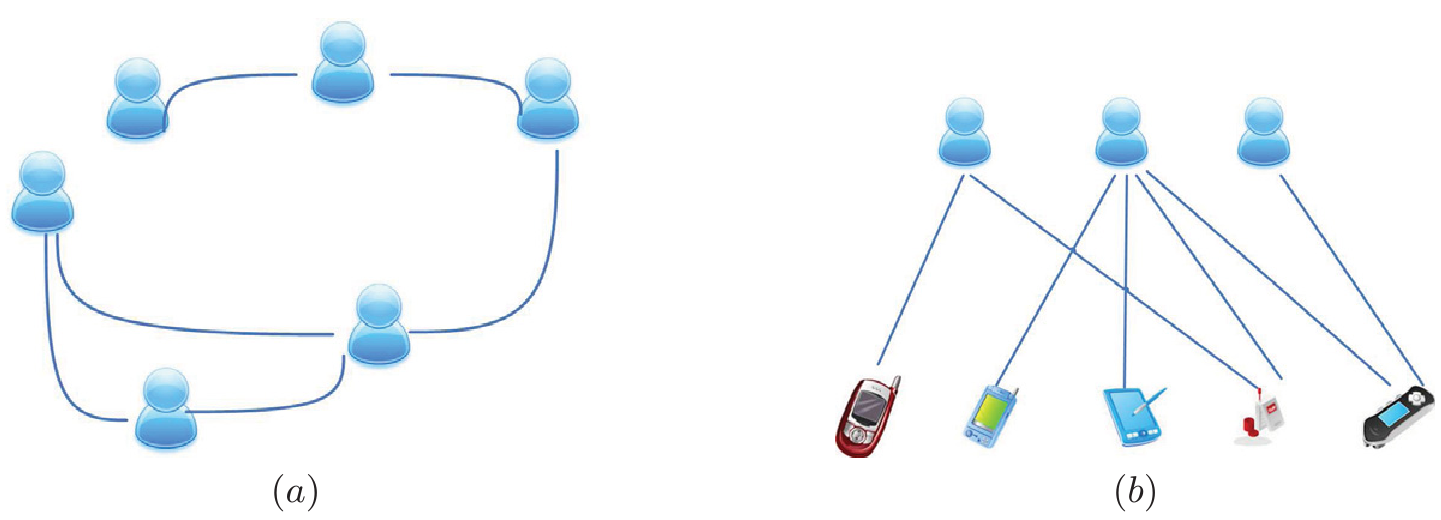
Methodology: The Power of Social Network Potential (SNP)
The researchers pivot from topology to similarity. They argue that an individual is most likely to be influenced by those with similar interests.
1. Similarity Metric
Using a modified Pearson correlation coefficient, the algorithm calculates how closely two users' preferences align based on their shared product ratings.
2. Reverse k-Nearest Neighbors (RkNN)
This is the "secret sauce." Instead of looking at who you follow, the algorithm looks at how many people have you in their "Top-K" most similar list.
- SNP (Social Network Potential): The size of your RkNN set. If 50 people look to your ratings to decide which movie to watch, your SNP is 50.
3. Sequential Seed Selection
The algorithm identifies the user with the highest SNP, labels them as a "seed," and then removes the users they influence from the global set before recalculating the SNP for the next iteration. This ensures maximum "coverage" with minimal overlap.
Experimental Breakthroughs
The authors tested their approach on the MovieLens 100k dataset (943 users, 1682 movies).
- Superior Efficiency: To reach 100% of the network, the proposed Seq-2 algorithm required significantly fewer seeds as increased. For , only 15% of the users were needed to influence the entire population.
- The 1% Impact: Even with a very limited budget (1% seed ratio), the RkNN method reached 17.18% of the users, while a random strategy reached less than 1%.

Critical Analysis & Professional Insight
From an academic standpoint, this work is a clever bridge between Collaborative Filtering and Graph Theory.
Why it works: It captures the "latent" authority of experts. In every niche (e.g., fans of 1950s French Cinema), there are a few users whose ratings act as a North Star for others. The RkNN approach mathematically isolates these "Taste Makers."
Limitations:
- Dynamic Scaling: Calculating RkNN for millions of users in real-time is computationally expensive.
- The "Similarity Influence" Trap: Just because we have the same taste doesn't mean I will follow your lead; however, in recommendation contexts, this proxy is remarkably historically accurate.
Conclusion
This paper shifts the paradigm of influence from "who you are connected to" to "how much your preferences resonate with the crowd." For marketers operating on platforms without social layers, this RkNN-based SNP provides a mathematically rigorous way to spend advertising dollars where they will ripple the furthest.
Future Outlook: We expect to see these "Implicit" models merged with Graph Neural Networks to better capture higher-order relationships in massive, sparse datasets.