
The Weibo Effect: How Big Data and Social Networks Reshape the Beauty Industry
Study of the Influence on Beauty Brands and Their Products from Chinese Social Network: From the Perspective of Big Data
This paper explores the transformative influence of Chinese social networks, specifically Sina Weibo, on the beauty product market in Mainland China. Integrating big data perspectives, it analyzes marketing strategies like TGI-based targeting and KOL (Key Opinion Leader) engagement, highlighting how social media integration with e-commerce (e.g., Taobao) drives massive consumer conversion.
TL;DR
Social media in China is no longer just a communication tool—it is a cornerstone of the commercial ecosystem. This paper investigates how Sina Weibo fundamentally alters the beauty market by bridging the gap between social interaction and e-commerce. By leveraging KOLs and big data metrics like TGI, brands are achieving explosive sales growth through participatory marketing strategies.
Problem & Motivation: Beyond the 30-Second Ad
Traditional advertising is dying in the face of mobile-first consumption. The authors argue that the biggest pain point for beauty brands in China is the lack of participation. While traditional ads "push" information, modern consumers crave "participation" and "sharing."
The study’s motivation stems from the 2013 strategic alliance between Alibaba (Taobao) and Sina Weibo, which turned social feeds into direct shopping funnels. The research seeks to quantify how social buzz translates into actual market volume in the hyper-competitive Chinese beauty sector.
Methodology: The KOL and TGI Framework
The paper breaks down the secret sauce of Chinese digital marketing into three core components:
- TGI (Target Group Index): A metric used to identify the "attention level" of a specific niche.
- KOL (Key Opinion Leaders): Unlike traditional celebrities, KOLs provide a "sense of participating," acting as trusted experts who bridge the gap between a brand and its followers.
- The Social-Commerce Bridge: The integration of Weibo’s social spread with Taobao’s transactional efficiency.
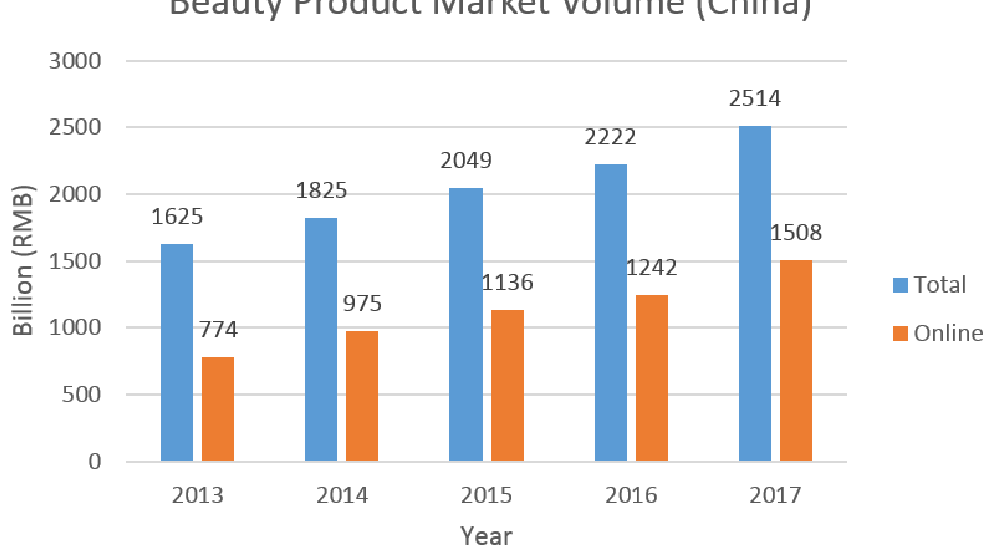 Figure 1: Comparison of total beauty market volume vs. online proportion growth.
Case Study 1: The YSL "Star Lipstick" Phenomenon
The authors dissect the 2016 YSL campaign as a masterclass in psychological warfare. The strategy wasn't just about the product; it was about:
- Emotional Marketing: Framing the lipstick as a "test of love" for boyfriends to buy for their partners.
- Hunger Marketing: Creating a perceived shortage that drove demand even in overseas markets.
- Lipstick Effect: Leveraging the psychological satisfaction of owning a "luxury item" at a relatively low price point (10,000 for a bag).
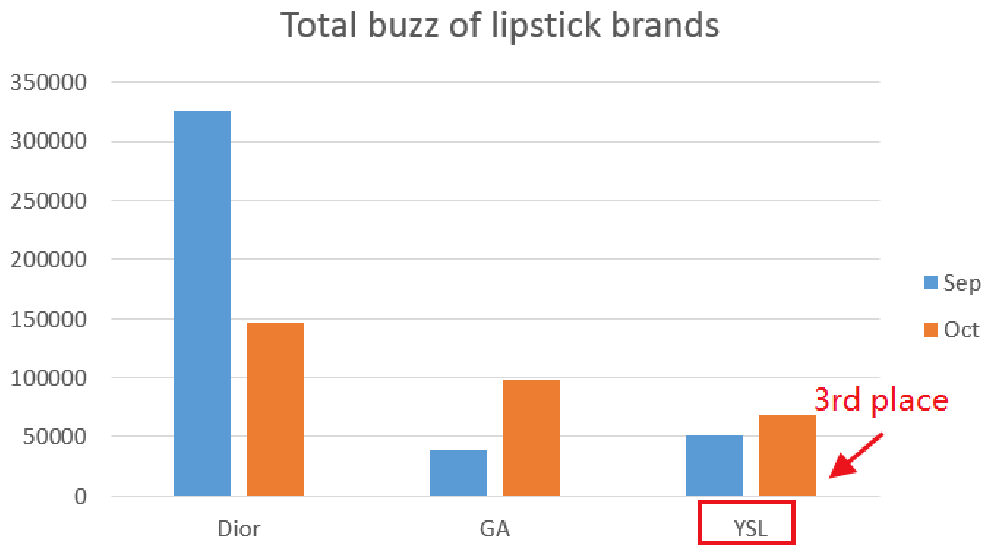 Figure 2: Analysis of total buzz for top makeup brands, showing the dominance of social-driven discussion.
Case Study 2: L'Oreal and the "Male Idol" Pivot
A fascinating shift identified is the use of male celebrities (like Zhu Yilong) to sell female skincare. Why?
- High TGI: Female fans on Weibo show an extreme willingness to support their idols through direct consumption.
- Velocity: L'Oreal's campaign resulted in inventory being cleared in 2 minutes post-announcement, proving that the right social node (the idol) can trigger immediate mass-conversion.
Findings and Future Outlook
The data shows a clear bounce-back in 2017, where online growth jumped nearly 10 percentage points due to intensified Weibo engagement. Using a 3rd-order polynomial regression, the authors predict that total beauty market volumes in China will continue to climb, fueled by social media.
Critical Insights:
- Side Effects: While YSL achieved massive sales, the paper notes that their brand reputation actually declined after the campaign because the focus shifted from product quality to "hype."
- Sentiment Analysis: The next frontier is using AI-driven sentiment analysis to react to customer emotions in real-time, creating a closed loop between social listening and product strategy.
Conclusion
This study confirms that the Chinese beauty market is governed by a "Smart Age" business model where social influence and big data are inextricable. For researchers and brands alike, the takeaway is clear: the conversation is the conversion.
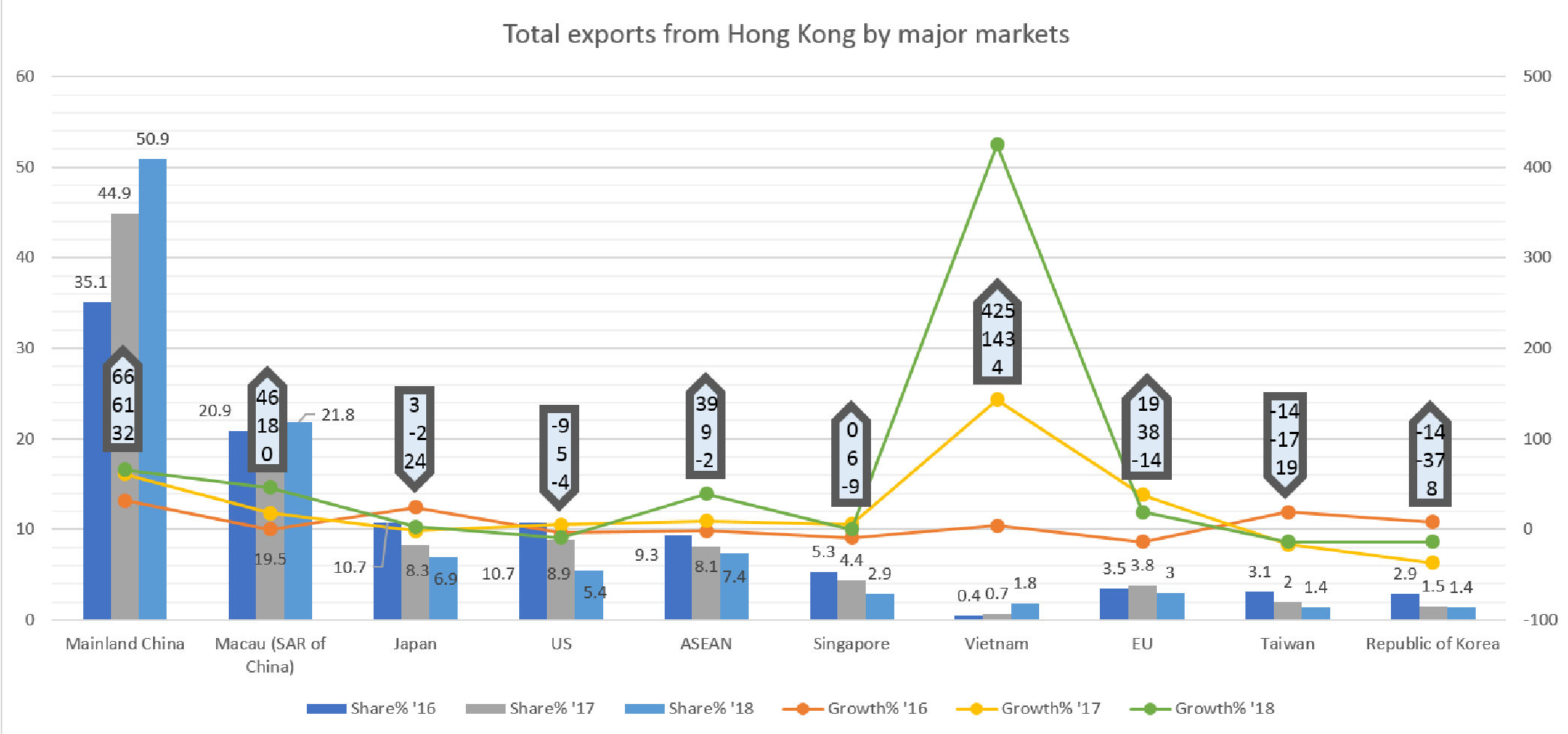 Figure 3: Export trends highlighting the growing importance of regional trading hubs like Macau and Hong Kong as conduits for this social commerce.