
Beyond the Check-in: How Location and Social Ties Converge in Mobile Marketing
The Influence of Location and Social Network on Customers’ Acceptance of Mobile Marketing: Evidence from Group Buying Field Experiment
2015-01-01
Summary
Problem
Method
Results
Takeaways
Abstract
This research investigates the dual impact of geographic location and social network strength on consumer acceptance of mobile marketing through a field experiment involving a "two-for-one" group-buying app. Key findings show that while social ties are universally critical, geographic distance becomes a decisive factor only for higher-priced promotions.
## TL;DR
Location-Based Social Networking Services (LBSNS) have moved beyond simple "check-ins." This study uses a field experiment to prove that while social relationships are the primary driver for mobile coupon redemption, **geographic distance becomes a "deal-breaker" specifically when the financial stakes (price) increase.**
## The Research Gap: From Concept to Reality
Most marketing literature treats **Location** (where you are) and **Social Network** (who you know) as separate channels. While we know proximity helps and friends influence us, how do these work together when a user is under time pressure?
The authors argue that previous studies using Structural Equation Modeling (SEM) only capture *intention*, not *action*. To fix this, they built a real app and ran a field experiment in a university setting to see how people actually behave when offered a "Buy One, Get One" deal.
## Methodology: The "Two-for-One" Experiment
The researchers developed a dedicated app with two core functions:
1. **LBS (Location-Based Service)**: See who is nearby within 1.5 miles.
2. **Social Management**: Organize a list of self-reported friends.
### The Field Scenario
Users were given a dilemma: Should I invite a **friend** (who might be far away and unable to arrive in time) or a **stranger nearby** (who is close but awkward to approach)? They tested this across two price points: 10 RMB and 30 RMB.
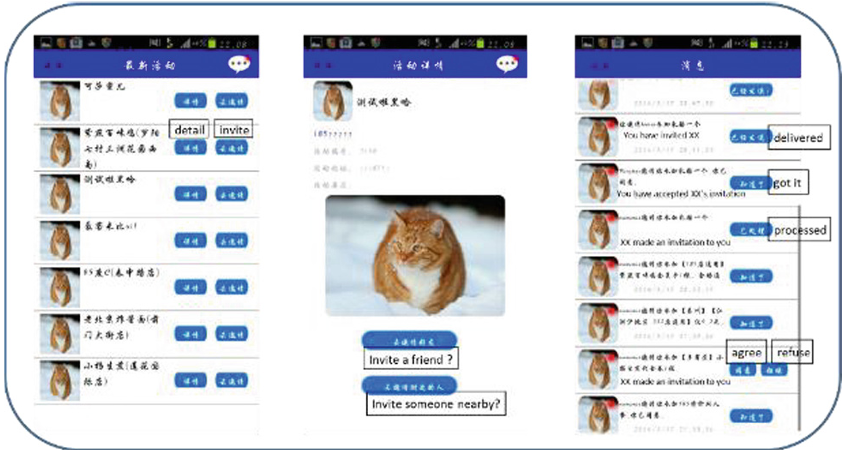
*Fig 1: The invitation workflow within the experimental app.*
## Key Insights: When Does Distance Matter?
The data analysis using ANOVA and Logistic Regression yielded three main takeaways:
### 1. Social Ties are the Universal Solvent
Regardless of the price, people are significantly more likely to accept an invitation from a friend than a stranger. This confirms that **trust and social capital** often outweigh the convenience of proximity.
### 2. The Price-Distance Correlation
One of the most unique findings is that **geographic distance only became statistically significant for the higher-priced items (30 RMB).**
* **Low Price**: People might walk further or wait longer for a "cheap" win.
* **High Price**: The perceived "cost" involves both money and time. If the person is far away, the deal is more likely to fail.
### 3. Personality Matters: Explorers vs. Exploiters
The study used a follow-up survey to categorize users:
* **Exploitative Users**: Prefer using existing social ties (friends).
* **Exploratory Users**: Are more willing to bridge into weak ties (strangers nearby).
Social network centrality (how many friends you have) naturally correlates with "exploitative" behavior—those with more friends rely on them more heavily.
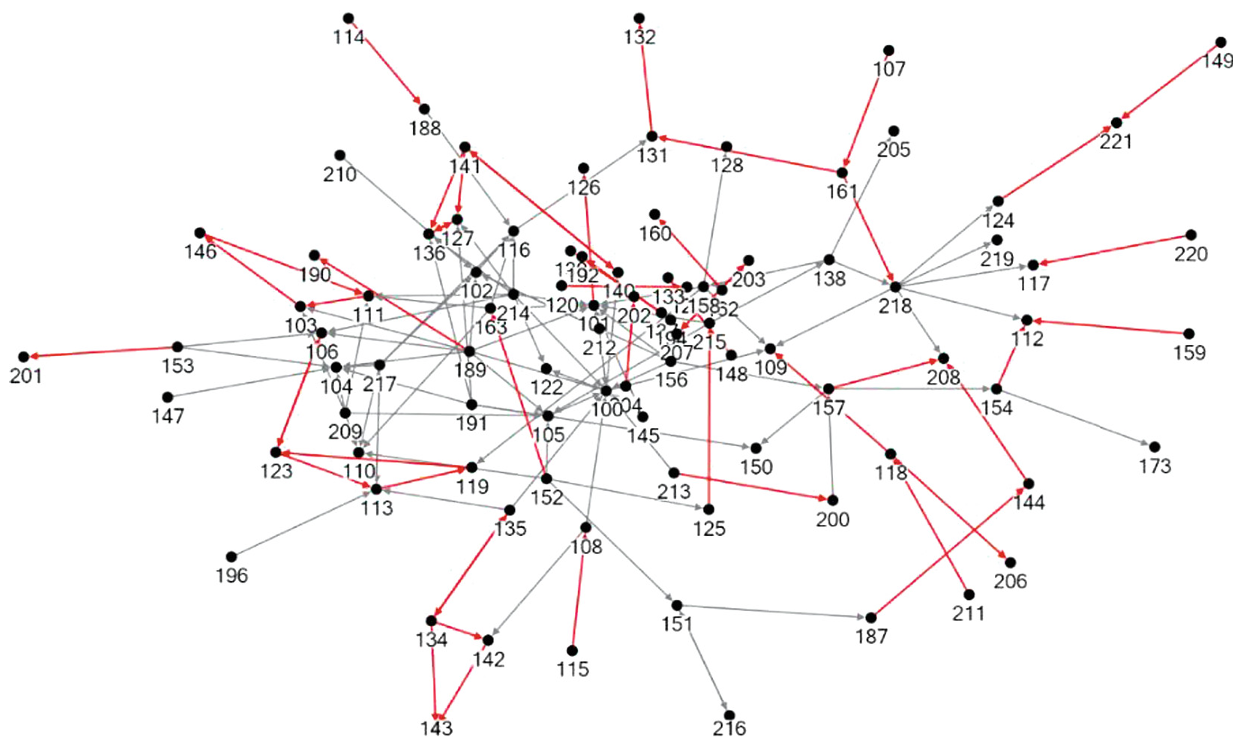
*Fig 2: Visualization of the social network versus invitation trials.*
## Strategic Takeaways for Industry
* **For Developers**: "Nearby" lists are not enough. Apps should facilitate communication between strangers (weak ties) to reduce the social friction of proximity-based requests.
* **For Merchants**: If you are running a high-end promotion, focus your "push" notifications on a much tighter geographic radius. For cheap items, you can cast a wider net.
* **The "Social Leverage"**: Incentivize users who have high "betweenness centrality" (the connectors), as they are more likely to bridge groups and initiate deals.
## Conclusion
This paper serves as a vital reminder that in the era of "GeoLife 2.0," technology doesn't just provide location—it contextually transforms how we use our social networks. The priority for consumers is usually **Social-first, Spatial-second**, but as the price increases, the "Spatial" constraint quickly becomes the dominant factor.
---
**Limitations**: The study was conducted on a university campus with a specific demographic (students). Future research should explore these dynamics in more diverse urban settings where the value of time and the "stranger danger" social cost might be higher.