
Deciphering Student Behavior: How Session Timeouts Shape Educational Data Mining Insights
Influence of Different Session Timeouts Thresholds on Results of Sequence Rule Analysis in Educational Data Mining
This paper investigates Educational Data Mining (EDM) by analyzing how pre-processing choices—specifically Session Timeout Thresholds (STT) and Path Completion—affect sequence rule extraction from LMS Moodle logs. It introduces a comparative framework across six datasets to identify student behavioral patterns using the Apriori algorithm.
TL;DR
In the realm of Educational Data Mining (EDM), the "garbage in, garbage out" mantra is particularly relevant during the log pre-processing stage. This study reveals that the Session Timeout Threshold (STT)—the period of inactivity used to define a student "visit"—is the most critical variable in sequence analysis. Conversely, the high-effort task of Path Completion (reconstructing clicks from the "Back" button) provides surprisingly little value in structured e-learning environments.
The Pre-processing Bottleneck
Analyzing Learning Management System (LMS) logs is essential for personalizing education. However, the raw data is often messy. Researchers face two major decisions during data preparation:
- Session Identification: When does one study session end and another begin? (15? 30? 60 minutes?)
- Path Completion: If a student uses the "Back" button, the server doesn't record the intermediate page loads. Should we manually reconstruct these missing links in the sequence?
Many assume that more data (longer sessions and reconstructed paths) leads to better insights. This paper challenges that assumption.
Methodology: The Six-Dataset Stress Test
The authors processed 75,530 log entries from Moodle across 180 participants. They created six distinct data matrices to isolate the effects of STT and Path Completion:
- Variables A1, A2, A3: Sessions identified with 15, 30, and 60-minute timeouts.
- Variables B1, B2, B3: The same timeouts, but with added Path Completion based on the course sitemap.
The core analysis utilized the Apriori algorithm to identify sequence rules—patterns like "If a student views the lecture notes, they are likely to participate in the collaborative forum."
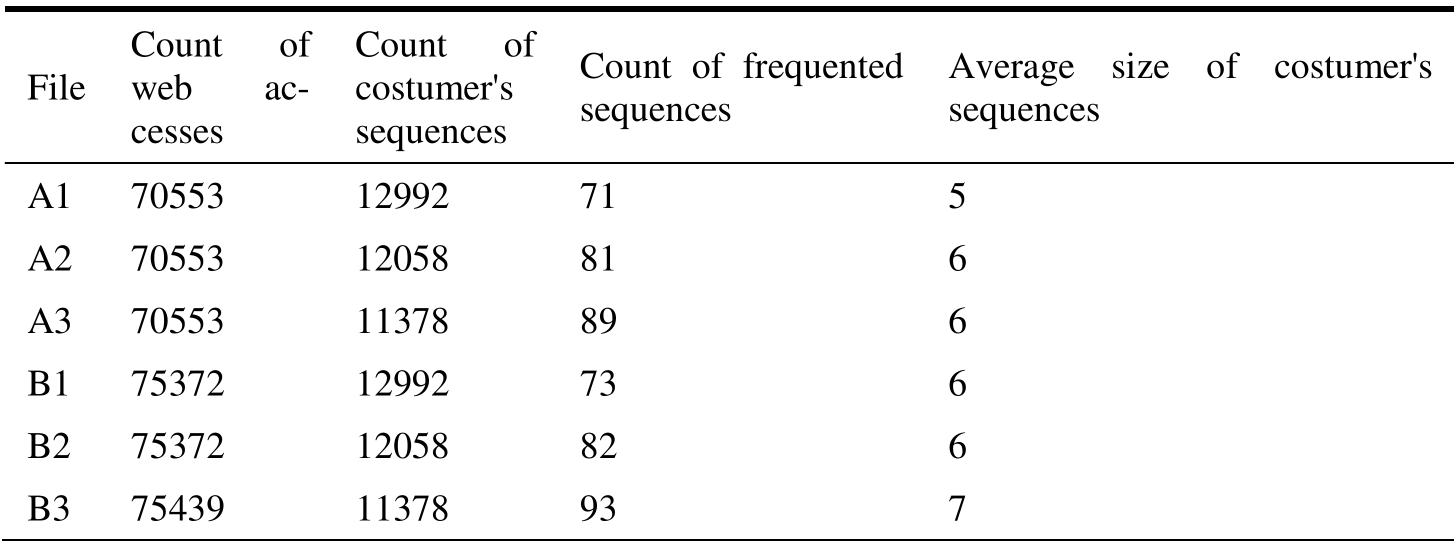 Table 1: Influence of STT and Path Completion on session count and sequence size.
Key Insights from Experimental Results
1. The "More isn't Better" Paradox of Timeouts
As the timeout threshold increased from 15 to 60 minutes, the number of costumer sequences decreased by 12.5%, but the number of extracted rules skyrocketed. While this might seem positive, the authors categorized these rules into Useful, Trivial, and Inexplicable.
- Finding: Shorter STTs (15-30 mins) yielded a higher percentage of "Useful" rules.
- The Trap: Longer STTs (60 mins) introduced a flood of "Inexplicable" patterns, likely caused by merging distinct study sessions into one, creating false correlations.
2. Path Completion: A Redundant Complexity?
One of the most surprising findings was that Path Completion had nearly zero impact on rule quality. In rigid course structures like Moodle, the navigation is often so guided that the missing "Back" button data doesn't change the underlying behavioral patterns.
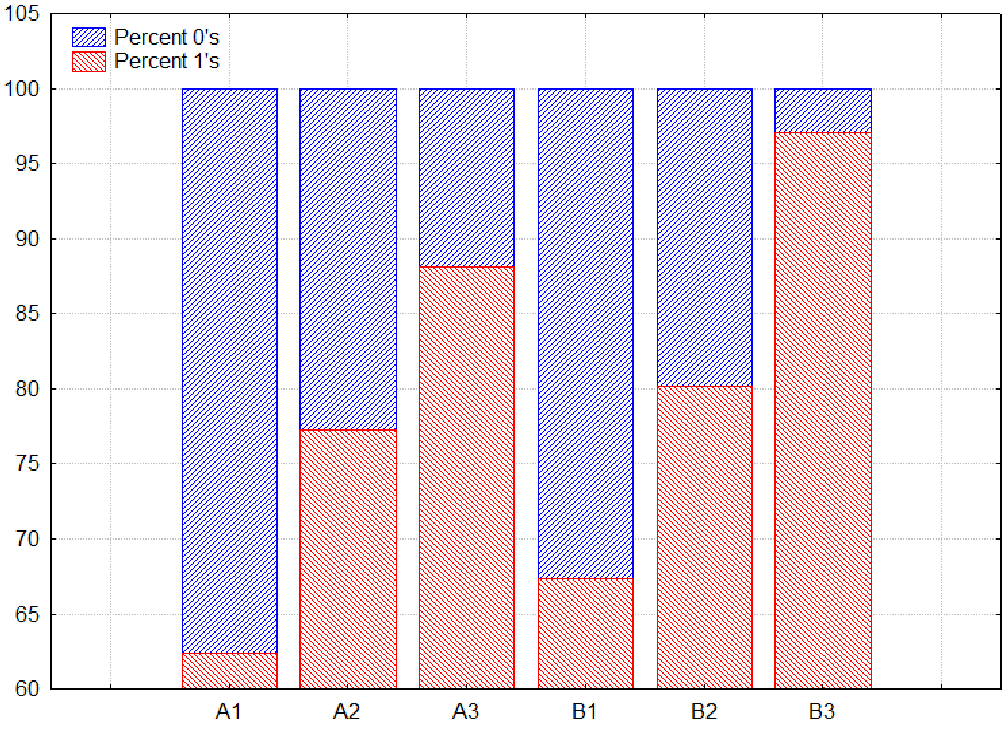 Fig 1: Sequential plot showing that rule incidence is heavily driven by STT, not the addition of path reconstruction.
3. Quantitative Validation
Using Cochran’s Q test, the authors confirmed that session lengths significantly altered the support and confidence metrics of the rules. The concordance (Kendall Coefficient) was high between datasets with and without path completion, confirming that the extra pre-processing step did not fundamentally change the knowledge discovered.
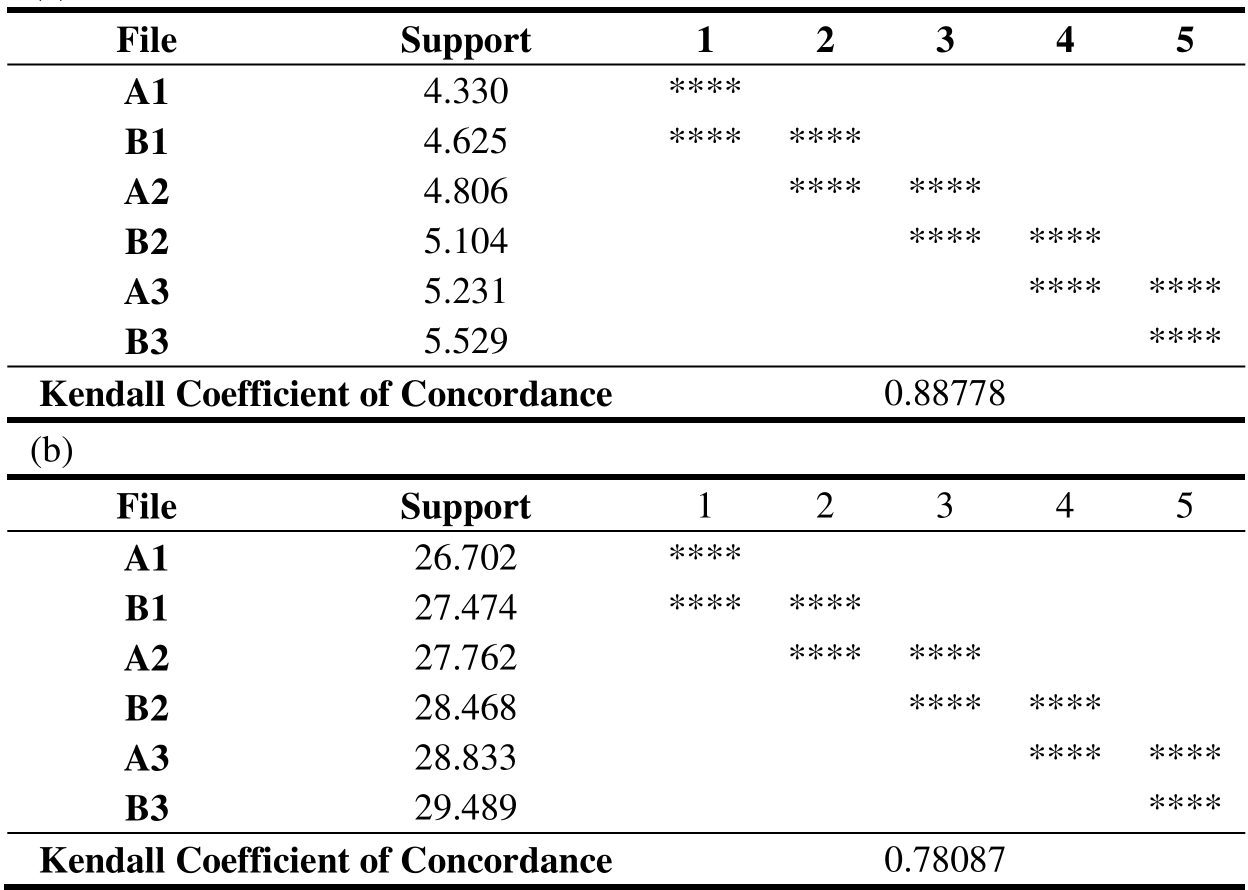 Table 7: Metrics showing statistically significant differences between STT groups (A1-A3) but minimal differences within Path Completion pairs (A vs B).
Strategic Recommendations for Researchers
- Optimize for Precision: Use a 15-30 minute STT to capture focused studying behavior. This minimizes "noise" from students leaving tabs open while doing other tasks.
- Simplify the Pipeline: If your LMS has a rigid navigational structure, skip Path Completion. It reduces computational complexity without sacrificing the reliability of your findings.
- Focus on Utility: Evaluate your mining results not just by the count of rules, but by their interpretability. A high rule count from a 60-minute session identification is often just an artifact of poor data segmentation.
Conclusion
This research provides a much-needed empirical basis for streamlining EDM workflows. By proving that complex path reconstruction is often unnecessary and that session timeouts must be tightly controlled, the authors allow future researchers to focus on what matters: turning student patterns into better educational outcomes.
Limitations: Results are based on a single course. Future work should validate if these findings hold true for more exploratory, non-linear learning environments.