
TIB-Community Detection: Beyond Static Links to Dynamic Influence Propagation
Influence Propagation Model for Clique-Based Community Detection in Social Networks
This paper introduces a Temporal Interaction-Biased (TIB) community detection framework designed to identify active, dense subgraphs in dynamic social networks. It proposes an Influence Propagation Model to reweight edges based on temporal interactions and a clique-based partitioning approach to improve computational efficiency.
TL;DR
Most community detection algorithms assume social networks are static. This paper argues that interactions (mentions, retweets) are much more telling than "follow" buttons. By introducing an Influence Propagation Model, the authors can identify active communities even when structural links are sparse, achieving higher density and relevance in dynamic environments.
Background: The "Static" Fallacy
In the world of social data analytics, we often treat a friend list or a followership link as a permanent bridge. However, the authors' analysis of Twitter data reveals a startling reality: 70% of users interact with people they don't even follow. Static models like the Louvain method suffer from the "free-rider effect," including irrelevant nodes simply because they are part of a structural cluster, while missing highly active "interaction-biased" groups.
Methodology: High-Frequency Interaction as the New Weight
The core innovation lies in the Influence Propagation Model. Instead of binary edges (connected/not connected), the authors use a normalized weight based on interaction frequency.
1. The Influence Propagation Model
If an edge is highly active, it radiates influence to its neighbors. Using a decaying factor and a hop distance , the model reweights neighboring "inactive" edges: This logic ensures that a "weak" link isn't ignored if it sits between two high-activity hubs—it has the potential to become active.
2. Clique-Based Partitioning
To handle massive data, the authors developed a partitioning strategy based on Percolated Cliques (PCs). Unlike random graph splitting, this method ensures that the fundamental building blocks of communities (triangles of nodes) aren't severed during parallel processing.
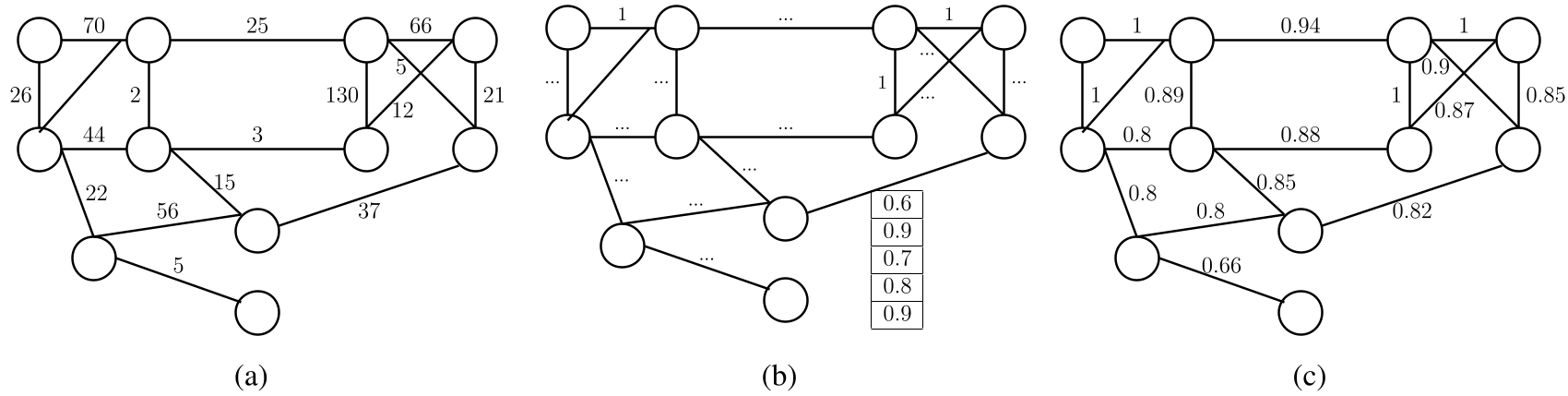 Fig 1: Illustration of the TIB-community detection workflow, showcasing the transition from cliques to dense communities.
Experiments: Quality Over Quantity
The TIB model was tested against the CPMw (Weighted Clique Percolation Method). While CPMw finds more communities, TIB finds better ones. TIB communities are essentially a subset of CPMw results but filter out the "noise"—the inactive users who aren't contributing to the community's life.
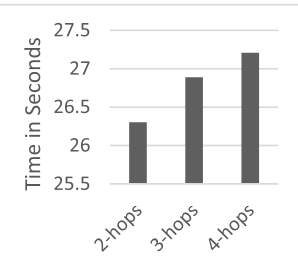 Fig 2: Time cost comparison for Influence Propagation. Parallel processing after clique-based partitioning significantly outperforms sequential execution.
Key Insights from the Twitter Case Study
- Temporal Persistence: 70% of TIB-detected communities maintained interactions over an 8-week period.
- The Holiday Effect: Interactions predictably dropped during Thanksgiving and Christmas, showcasing the model's sensitivity to real-world behavioral shifts.
- Interest Alignment: Topic analysis (using hashtags) confirmed that these dynamic communities converged around specific themes like
#NFL,#GOPDebate, or#Euro2016.
Critical Analysis & Conclusion
This paper shifts the focus from who you know to who you talk to. By leveraging clique structures (), the TIB method ensures high internal cohesion.
Limitations: The model relies on empirical parameters for and (activity thresholds), which might require manual tuning for different platforms (e.g., LinkedIn vs. Twitter).
Future Outlook: The integration of Temporal Information Gaps and Node Attributes (like sentiment or user bio) into the influence model could further refine how we predict the "death" or "merging" of online communities. This research is a vital stepping stone for targeted marketing and viral information propagation in an increasingly transient digital world.
Takeaway: In dynamic networks, density is not just about structure—it is about the "pulse" of interactions.