
Beyond Follower Counts: A Multi-Dimensional Approach to Twitter Influence
Extraction of Influencers Across Twitter Using Credibility and Trend Analysis
The paper proposes a novel multi-dimensional framework for identifying Twitter influencers by integrating a probabilistic numerical Influence Score with textual Sentiment and Trend Analysis. By correlating user credibility with real-time topic popularity, the method effectively distinguishes between major trend-setters and influential contrarians (negative influencers).
TL;DR
This research moves beyond the vanity metrics of social media to pinpoint true influencers. By combining probabilistic credibility scoring (numerical data) with sentiment-based trend analysis (textual data), the authors present a framework that identifies not just who is popular, but who is actually shaping—or opposing—the public narrative on specific topics like technology trends.
Background Positioning
In the ecosystem of Social Network Analysis (SNA), most models focus on the "What" (Activity) or the "Who" (Centrality). This paper contributes to the "Why" and "How" by introducing Trend Correlation, positioning itself as a practical bridge between graph theory and natural language processing (NLP) for real-world marketing and sociological study.
The Core Problem: The Context Gap
Existing SOTA methods often suffer from the "Echo Chamber" blind spot. A user might have millions of followers (High Authority), but if their content is irrelevant to a specific trending topic, their actual influence on that topic is negligible. Furthermore, many systems fail to account for "Negative Influencers"—credible users who provide critical friction against a majority trend. The authors argue that without mining the content (text) alongside the profile (numbers), an influence score is just an empty shell.
Methodology: The Synthesis of Numbers and Words
The proposed methodology operates in two distinct but converging streams:
1. Probabilistic Credibility Mining
Instead of simple tallies, the authors use a probabilistic gain formula to assign weights to various features:
- Follower count/Post intensity
- Retweet/Like ratios
- Listing frequency (a sign of topical authority)
The weight is determined by: This ensures that features with more information density contribute more significantly to the final Influence Score.
2. Textual Sentiment & Trend Scoring
The system mines tweets for "Iphone" related sentiment. By mapping words to an emotional dictionary, it computes an average Tweet Score. The aggregate of these scores across the population defines the Trend Score (e.g., is the public generally 80% positive or negative about the new iPhone?).
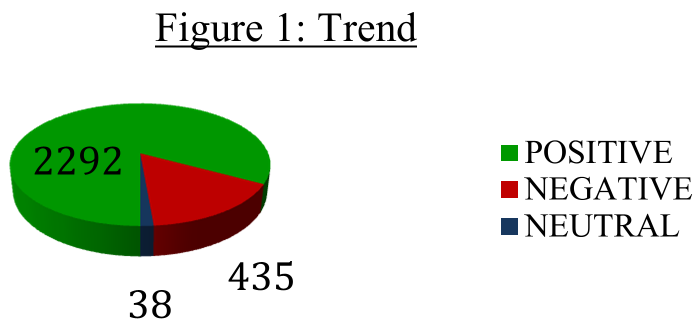 Figure 1: The dual-phase pipeline from HDFS data collection to influencer extraction.
Experimental Insights: Mapping the Influencer Landscape
The study analyzed a dataset of 15,794 tuples, narrowing down to the top 200 high-credibility users.
The most insightful result is the visualization of Tweet Score vs. Influence Rank.
- Positive Influencers: High credibility score + High positive sentiment. These are the "Trend Setters."
- Negative Influencers: High credibility score + High negative sentiment. These are the "Contrarians" or "Critics" who possess the power to pivot public opinion away from a trend.
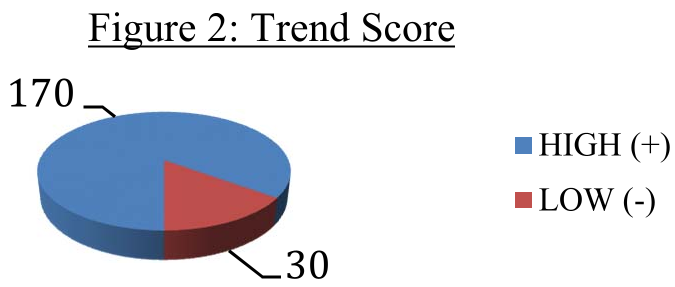 Figure 2: Distribution of influencers. Note the clusters of positive vs. negative sentiment holders among the top-ranked profiles.
Critical Analysis & Conclusion
The strength of this work lies in its bi-sectoral validation. By checking if a "credible" person actually talks about the trend, the researchers filter out bot-like high-follower accounts that don't engage with specific topics.
Limitations: The current approach relies on a fixed English dictionary for sentiment, which might struggle with sarcasm or evolving internet slang. Furthermore, the correlation doesn't yet account for the temporal decay of influence (how influence fades over time).
Future Outlook: This framework could be significantly enhanced by incorporating Graph Neural Networks (GNNs) to model the structural path of the diffusion alongside these scores. For practitioners, this highlights a shift: stop looking for the biggest audience, and start looking for the highest thematic alignment.