
Decoding the Influence: A Kansei Engineering Approach to Influencer Marketing
The Study on How Influencer Marketing Can Motivate Consumer Through Interaction-Based Mobile Communication
This study investigates the emotional appeal of influencer marketing via mobile communication using a hybrid psychological-statistical approach. By combining Kansei Engineering with the Evaluation Grid Method (EGM) and Quantification Theory Type I, the researcher identifies "Interaction-based" and "Communicably-targeted" as the primary psychological drivers for consumer motivation.
TL;DR
In the hyper-connected era of mobile communication, influencer marketing has transcended simple endorsement. This research utilizes Kansei Engineering—a consumer-oriented technology that translates feelings into design parameters—to dissect why certain influencer strategies motivate us. By analyzing "Interaction-based" and "Communicably-targeted" factors, the study reveals that the most effective marketing isn't just seen; it's felt and participated in.
Problem & Motivation: Beyond the Screen
Why do we feel compelled to visit a "pop-up shop" or use a specific hashtag just because an influencer did? Traditional marketing theories often fail to capture the visceral, emotional "pull" of social media. The researcher, Kai-Shuan Shen, identifies a gap: we know influencer marketing works, but we don't fully understand the semantic structure of its appeal. The goal was to move beyond anecdotes and use statistical rigor to map the emotional landscape of the mobile consumer.
Methodology: The Core of Kansei Engineering
The study utilizes a sophisticated two-stage methodology:
- Qualitative Mapping (EGM): Using the Evaluation Grid Method, the author interviewed experts to create a "hierarchy of appeal." This process ladders abstract concepts (like "Influential") down to specific attributes (like "Using hashtags reasonably").
- Quantitative Validation (Quantification Theory Type I): This statistical method measures how specific attributes contribute to the overall "Kansei" (feeling). It's essentially a way to put a numerical value on a subjective emotion.
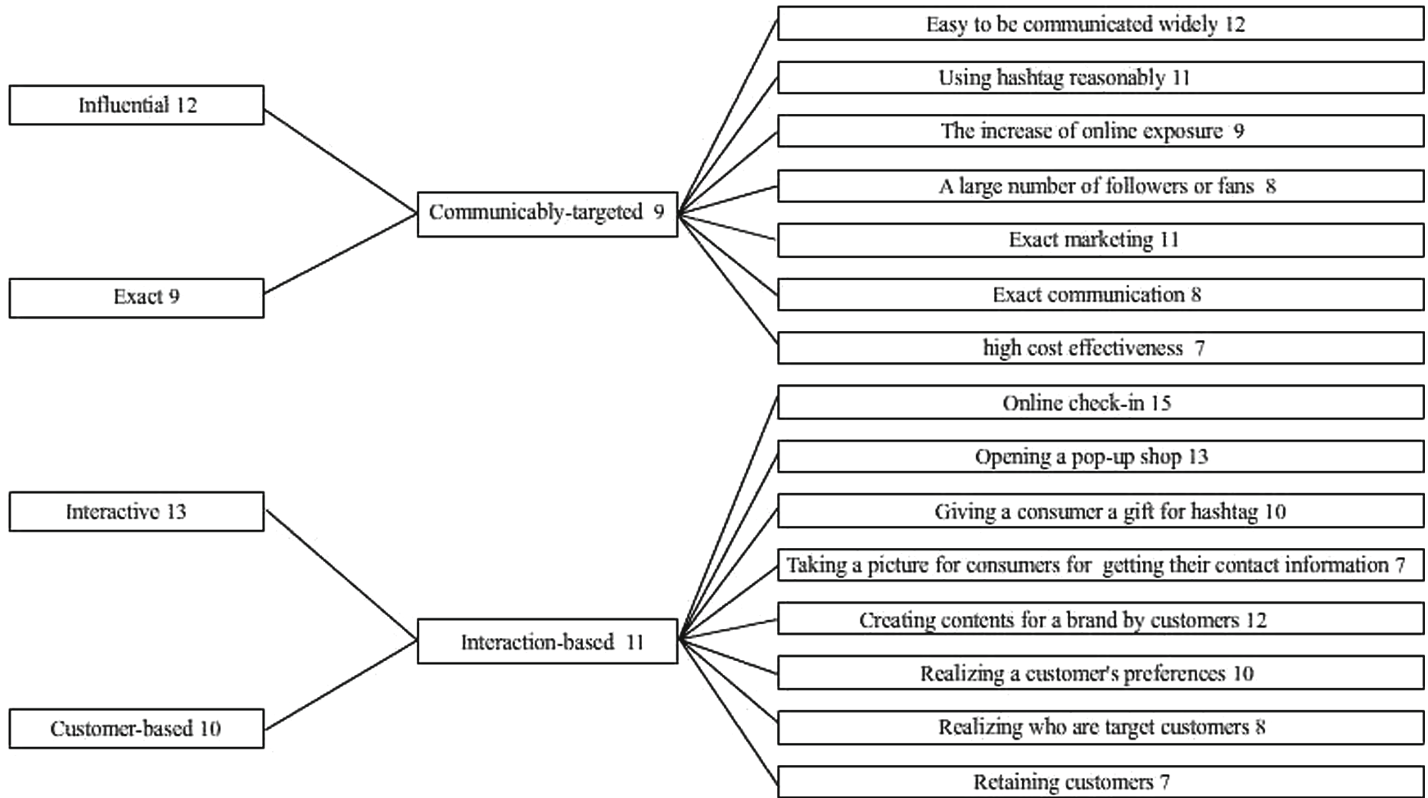 Figure: The hierarchy used to bridge abstract consumer feelings with concrete marketing tactics.
Experiments & Results: What Actually Motivates?
The analysis broke down influencer appeal into two dimensions:
1. Communicably-Targeted (The "Reach" Factor)
With an R² of 0.686, this model proved highly reliable. The results showed that "Influential" traits carry more weight than "Exactness." Surprisingly, while "easy to communicate widely" was a major positive, "using hashtags reasonably" actually had a negative correlation if over-engineered, suggesting that consumers value organic reach over forced tagging.
2. Interaction-Based (The "Engagement" Factor)
This factor (R² = 0.559) highlights the importance of the consumer's role. The top driver here was "Creating contents for a brand by customers." This suggests that the most powerful influencers are those who empower their audience to become creators themselves.
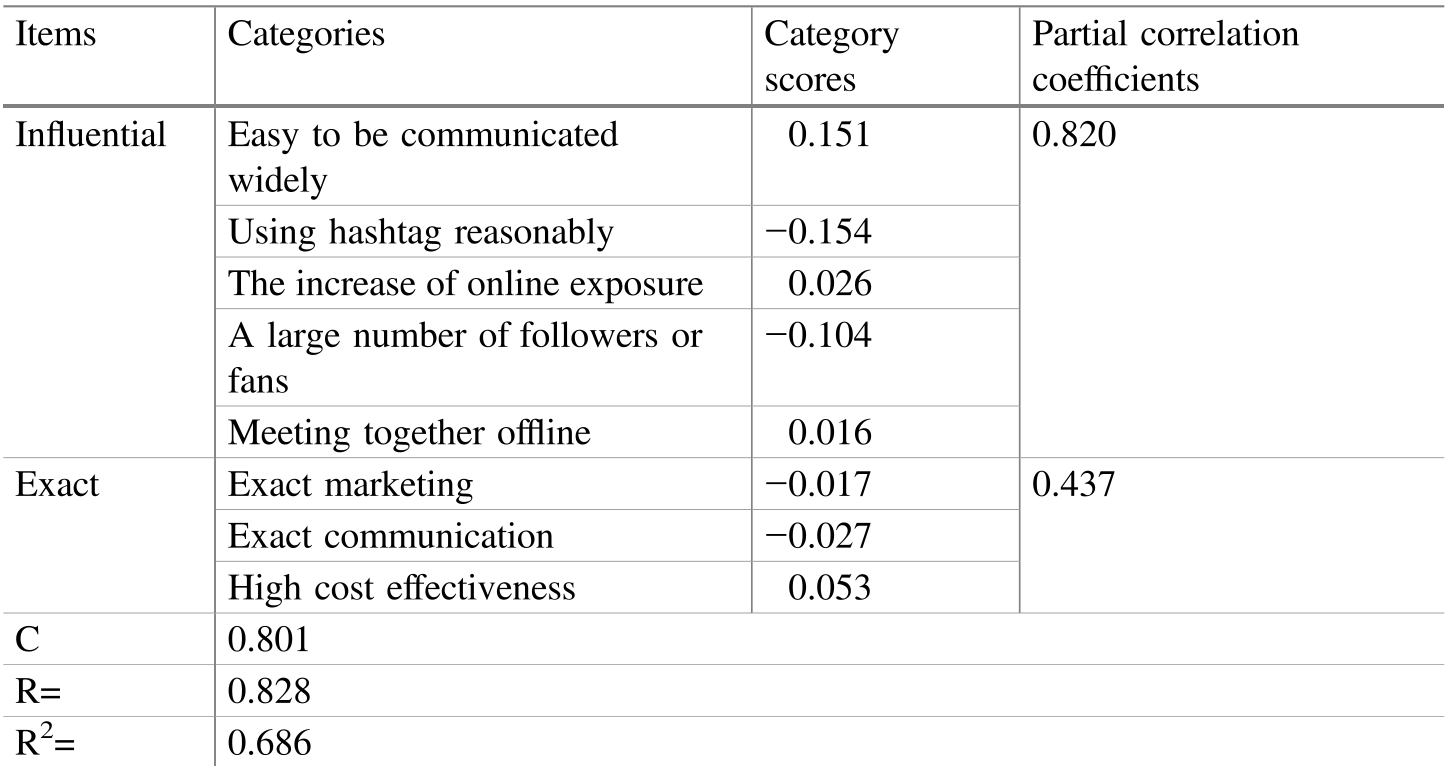 Table: Partial correlation coefficients showing the impact of specific influencer traits on perceived influence.
Critical Analysis & Conclusion
Takeaway
The study proves that influencer marketing is successful not because of the celebrity's status alone, but because of the interdependent appeal factors—specifically the ability to make the consumer feel like a participant in the brand's story (Interaction-based) and the influencer's ability to trigger wide-scale social validation (Communicably-targeted).
Limitations
- Cultural Context: The data was collected in Taiwan; influencer dynamics might differ significantly in Western or other Asian markets due to cultural nuances.
- Subjectivity: Despite the statistical rigor, the initial "Kansei words" are subject to the researcher's interpretation of expert interviews.
Future Outlook
This framework provides a blueprint for brands to move away from "shouting" at consumers. Future marketing designs should prioritize "Instagrammable" physical environments and UGC (User-Generated Content) mechanisms, as these are scientifically proven to be the strongest motivators in the mobile ecosystem.