
Viral Interference: How Influenza Desensitizes the Human Immune System to Tuberculosis
Influenza coinfection inhibits control of mycobacterial infection in a human challenge model
2026-01-01
Summary
Problem
Method
Results
Takeaways
Abstract
This study establishes a human challenge model to demonstrate that Influenza A virus (H3N2) infection significantly impairs the host's ability to control Mycobacterium tuberculosis. By utilizing a whole-blood mycobacterial growth inhibition assay (MGIA) and transcriptomic profiling, the researchers identified that influenza-induced activation of Type 1 Interferon (IFN) pathways paradoxically suppresses subsequent immune responsiveness to mycobacteria.
## TL;DR
A landmark study published in *Nature Communications* (2026) provides the first direct human evidence that influenza infection actively inhibits the body’s ability to contain mycobacteria. By "pre-occupying" the innate immune system—specifically Type 1 Interferon pathways—influenza leaves the host vulnerable to mycobacterial proliferation, effectively lowering the threshold for TB progression.
## The Missing Link in TB-Viral Synergy
Tuberculosis remains a global health crisis, yet only a fraction of those infected with *Mycobacterium tuberculosis* (Mtb) develop active disease. While HIV is a well-known catalyst, the role of common respiratory viruses like influenza has remained in the shadows of observational data. The fundamental question was: **Does influenza just happen to coincide with TB, or does it mechanistically dismantle our defenses?**
The researchers tackled this by using a controlled human challenge model, stripping away the noise of real-world variables to observe the host-pathogen tug-of-war in real-time.
## Methodology: The BCG-lux Challenge
The study used an elegant functional assay: the Mycobacterial Growth Inhibition Assay (MGIA). By introducing a bioluminescent strain of BCG (BCG-lux) into the blood of volunteers before and after they were infected with Influenza A (H3N2), the team could precisely measure how well the immune system "bottled up" the bacteria.
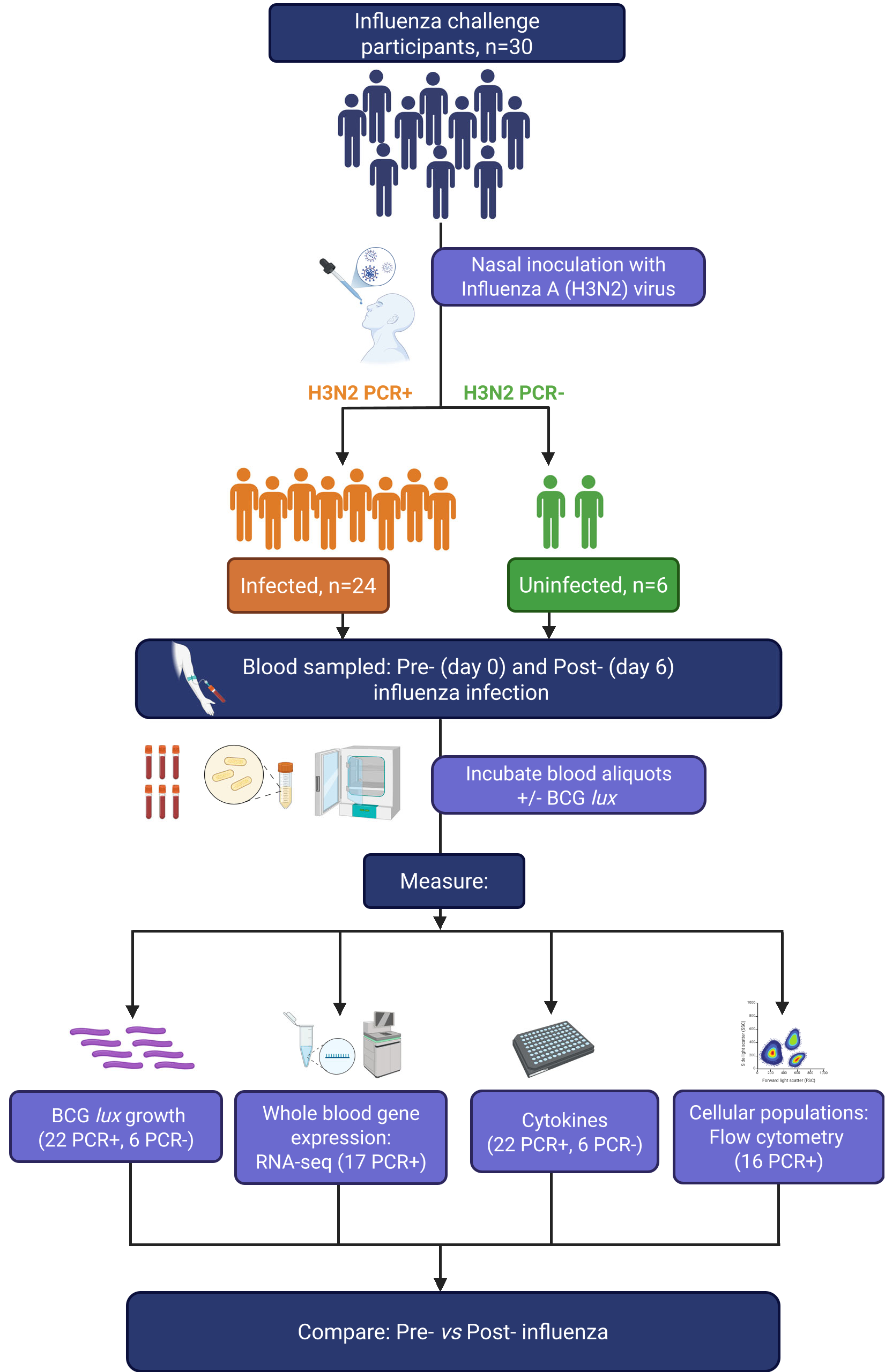
*Fig 1: The experimental workflow integrated viral inoculation with longitudinal blood sampling for transcriptomics and functional growth assays.*
## The "Interferon Paradox"
The most striking finding was the behavior of **Type 1 Interferon (IFN) signaling**. Typically, IFN is a frontline antiviral defense. However, the study found that because influenza had already "turned on" these genes (like *IFI44L* and *RSAD2*), the immune cells were effectively desensitized.
When the mycobacteria arrived, the cells—already saturated with viral-induced signals—failed to mount a specific, robust secondary response. This transcriptomic "numbness" directly correlated with the bacteria's ability to grow 1.5x faster in post-influenza blood.
### Key Findings:
* **Functional Control**: Influenza-infected individuals lost significant control over BCG growth (p < 0.05).
* **Hub Genes**: The top 10 most "interconnected" genes affected by the coinfection were all ISGs. The "Non-restrictors" (those who lost the most control) had the highest baseline viral-induced gene expression.
* **Cytokine Repression**: While baseline IFN-α2a was high post-flu, the *additional* production normally triggered by mycobacteria was silenced.
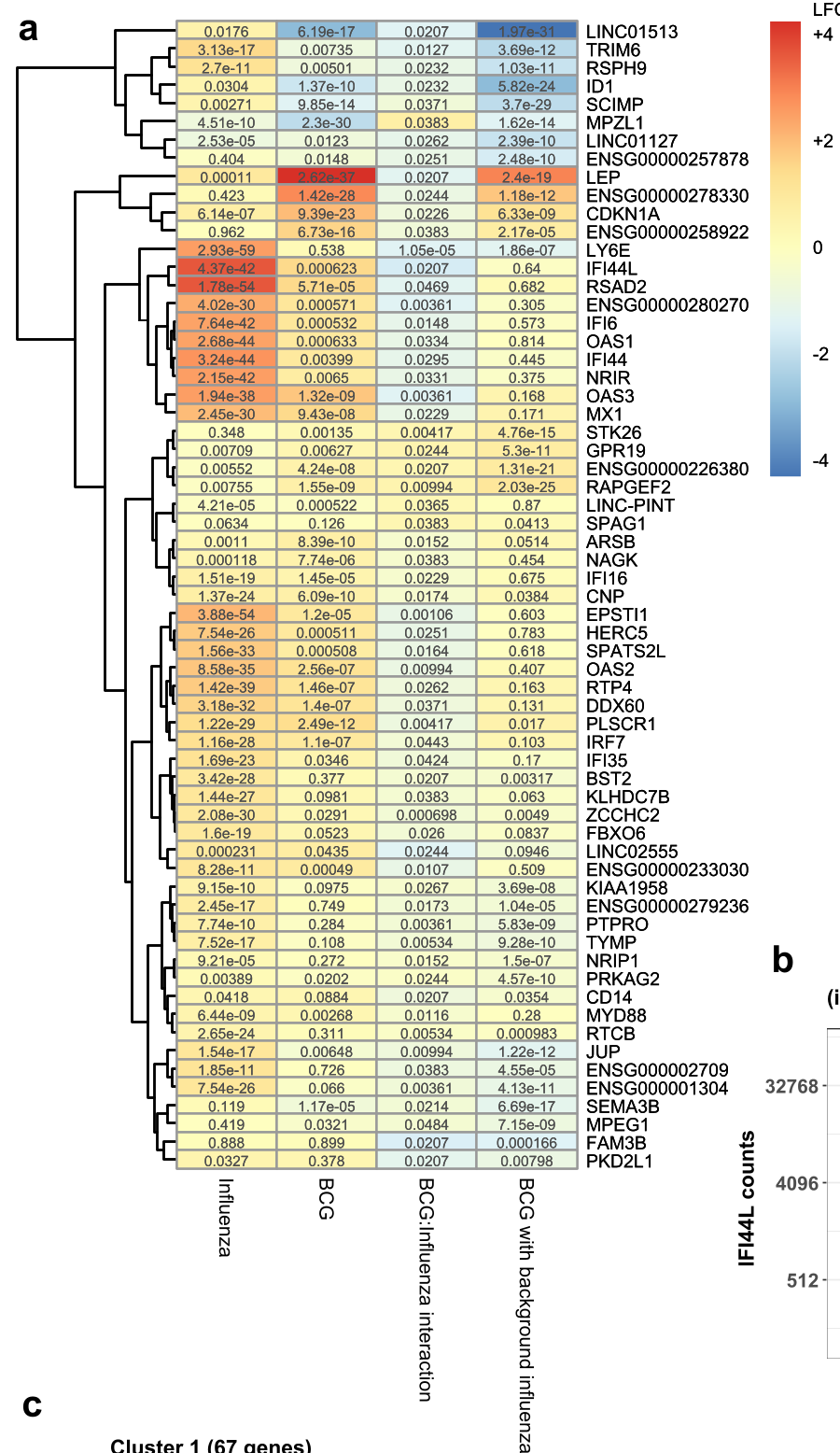
*Fig 2: Heatmap showing the 63 genes where the response to BCG was significantly altered by the presence of influenza.*
## Experiments & Results: A Clear Trend
The study categorized participants into "Restrictors" and "Non-restrictors" based on their blood's ability to suppress BCG. In the post-influenza period, the "Non-restrictors" exhibited a significant "ceiling effect"—their immune systems were so busy responding to the flu that they had no remaining "bandwidth" to fight the mycobacteria.
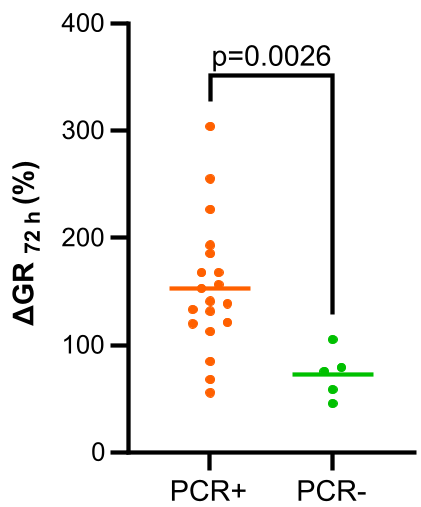
*Fig 3: Growth Ratios showing increased mycobacterial survival 72h post-influenza infection compared to baseline.*
## Critical Analysis & Future Outlook
This research moves the needle on TB prevention in several ways:
1. **Vaccination Strategy**: If influenza facilitates TB progression, then flu vaccines are actually "anti-TB" tools. This provides a massive public health incentive for flu vaccination in TB-endemic regions.
2. **Diagnostic Accuracy**: Host-transcriptomic signatures for TB often overlap with viral signatures. This study highlights which specific genes (the 63 interaction genes) should be *excluded* or handled with care when designing TB diagnostic panels to avoid false positives during flu season.
3. **Limitations**: The study uses BCG as a surrogate for Mtb. While biologically similar, Mtb is more virulent and may exploit these immunosuppressive windows even more aggressively.
### Conclusion
Influenza is not just a seasonal nuisance; it is an immunological disruptor that breaks the host's "containment" of mycobacteria. By understanding the desensitization of Type 1 IFN pathways, we can better predict who is at risk for TB reactivation and develop more resilient diagnostic and preventive frameworks.