
Evolutionary Contagion: Why Misinformation Wins in Social Networks
Information diffusion model for spread of misinformation in online social networks
This paper proposes a novel information diffusion model for misinformation spread in social networks by integrating Evolutionary Game Theory and Evolutionary Graph Theory. It models users as strategic agents whose adoption of misinformation is governed by replicator dynamics and network reciprocity.
TL;DR
This research redefines misinformation not just as a virus, but as a mutant gene competing for survival in a social ecosystem. By combining Evolutionary Game Theory with Graph Theory, the authors provide a framework to predict when a rumor will fizzle out and when it will trigger an unstoppable exponential cascade via "Global Trends."
Strategic Position: This is a pioneering work that bridges biological evolutionary dynamics with social network analysis (SNA) to solve the "Semantic Attack" problem—intentional deception designed to alter mass behavior.
Problem & Motivation: Beyond Passive Nodes
Existing models like the Linear Threshold Model (LTM) or Independent Cascade Model (ICM) view users as simple switches—if enough neighbors "on," they turn "on."
The authors argue this is too simplistic:
- Non-Rationality: Humans don't always act in their best interest when consuming news.
- Dynamic Learning: People change strategies (beliefs) by observing what’s popular, not just what's true.
- Semantic Attacks: Disinformation is often a deliberate campaign designed to exploit these human vulnerabilities.
Methodology: The "Mutant" Misinformation
The core insight is treating misinformation as a strategy in a Prisoner's Dilemma. Users "cooperate" by spreading misinformation or "defect" by ignoring it.
1. Population Types
The population is stratified into three distinct behavioral archetypes:
- For Type: High Benefit/Cost (B/C) ratio; they spread almost anything.
- Against Type: Zero B/C ratio; immune to the misinformation.
- Neutral Type: The "swing voters" who only spread misinformation if the local "fitness" (popularity among neighbors) is high enough.
2. Update Rules & Fitness
The model uses the Imitation (IM) Update Rule. A user looks at their neighbors and adopts the strategy with the highest "evolutionary fitness." Fitness here is the ability of a strategy to proliferate.
 Eq 2: Relating game theoretic payoff (P) to evolutionary fitness (f).
3. The Two-Phase Spread
It begins with Neutral Drift (slow spread among those already inclined to believe) and accelerates through imitation once the Neutral types see enough "For" neighbors, creating a feedback loop.
Experiments: Real-World Cascades
The authors tested this on the Arxiv High Energy Physics collaboration network.
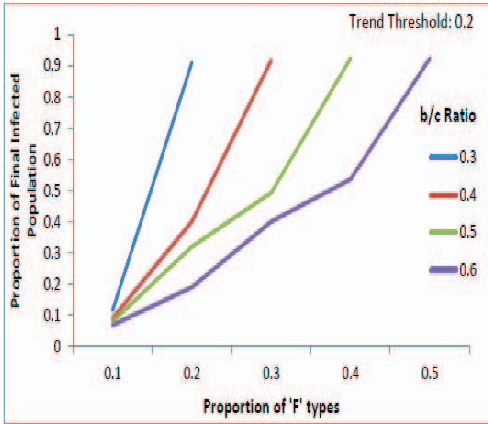 Fig 2: Spread of Misinformation on Arxiv Collaboration Network.
Key Findings:
- Trend Thresholds: Social media "Trends" features break the limits of the graph structure. Once misinformation hits a trend threshold, it moves from local clusters to a "homogeneous mixing" state, infecting the population exponentially.
- Cascade Capacity: Every network has a limit. Predicting the "fixation probability" (the chance for a rumor to take over the whole network) is the holy grail of this model.
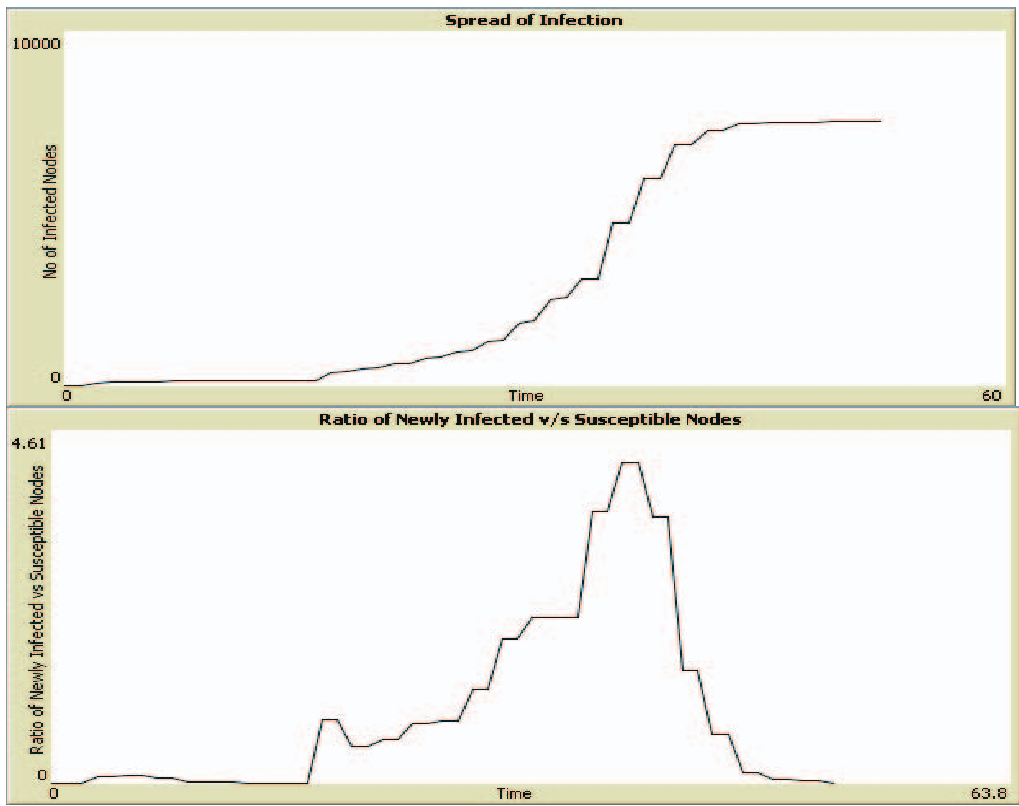 Fig 3: The "Tipping Point" where slow growth becomes an exponential explosion.
Critical Analysis & Conclusion
Takeaway
The study proves that countering misinformation isn't just about fact-checking; it's about altering the payoff matrix. To stop a semantic attack, counter-campaigns must lower the "fitness" of the misinformation strategy—making it socially or practically "costly" to share—before it reaches the Global Trend tipping point.
Limitations
- Static Graph: Real social networks are dynamic; edges appear and disappear. This model uses static snapshots.
- Homophily: The model assumes imitation is based on fitness, but in reality, people imitate those they like or trust, regardless of the information’s "payoff."
Future Work
The authors aim to develop predictive models that can alert social media moderators the moment a specific misinformation "mutant" shows signs of high fixation probability, allowing for surgical counter-interventions.