
Concept Incarnation: Engineering the Social Fertility of New Ideas
Information-Driven Collective Intelligences
The paper introduces a graph-based framework for "Information-Driven Collective Intelligence," focusing on the concept of "Concept Incarnation." It employs complex network theory and a novel non-deterministic operator, Com', to automate the population of unpopular concepts with robust agent communities to foster innovation.
TL;DR
Innovation is not just about having a new idea; it is about that idea finding a "home" within a community. This paper proposes a computational approach to Concept Incarnation, using complex network theory to automatically build dense communities around emerging concepts. By leveraging mathematical operators on scale-free networks, the authors provide a "cognitive prosthesis" that bridges the gap between abstract knowledge and social reality.
The Missing Link in the Knowledge Spiral
In the study of collective intelligence—where thousands of independent agents interact—knowledge is often viewed through the lens of the "Knowledge Spiral." While prior work has focused on Concept Discovery (identifying new ideas from the bottom up), it often ignores the reverse: Concept Incarnation.
The authors argue that a concept like "SCR-based ecologically sustainable engines" might be scientifically valid but socially "unpopular." Without a community of practitioners or web resources to "incarnate" it, the idea remains sterile. The challenge is: how do we mathematically force a community to crystallize around a lonely node in a massive network?
Methodology: The Geometry of Community
The authors treat communities not just as groups of people, but as topological dense regions within a Complex Network.
1. Defining the Complex Landscape
The paper distinguishes between random graphs and real-world networks (Scale-Free and Small-World). Real networks follow a power-law distribution: This "unfair" distribution is actually what allows information to flow efficiently through "hubs."
2. The Com' Operator
To solve the incarnation problem, the authors introduce a graph-transformation operator, Com'.
- Step 1: Identify a "seed" set of nodes (tokens) for a new concept.
- Step 2: If these nodes lack internal density (more out-links than in-links), the operator adds internal edges.
- Step 3: Crucially, the non-deterministic version (Com') uses a pseudo-random approach to ensure the network's structural identity (like its scale-free nature) remains intact while increasing its local clustering.
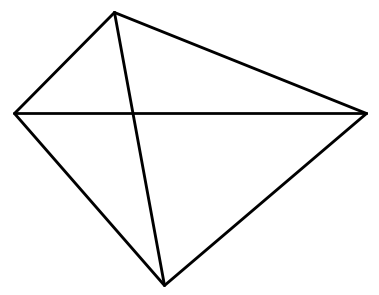 Figure 1: Visualizing 1-clique, 2-clique, strong, and weak communities in the framework.
Experiments: Proving Social Density
The authors utilize spectral analysis and clustering coefficients to validate their method. By applying the Com' operator, they prove that: This mathematical proof ensures that the "cognitive prosthesis" always makes a concept more "socially fertile" than it was before the transformation. In a web context, this translates to creating a robust neighborhood of interconnected sites and resources that stabilize a previously fringe topic.
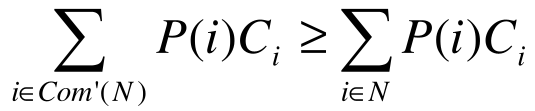 Experimental validation: Ensuring the clustering coefficient increases without destroying network invariants.
Deep Insights & Industrial Impact
The true value of this work lies in Circular Innovation. In the age of social media, manufacturing companies cannot rely solely on internal R&D. They must leverage "end-user innovation."
- Discovery: Users feed fresh concepts into the organization.
- Incarnation: The organization uses these computational tools to "shake hands" with those user communities, populating the new concepts with social ties and digital visibility.
Limitations & Future Work
While the topological approach is sound, the paper largely treats "tokens" (web sites/agents) as interchangeable units. Future research should consider the semantic weight of these connections—not all links are created equal. Furthermore, the real-world performance of the non-deterministic Com' operator in truly massive-scale networks remains an open area for empirical testing.
Conclusion
By treating collective intelligence as a symbiotic "prokaryotic-to-eukaryotic" evolution, the authors have provided a roadmap for how digital networks can act as a higher-level "thinking" layer for human organizations. Innovation is no longer a localized spark; it is a networked process of discovery and incarnation.