
Mobile Money: The "Infrastructure Substitute" for Sub-Saharan Africa
Information Economics and Policy
This study investigates the relationship between physical infrastructure accessibility and the adoption of mobile technology across 11 Sub-Saharan African countries. Using nighttime light intensity as a proxy for infrastructure, the authors reveal that while better infrastructure boosts mobile phone adoption, residents in infrastructure-poor areas are significantly more likely to utilize mobile money and financial transfer services.
TL;DR
Does a lack of roads and electricity hinder digital progress, or accelerate it? This seminal research finds a paradoxical "substitution effect": while people in developed areas are more likely to own phones, it is those in the most remote, infrastructure-starved regions who rely most heavily on mobile money. Mobile technology isn't just a luxury; it's a vital bypass for non-existent physical banking systems.
Problem & Motivation: The Infrastructure Gap
In Sub-Saharan Africa, the lack of fixed-line telecommunications and physical banking branches has historically stifled economic growth. Traditional economic theories suggest that technology adoption follows infrastructure. However, the rise of services like M-Pesa suggested a different narrative. The authors, Mothobi and Grzybowski, sought to quantify this: Does mobile technology simply complement existing wealth, or does it substitute for missing services?
The challenge was the data. How do you measure "infrastructure" for thousands of individual survey respondents across 11 different countries?
Methodology: Lighting up the Map
The researchers utilized a brilliant proxy for infrastructure: Nighttime Light Intensity. By mapping DMSP/OLS satellite data (measuring light at a 1km² resolution) to the geographic coordinates of survey respondents, they created a high-resolution "Infrastructure Index."
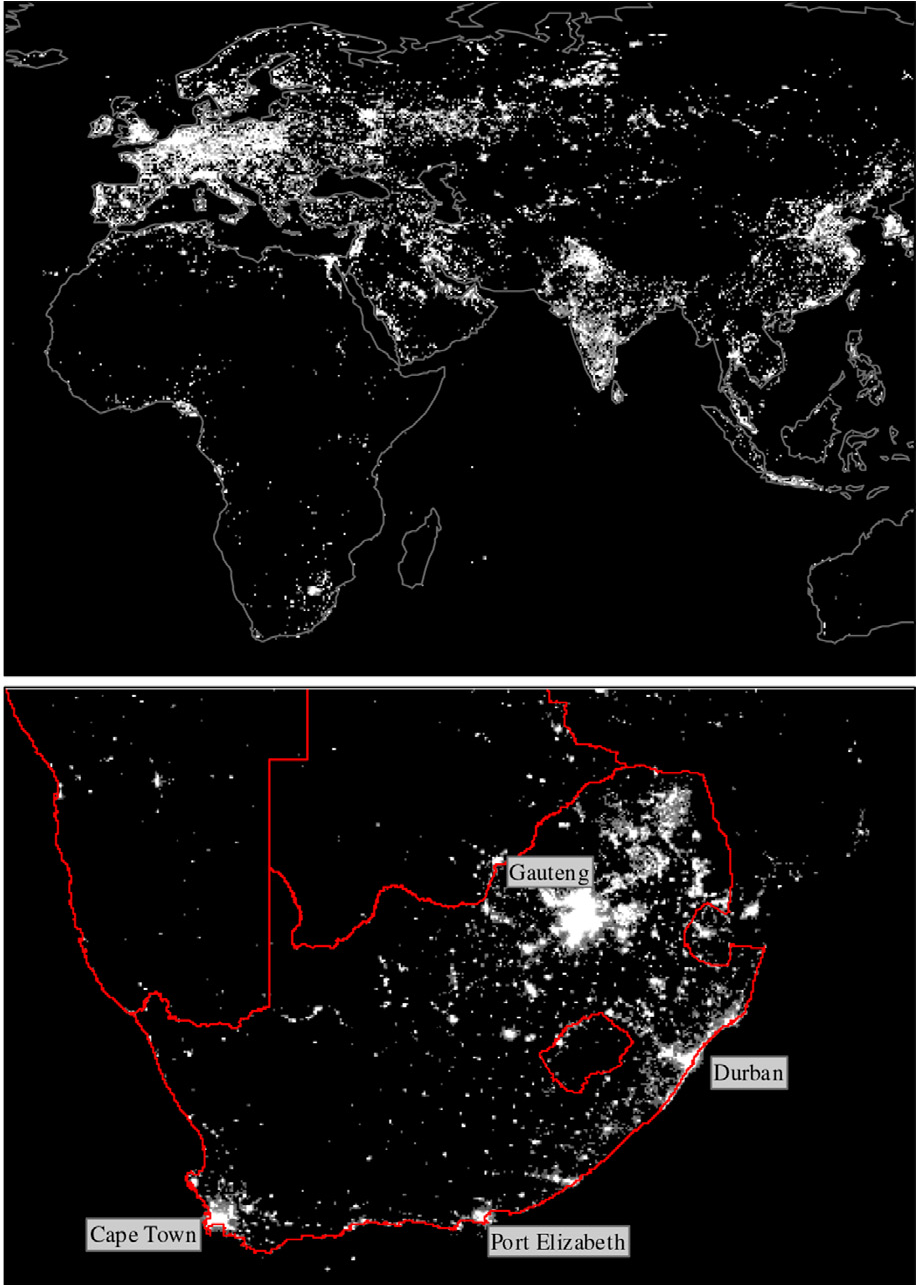
They then combined this with a massive dataset of 13,814 individuals to run logit regressions, testing how infrastructure levels influence three distinct behaviors:
- Adoption: Owning a mobile phone.
- Finance: Sending or receiving money.
- Social: Using the internet for social media or browsing.
The Core Finding: Paradoxical Adoption
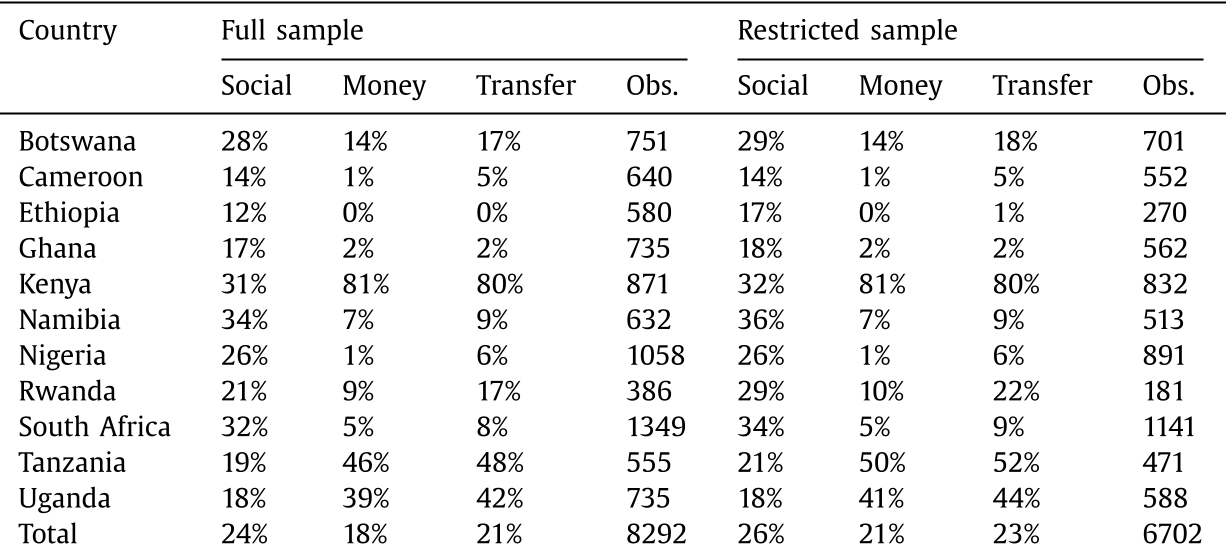
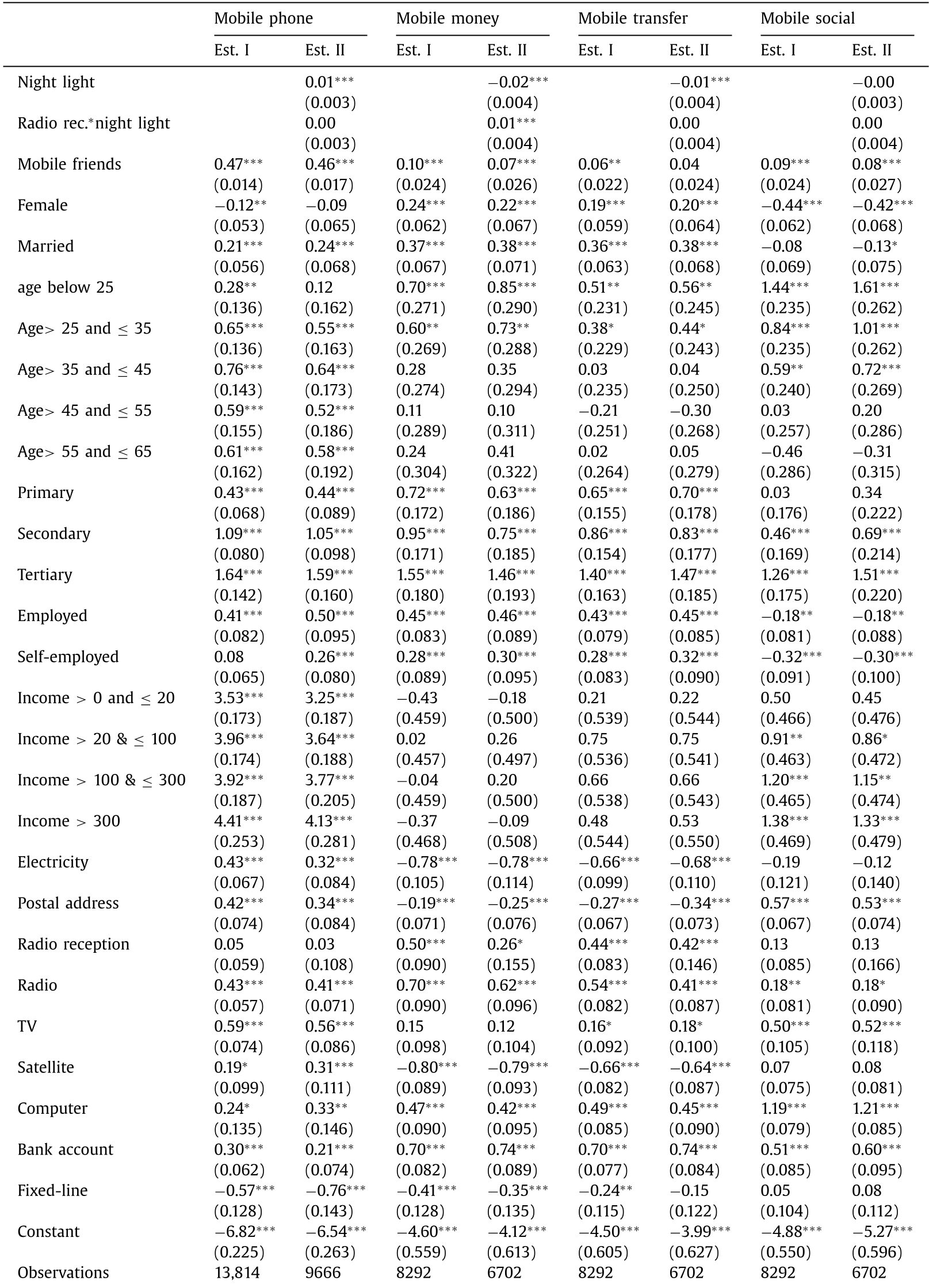
The study's results, highlighted in the regression tables, reveal a striking divergence:
- The Complementary Effect: Phone ownership increases with light intensity. Wealthier, more "lit-up" areas have higher adoption rates.
- The Substitution Effect: Among phone users, the use of mobile money and transfers is negatively influenced by infrastructure development. If you live in a dark, remote area, your phone becomes your bank.
- The Internet Divide: Unlike financial services, using the phone for social media (Facebook, Skype) is largely independent of physical infrastructure but highly dependent on income and education.
Deep Insight: Why Why This Matters
The "why" is rooted in Opportunity Cost. In a city with bank branches and paved roads, the utility of mobile money is incremental. In a remote village where the nearest bank is a day's journey away, mobile money is transformative.
The regression results (Table 7) confirm that for those with "poor radio reception" (a proxy for extreme remoteness), the impact of mobile services on livelihood is significantly higher.
Critical Analysis & Conclusion
Takeaway
Mobile phones in developing nations are more than communication devices; they are institutional placeholders. They perform the functions of banks and postal services where the state or private sector has failed to build physical versions.
Limitations
The study relies on 2011 data. Since then, smartphone penetration and 4G coverage have dramatically shifted the landscape. Furthermore, while "nighttime light" is a proxy for development, it doesn't perfectly capture the quality of institutional trust, which is crucial for mobile money.
The Future
This research provides a blueprint for "leapfrogging." It suggests that for developing economies, investing in digital regulatory frameworks (like mobile banking licenses) may yield higher immediate returns for social inclusion than long-term, high-cost physical infrastructure projects.
Conclusion: In the "darkest" areas of the map, mobile money shines the brightest.