
IE as Ontology Population: Transcending Patterns with Deductive Reasoning
Information Extraction as an Ontology Population Task and Its Application to Genic Interactions
This paper introduces an original architecture that frames Information Extraction (IE) as an Ontology Population (OP) task, specifically targeting complex genic interactions. By integrating a "Lexical Layer" (LL) as a bridge between raw text and conceptual models, the authors achieve high-performance results (Recall 89.3%, Precision 89.6%) on the Bacillus subtilis bacterium corpus using Inductive Logic Programming (ILP).
TL;DR
Information Extraction (IE) is often reduced to "finding entities and the verbs connecting them." This paper argues that for complex domains like genomics, we should instead view IE as Ontology Population (OP). By combining a domain ontology with a specialized Lexical Layer (LL) and using Inductive Logic Programming (ILP) to learn inference rules, the authors demonstrate a system that doesn't just extract text—it reasons about it.
Background: Why Hierarchies Are Not Enough
In the traditional IE pipeline, an ontology is typically a "dumb" taxonomy—a dictionary of concepts used to label parts of speech. The actual extraction is left to "patterns" (e.g., Protein A stimulates Protein B).
The authors identify a critical gap: the granularity of language and the granularity of conceptual knowledge are rarely aligned. To solve this, they treat the ontology not just as a schema for output, but as the execution engine for the entire extraction process.
Methodology: The Architecture of Reasoning
The system's brilliance lies in its three-component split:
- Domain Ontology: The formal logic layer (e.g., "A protein transcripted from a promoter implies a dependency").
- Lexical Layer (LL): An intermediate layer that maps NLP outputs (subject, object, dependency trees) into the ontology's language.
- Query Module: A Prolog-based engine that takes these instances and fires inference rules to "discover" relations that might not even be explicitly stated in a single sentence.
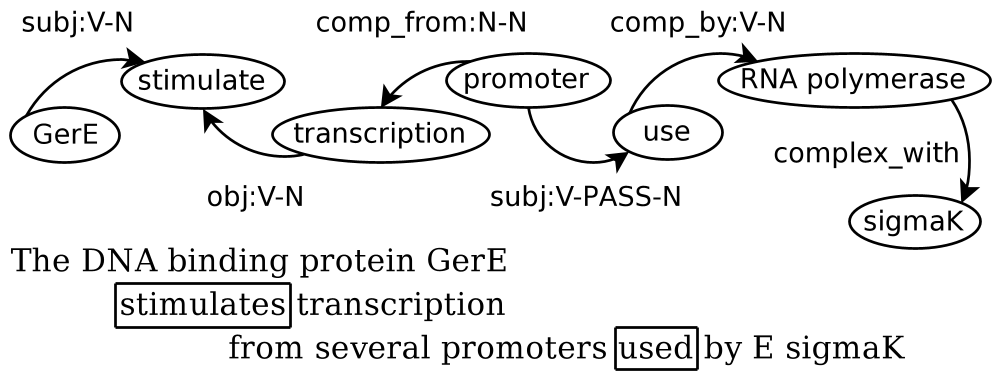 Figure 1: The OP module populating the Lexical Layer and the Ontology from NLP outputs.
Learning the "How" via ILP
Instead of hand-coding thousands of rules, the authors use Inductive Logic Programming (ILP) with the PROPAL learner. By providing the system with examples of annotated genic interactions, the learner discovers the logical Horn clauses required to bridge the gap between "syntactic subject/object" and "biological interaction."
Experimental Results: Precision Meets Complexity
Testing on the Bacillus subtilis corpus (LLL05 Challenge), the system outperformed generic interaction extractors.
| Relation | Recall (%) | Precision (%) |
|---|---|---|
| Promoter Dependence (p_dep) | 91.5 | 94.3 |
| Event Target (et) | 95.8 | 99.4 |
| Global Performance | 89.3 | 89.6 |
The beauty of this approach is in the Ablation Insight: more specific relations (like p_dep) are actually easier for the machine to learn than general "interaction" labels because they exhibit less lexical variability.
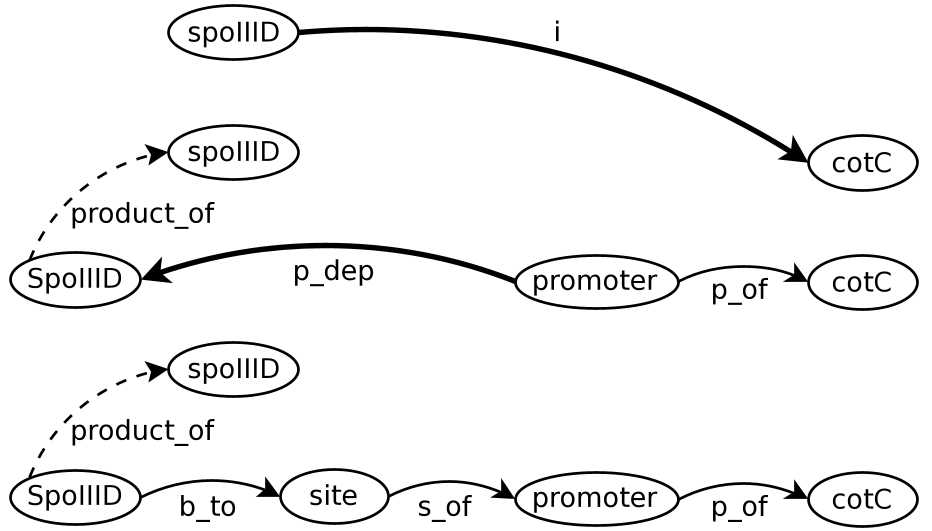 Figure 2: A complex genic interaction network automatically synthesized from multiple disparate sentences.
Critical Insight: Beyond the Sentence
Most IE systems stop at the period. This system uses cross-sentence reasoning. For example, if Sentence A says "Protein X binds to Promoter Y" and Sentence B says "Transcription from Promoter Y is activated by GerE," the system can infer a functional dependency between Protein X and GerE, even if they never appear in the same sentence.
Conclusion & Limitations
Takeaway: This work proves that symbolic reasoning (Ontologies + ILP) provides a level of explainability and precision that raw pattern matching lacks. It moves IE from "Surface Matching" to "Semantic Population."
Limitations: The system relies heavily on the quality of the initial NLP parser and the manual curation of the Ontology. In an era of LLMs, the "Lexical Layer" might be replaced by embeddings, but the core need for logical consistency defined by an ontology remains the "North Star" for reliable knowledge base construction.