
Beyond Topology: Enhancing Link Prediction with Semantic Content and Relationship Age
4823_Information Extraction to improve Link Prediction in scientific social networks.
The paper introduces a novel "Semantic Metric" for link prediction in multi-relational scientific social networks. By integrating content extraction (semantic data) with topological analysis, the method significantly outperforms the traditional Katz metric in predicting future collaborations between researchers.
TL;DR
Predicting who will collaborate next in the scientific world is more than a game of "friends of friends." This paper proposes a Semantic Metric that moves beyond pure graph topology (like the Katz metric) by injecting semantic information from research content and accounting for the temporal decay of relationships. The result? A significant performance boost in 80% of tested scenarios.
Background: The Limits of Pure Topology
Link prediction—the task of identifying future connections in a network—is a cornerstone of social network analysis. For years, the Katz metric has been a benchmark, calculating the weighted sum of paths between two nodes. While mathematically elegant, the Katz metric is "blind" to the nature of the nodes. In a scientific network, it doesn't know if two researchers work on Quantum Physics or Renaissance Art; it only sees the lines connecting them.
The authors argue that this lack of context leads to "content loss" in long relationships and fails to capture the evolving relevance of a researcher's output.
The Methodology: Fusing Semantics with Structure
The core contribution is the Semantic Metric (SM), which refines the link prediction process through three distinct lenses:
1. The Weight of Commonality ()
Instead of just counting neighbors, the authors look at the Number of Relationships in Common relative to the total output of the researchers ().
2. The Temporal Decay ()
Relationships aren't static. A collaboration ten years ago shouldn't weigh as much as one from last year. The authors introduce a decay factor : Where the difference between the Base Year () and Relationship Year () dampens the link's influence.
3. Maximum Flow and Information Recovery
The model accounts for content loss over long chains using a MaxFlow-based approach, ensuring that the "semantic signal" doesn't dissipate as path lengths increase.
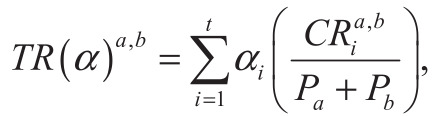 Above: The foundational formula for common relationships (), the building block of the semantic approach.
Experiments and Results
The researchers tested their metric on a multi-relational network of Brazilian university researchers. They compared the Semantic Metric against the Katz Metric using Precision, Recall, and F-Measure.
Key Findings:
- Consistent Superiority: The Semantic Metric achieved better precision and recall in 80% of experiments.
- Data Density Advantage: Performance improved as the network grew over the years (2003–2013). This suggests that as more semantic data (papers) becomes available, the metric becomes increasingly accurate compared to purely structural methods.
- Statistical Significance: A t-test confirmed a p-value of 0.0023, allowing the rejection of the null hypothesis that the two metrics are equivalent.
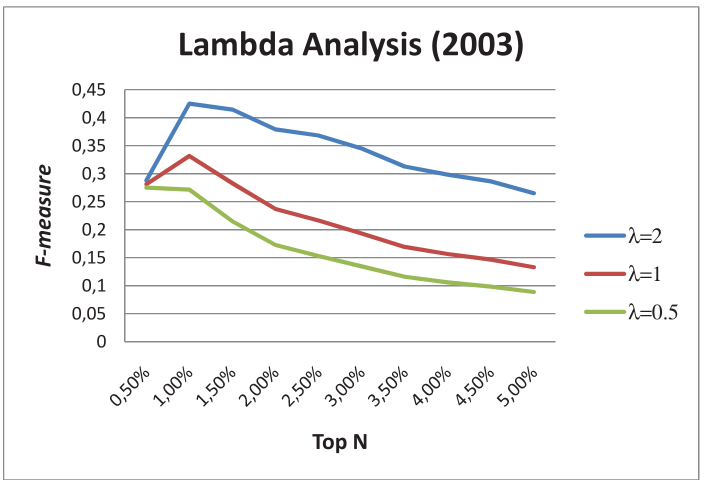 Figure 2: Analysis of F-measure and quality metrics showing the trend of Semantic Metric improvements over standard baselines.
Critical Insight & Future Outlook
The brilliance of this work lies in its acknowledgment that Scientific Social Networks (SSN) are unique. Unlike a casual friendship network, SSNs are driven by shared expertise and temporal relevance. By weighting the graph with "Relationship Age" and "Content Extraction," the authors provide a blueprint for more intelligent recommendation systems in academia.
Limitations: The current study focuses on a specific geographic subset (Brazilian universities). While the results are promising, the next step—as the authors suggest—is to apply this to massive datasets like DBLP to see if the semantic weighting holds up under the "noise" of millions of nodes.
Conclusion
This paper proves that the "Why" (semantic content) is just as important as the "Who" (topology) in link prediction. As we move toward more complex, AI-driven research assistants, integrating these hybrid metrics will be essential for fostering the next generation of scientific breakthroughs.