
When Friends Over-Share: The Science of Peer Disclosure and Privacy Control
9604_Information Privacy Concern About Peer Disclosure in Online Social Networks.
This paper investigates Information Privacy Concern About Peer Disclosure (IPCPD) in Online Social Networks (OSNs). It presents a contingency model based on Communication Privacy Management and Impression Management Theory, demonstrating how decisional control's efficacy in reducing privacy concerns depends on image discrepancy and social network overlap.
Executive Summary
TL;DR
In the world of Facebook and Instagram, your privacy isn't just in your hands—it’s co-owned by your friends. This paper tackles Information Privacy Concern About Peer Disclosure (IPCPD), revealing that a user's desire for control over what friends post is not constant. Instead, it fluctuates based on who is watching and how bad the information makes the user look.
Background Positioning
While most academic work focuses on how companies (like Amazon or Google) use your data, this study is a pivotal contribution to Social Privacy. It shifts the focus from "User-vs-Firm" to "User-vs-Peers," providing a rigorous theoretical framework for why we sometimes get "privacy fatigue" and other times feel "privacy panic."
The "Co-Ownership" Problem
The central tension in Online Social Networks (OSNs) is that privacy boundaries are collective. If a friend tags you in a photo of a party you weren't supposed to attend, they have violated a "tacit" privacy rule. Current methods fail because they treat privacy as a binary switch. The authors argue that privacy concern is actually a function of Impression Management: we aren't just protecting data; we are protecting our "face."
Methodology: The Three-Way Tug of War
The researchers identified three variables that dictate our privacy anxiety:
- Decisional Control: Can you veto a tag before it goes live?
- Image Discrepancy: Does the post make you look like a "bad friend" or "unprofessional"?
- Social Network Overlap: Is the audience made up of your close inner circle or "friends of friends" (potential strangers)?
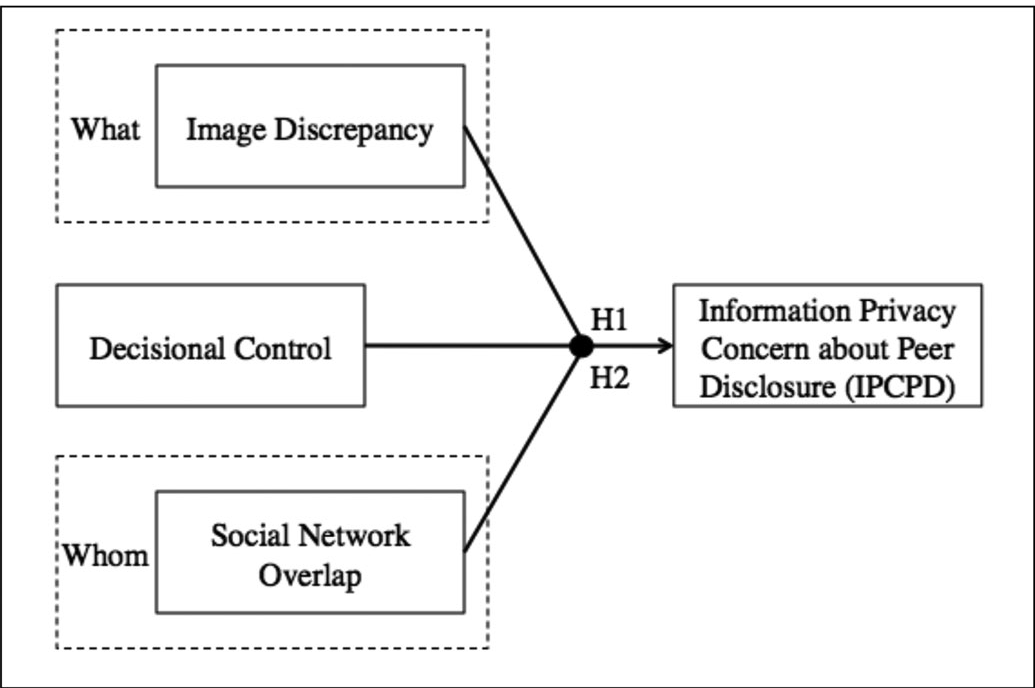 Figure 1: The Research Model illustrating the interaction between Control, Image, and Network.
Key Insights: When does "Control" actually matter?
The results from the 144-person lab experiment, utilizing a simulated Facebook interface, yielded a "counter-intuitive" but logical finding:
1. The "First Impression" Effect (Low Image Discrepancy)
When a post is relatively harmless, you only care about control if the audience consists of strangers (Low Overlap). Why? Because "you only get one chance to make a first impression." If the audience is already your friends, they already know who you are; a minor post doesn't move the needle.
2. The "Reputation Guard" Effect (High Image Discrepancy)
When a post is damaging, you care deeply about control if the audience consists of your close friends (High Overlap). You have invested years in these relationships; a major image discrepancy feels like a betrayal of that trust and a threat to your social capital.
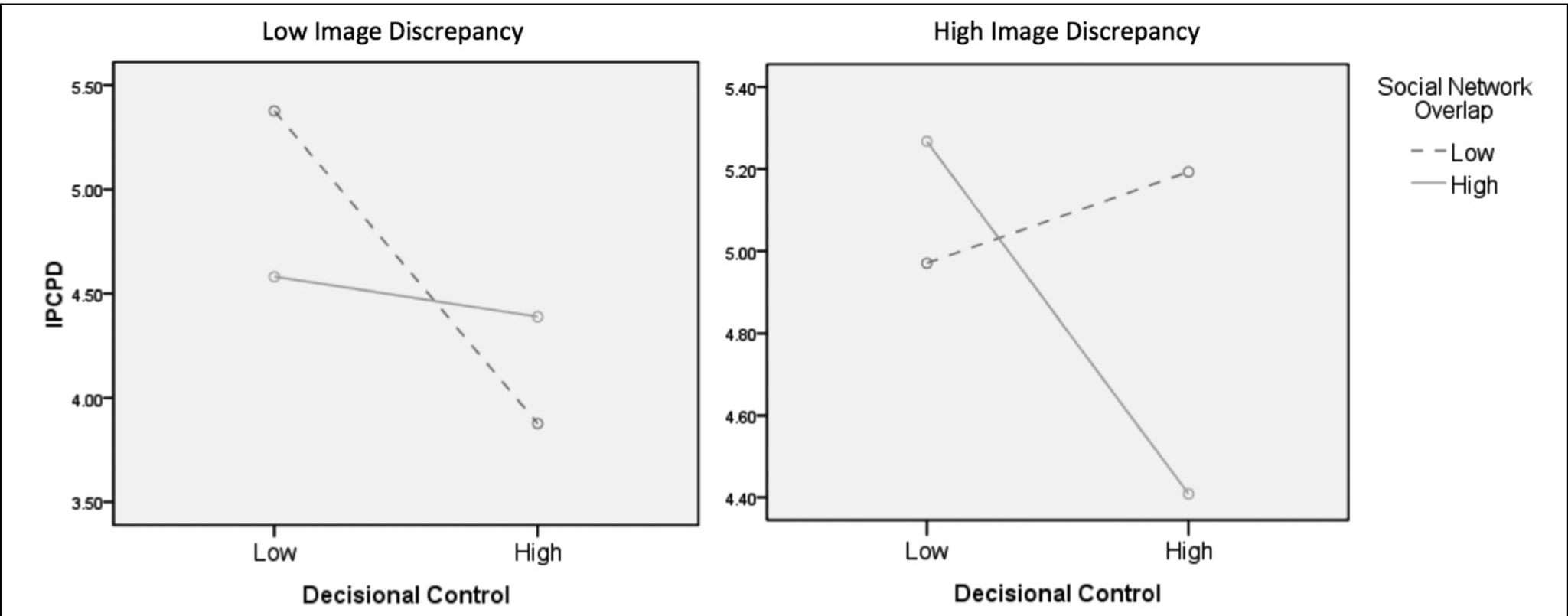 Figure 2: Interaction effects showing when Decisional Control successfully reduces IPCPD.
Critical Analysis & Professional Perspective
Why this works
The genius of this paper lies in its application of Impression Management Theory. It recognizes that we are "social actors" performing for different audiences. The inclusion of Social Network Overlap is particularly brilliant—it acknowledges that in OSNs, the discloser's audience is often a "black box" to the disclosed person.
Limitations
The study relies on undergraduate students and photo tagging. While students are "digital natives," their privacy concerns regarding professional image (e.g., on LinkedIn) might differ significantly from their social image on Facebook. Additionally, as AI-based image recognition improves, the concept of a "tag" might become obsolete, as platforms will identify users automatically regardless of manual "decisional control."
Conclusion: Design for the Context
The takeaway for platform designers is clear: Contextualize the Control. Instead of a blanket privacy setting, platforms should perhaps proactively prompt users for approval when they detect a "low overlap" audience or sensitive keywords, helping users manage their varied social "faces" more effectively.
As we move into an era of "others talking about me" via AI and pervasive sharing, this paper provides the foundational "rules of engagement" for collective privacy.