
Westeros Sentinel: Decoding the Emotional Pulse of Game of Thrones via Web Intelligence
Information Processing and Management
The paper introduces "Westeros Sentinel," a Web intelligence portal built on the webLyzard platform to analyze public discourse surrounding HBO’s "Game of Thrones." It aggregates news and social media data, utilizing SenticNet 3 for concept-level sentiment analysis and sophisticated visual analytics to track audience engagement and emotional perception.
TL;DR
As the television landscape shifts from passive viewing to active social media engagement, traditional ratings no longer suffice. This paper presents Westeros Sentinel, a sophisticated intelligence portal that harvests data from news and social platforms to map the "emotional geography" of HBO’s Game of Thrones. By combining Named Entity Recognition (NER) with deep sentiment analysis, it offers a real-time window into how fans and critics perceive specific characters and plot twists.
Background: Beyond the Nielsen Box
The era of a single family watching a broadcast scheduled at a specific time is over. We now live in an age of "Social TV," where the discourse on Twitter, Facebook, and YouTube is as important as the broadcast itself. The authors argue that industry-standard metrics are blind to why people engage. To solve this, they built a system that doesn't just count mentions but understands affective knowledge—the underlying emotions of the audience.
Methodology: The Engine Behind the Wall
The Westeros Sentinel is powered by the webLyzard platform, utilizing a multi-stage pipeline:
- Content Acquisition: Real-time crawling of 150 Anglo-American news sites and social APIs (Twitter, YouTube, etc.).
- Named Entity Resolution (Recognyze): Instead of just searching for the word "Arya," the system uses DBpedia and specialized wikis to resolve entities, ensuring that "The Imp" and "Tyrion Lannister" are mapped to the same fictional entity.
- Affective Extraction: Using SenticNet 3, the system moves beyond a simple "positive/negative" binary. It categorizes text into four emotional dimensions: Pleasantness, Aptitude, Attention, and Sensitivity.
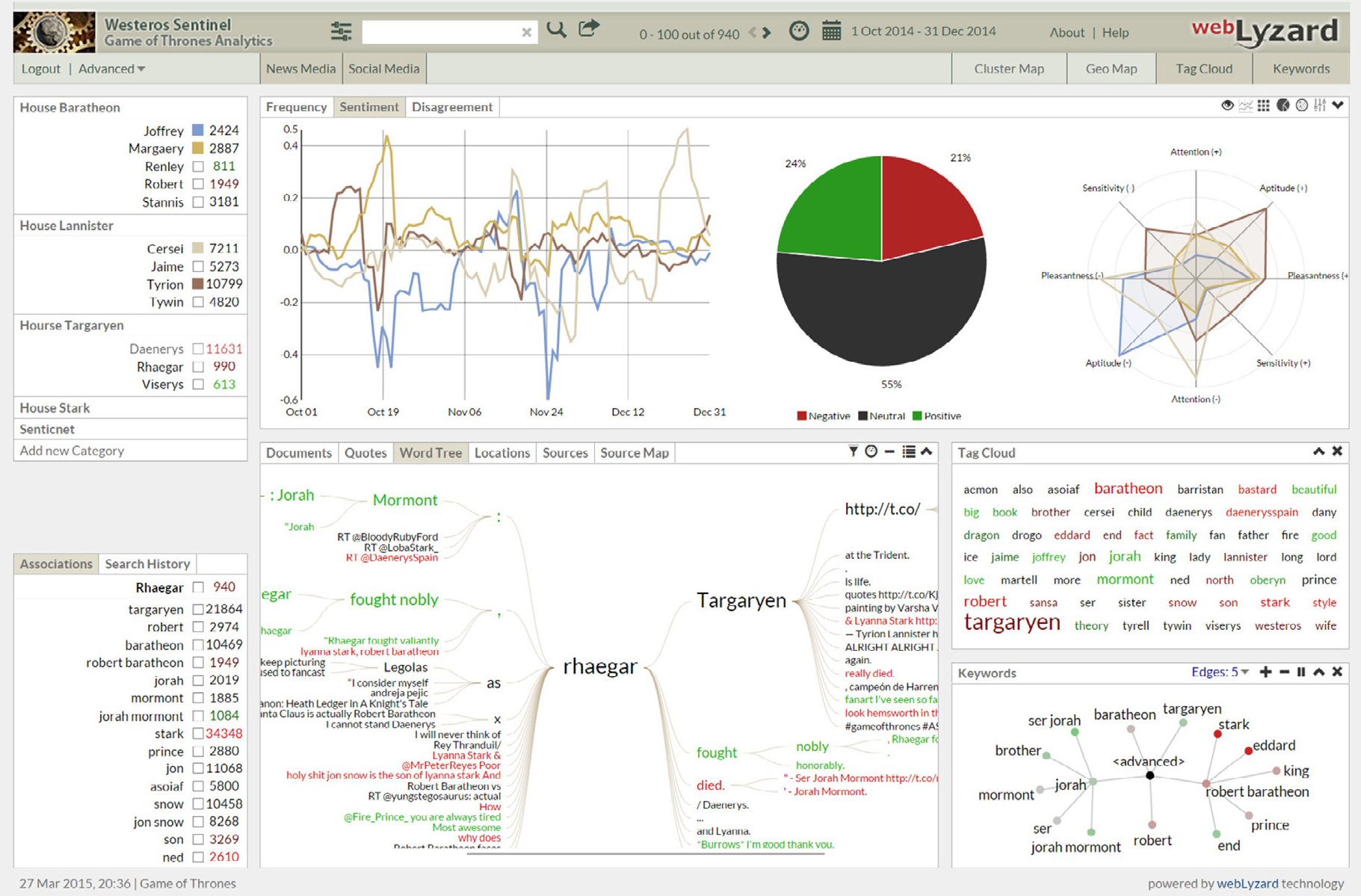 Figure 1: The Westeros Sentinel Dashboard, featuring integrated trend charts and topic management.
Visualizing Fictional Worlds
The most impressive part of the system is how it translates complex data into "Actionable Knowledge" through synchronized views:
- The Word Tree: A graph-based concordance tool that shows the lexical context of queries. For instance, searching "Lannister" visually displays the most frequent phrases preceding or following the name, revealing recurring memes or critique tropes.
- Sentic Radar Charts: This allows a side-by-side comparison of characters. As shown in the study, a "villain" like Joffrey Baratheon and a "hero" like Tyrion Lannister show drastically different shapes on the radar chart, reflecting the audience's mixed feelings of repulsion and fascination.
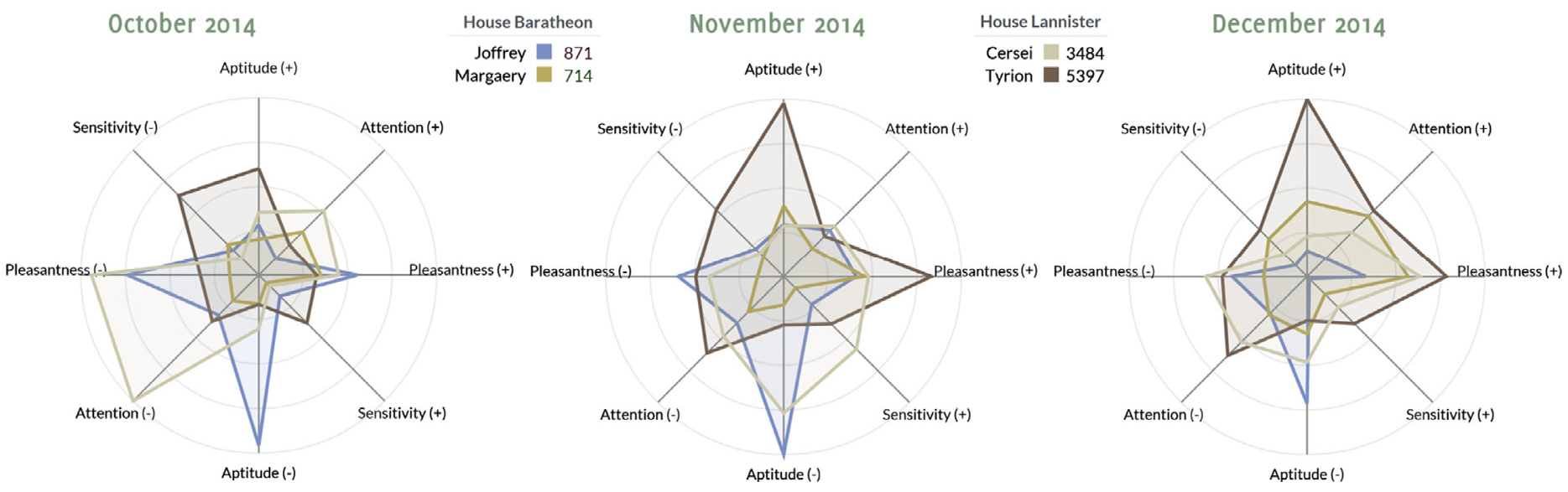 Figure 2: Radar charts depicting media perceptions of key characters across emotional categories.
Key Results & Achievements
The researchers validated their approach using multiple evaluation corpora (including IMDB and Amazon reviews), finding that their context-aware sentiment extension significantly outperformed traditional methods.
- Accuracy: F-measure for sentiment detection reached 73.7%, a near 10-point jump from standard lexicons.
- Disagreement Tracking: The system uniquely measures the "standard deviation of sentiment," highlighting which characters or episodes are the most polarizing among the fanbase.
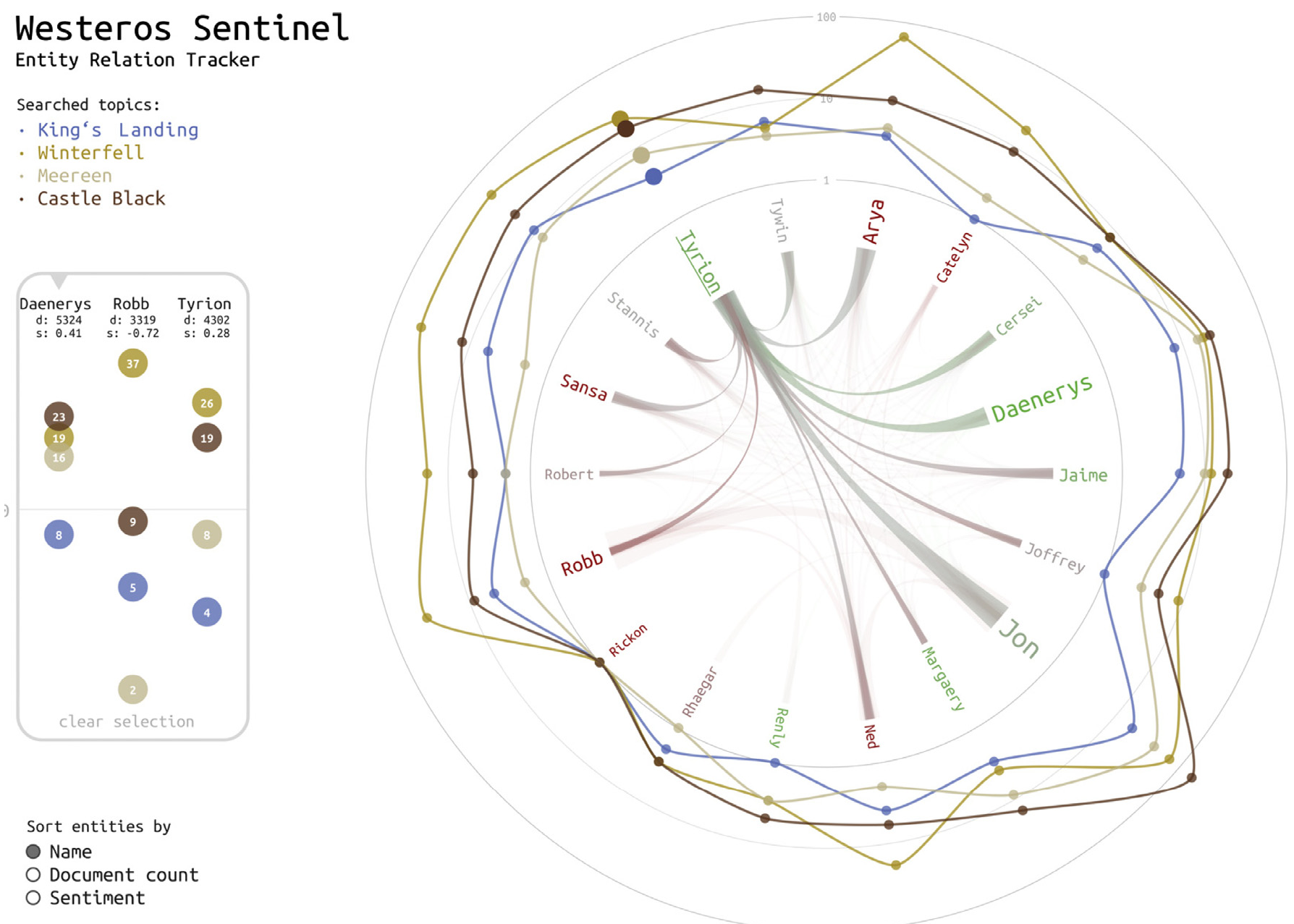 Figure 3: The Entity Map visualizing relationships and sentiment between characters and locations.
Critical Insight & Future Outlook
The Westeros Sentinel isn't just a tool for fans; it’s a blueprint for Brand Intelligence. By identifying which plot elements trigger "sensitivity" versus "pleasantness," networks like HBO can optimize their marketing and engagement strategies.
Limitations: The authors acknowledge that distinguishing between a critique of an actor's performance and a critique of a character's actions remains a challenge. Future work involving dependency parsing aims to solve this by identifying "opinion targets" more precisely.
In conclusion, this work elevates social media monitoring from simple "buzz" tracking to a nuanced psychological analysis of the global audience.