
Beyond Centrality: A Multi-Objective Approach to Node Importance in Social Networks
Information Processing and Management
2010-01-01
Summary
Problem
Method
Results
Takeaways
Abstract
This paper proposes a multi-objective decision-making framework for identifying influential nodes in social networks. By integrating five distinct topological and flow-based indicators (Structural Holes, Flow Betweenness, Cumulative Nomination, Information Indices, and Subgraph Centrality) using the Analytic Hierarchy Process (AHP), the authors create a comprehensive closeness degree metric (Z) to rank node importance more accurately than single-metric approaches.
## TL;DR
Identifying "VIP" nodes in a social network is often reduced to simple metrics like "Who has the most friends?" (Degree) or "Who is the best bridge?" (Betweenness). However, this paper argues that true importance is a multi-faceted reality. By combining five specialized graph metrics—including **Structural Holes** and **Flow Betweenness**—into a single ranking system using multi-objective decision theory, the authors provide a more surgical way to identify nodes that, if removed, would cause the most significant network collapse.
## The Problem: The Myopia of Single Metrics
In network science, we often suffer from "indicator bias." A node might have a high degree (many connections) but occupy a peripheral cluster with no real influence over the flow of information. Conversely, a node with a low degree might be the only bridge between two massive communities (a "structural hole").
The authors observe that existing work often ignores the complexity of social roles. A person’s social "importance" is rarely about just one thing—it’s a mix of their reputation (**Prestige**), their location (**Topology**), and their efficiency in passing rumors (**Flow**).
## Methodology: The Comprehensive Decision Blueprint
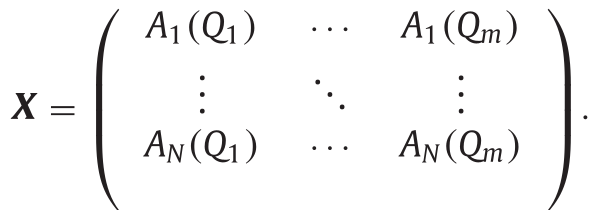
The core innovation lies in treating each node as a "solution" to an optimization problem. The authors selected five distinct dimensions:
1. **Structural Holes (CH):** Measuring if a node connects otherwise disconnected groups.
2. **Flow Betweenness (CF):** Analyzing how much "traffic" passes through a node.
3. **Cumulative Nomination (CN):** A prestige-based metric similar to PageRank.
4. **Information Indices (CI):** Quantifying a node's efficiency in information spread.
5. **Subgraph Centrality (CS):** Analyzing the node's participation in local clusters.
### Step 1: Weighting the Indicators
Using the **Analytic Hierarchy Process (AHP)**, the authors created a comparison matrix (Table 1) to determine which metric matters most. They concluded that **Structural Holes** (CH) carry the highest weight (0.4556) because nodes that fill these gaps are critical for network control and information brokerage.
### Step 2: Finding the "Ideal Solution"
The method uses a logic similar to TOPSIS. It creates a "Positive Ideal Solution" (a hypothetical node that scores perfectly on all five metrics) and a "Negative Ideal Solution." The importance of a node ($Z_i$) is then determined by how close it is to the ideal and how far it is from the worst-case scenario.
## Experiments & SOTA Comparisons
The authors tested their method on several real-world datasets, most notably the **ARPA network** (a precursor to the modern internet).
The ultimate test for node importance is **Network Vulnerability**: "If we remove the most important nodes, how quickly does the network fall apart?"
* **Standard Methods:** Removing the Top 5% of nodes split the network into 4 or 5 pieces.
* **This Proposed Method:** Removing the Top 5% split the network into **6 separate pieces**, demonstrating that it had correctly identified the "critical linchpins" that held the network together.
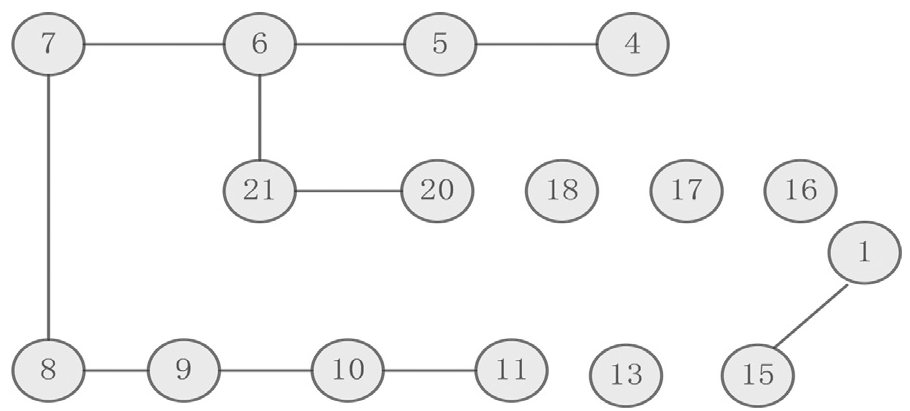
*Fig: The ARPA network shattered after removing nodes identified by the proposed multi-objective method.*
## Deep Insight: Why Why This Matters
The impact of this research extends beyond abstract graph theory. In **Epidemiology** (modeled via the HIV/AIDS network in the paper), identifying these nodes helps health officials understand "super-spreaders." In **Emergency Management**, it identifies communication hubs that must be protected at all costs during a disaster.
### Limitations & Future Work
The main drawback is **Computational Complexity**. Calculating Information Indices and Subgraph Centrality requires matrix inversions and eigenvalue decompositions ($O(N^3)$), making it difficult to scale to massive social networks like Twitter or Facebook without optimization. Future research might look into approximating these values or using sparse matrix techniques to bring the method into the "Big Data" realm.
## Conclusion
This paper serves as a reminder that in complex systems, the "best" answer usually doesn't come from a single perspective. By synthesizing local, global, and flow-based metrics, the proposed comprehensive decision method provides a robust and mathematically sound framework for finding the true power players in any network.