
E-Value: The Hidden Engine of Viral Word-of-Mouth
Information Processing and Management
This study investigates the influence of emotional expressions in electronic Word-of-Mouth (eWOM) using a unique coding scheme based on Formal Value Theory. By analyzing three communication waves of a Swedish industrial design start-up (BETTER-DESIGN), the authors demonstrate that emotional triggers significantly accelerate the spread and impact of consumer sentiment in online communities.
TL;DR
Why do some brand campaigns ignite instant conversations while others, filled with detailed facts, fall silent? This research reveals that Emotional Value (E-value) acts as a catalyst for electronic Word-of-Mouth (eWOM). By analyzing a design start-up's journey, the study finds that emotional comments are shorter, punchier, and spread significantly faster than logical or practical discourse.
Problem & Motivation: Beyond the Functional Noise
In a digital marketplace flooded with signals, most start-ups struggle to "cut through the noise." Traditional marketing assumes consumers are rational actors who weigh pros and cons. However, the authors argue that this rational process takes too long for the fast-paced online environment. The real problem isn't a lack of information—it's the lack of emotional resonance that triggers immediate action.
The researchers sought to understand the "Why" behind eWOM: What specific types of value expressions actually drive community engagement?
Methodology: Coding the Human "Gut Feeling"
The study utilizes Hartman’s Formal Value Theory to categorize eWOM into a hierarchy of richness:
- Intrinsic (Emotional - E): Unique, infinite, and deeply personal (e.g., "Love it!!! ❤️").
- Extrinsic (Practical - P): Focused on utility and results (e.g., "Will this fit in a standard bookshelf?").
- Systemic (Logical - L): Factual, categorical, and often rigid (e.g., "Output is 50W, 8 ohms.").
By tracking the Swedish start-up BETTER-DESIGN across three "communication waves," the authors analyzed 722 comments to correlate these value types with Text Volume (how much is said) and Response Time (how fast it is said).
 Figure 1: The intersection of e-communication stimuli and value-driven eWOM.
Key Findings: The Speed of Emotion
The study's most striking revelation is the inverse relationship between technical detail and communication speed:
- Emotional Brevity: E-value comments are significantly shorter. While a logical response might drag on for 500+ characters, emotional reactions are succinct "bursts" that are easier for others to consume and viralize.
- Response Velocity: Users expressing E-value are the "first responders" of the internet. They react more quickly to stimuli, providing the initial momentum needed for a thread to become "trending."
- Visual Triggers: The third wave of the campaign—which utilized high-quality photography and "saga" storytelling—generated the highest concentration of E-value and the most successful eWOM.
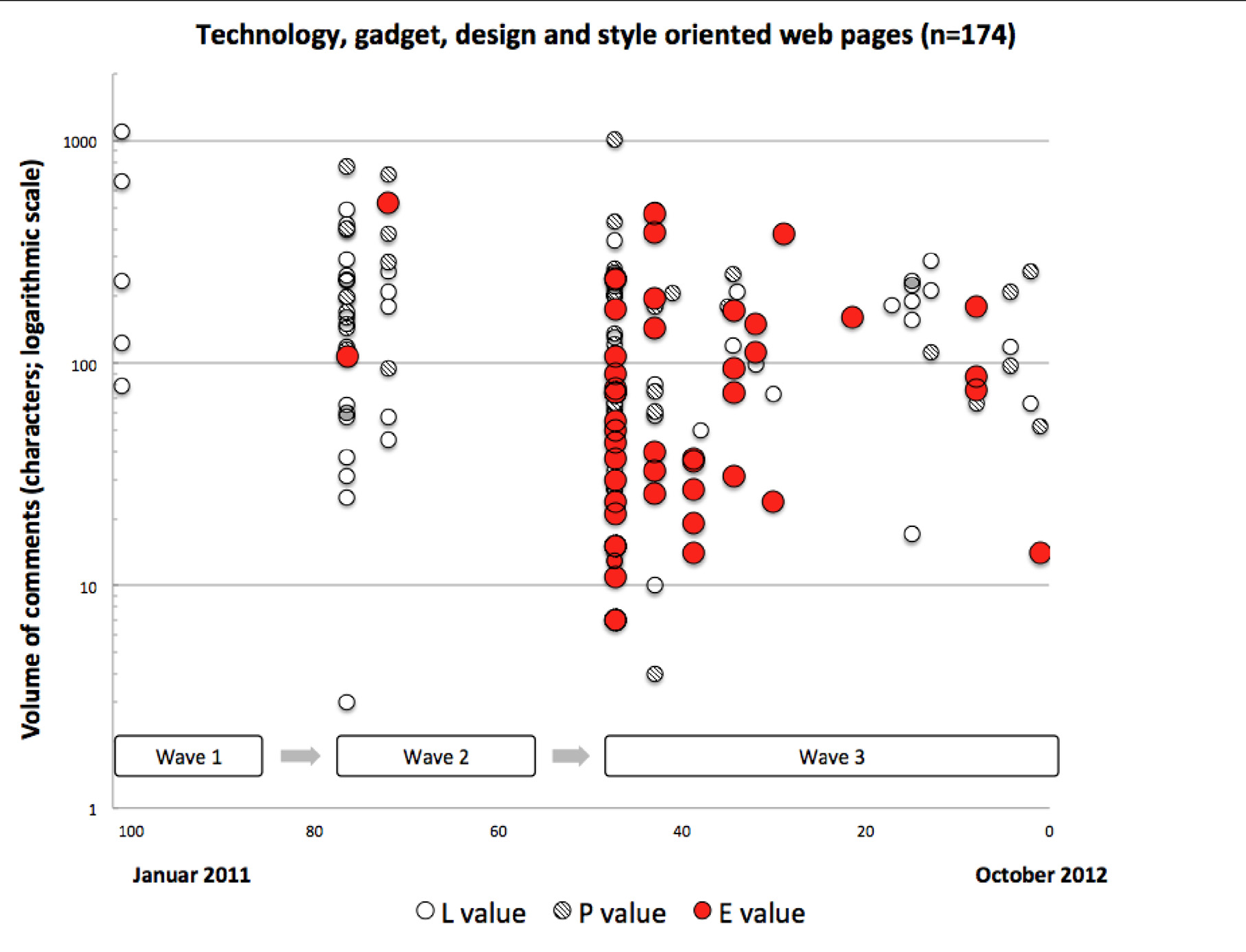 Figure 2: Comparing text volume across Emotional, Practical, and Logical groups.
Critical Analysis & Conclusion
This work highlights a critical Inductive Bias in digital marketing: the belief that more information leads to more sales. In reality, for a start-up, authenticity and artistic appeal outperform manual-style specs.
Takeaway for Research and Industry:
- Design for Emotion: Platforms and campaigns should prioritize "E-triggers" (emoticons, visual storytelling) to facilitate rapid knowledge sharing.
- The "Group Think" Syndrome: Emotional eWOM creates a legitimizing force similar to "group think," which is essential for the survival of new ventures.
Limitations: The study is limited to a single case (audiophile speakers) and focused on a relatively small user base. Future research should explore if this "speed of emotion" holds true for utilitarian products like insurance or healthcare software.
Future Outlook: As we move toward AI-driven social mining, integrating Formal Value Theory into sentiment analysis could allow brands to predict not just what people feel, but how fast that feeling will turn into a viral wave.