
Voluntary Sharing vs. Mandatory Provision: Decoding the Privacy Calculus of SNS Users
Information Processing and Management
This study investigates private information disclosure on Social Networking Sites (SNS) by bifurcating behavior into two modes: "Voluntary Sharing" and "Mandatory Provision." Utilizing Communication Privacy Management (CPM) theory, the authors demonstrate that while perceived benefits drive spontaneous sharing, perceived risks and age are dominant inhibitors in mandatory scenarios.
TL;DR
Not all social media posts are created equal. This research breaks down the "privacy paradox" by distinguishing between Voluntary Sharing (spontaneous status updates) and Mandatory Provision (required data for registration). The findings reveal that while we share for social benefits, we resist mandatory data requests primarily due to perceived risks and age-related caution.
Contextual Positioning
In the landscape of Information Management, this paper shifts the focus from a monolithic view of disclosure to a nuanced, dual-mode framework. It moves away from simply asking "Why do people share?" to "How does the nature of the request change the decision-making process?"
The Problem: The Overlooked Mandatory Disclosure
Most existing literature treats privacy disclosure as a choice. However, modern SNS platforms often hold "gates"—you cannot enter or use a feature without providing a phone number or real name. The authors argue that the psychological "boundary" defined in Communication Privacy Management (CPM) theory reacts differently when pushed by a platform versus when opened by the individual.
Methodology: The Core Intuition
The researchers hypothesized that "Core Criteria" (like Age and Gender) and "Catalyst Criteria" (like Risk-Benefit ratios and Motivation) would weight differently across the two modes.
The Two Modes Defined:
- Voluntary Sharing: Driven by emotional needs, reciprocity, and social interaction.
- Mandatory Provision: An economic exchange—data in return for service access.
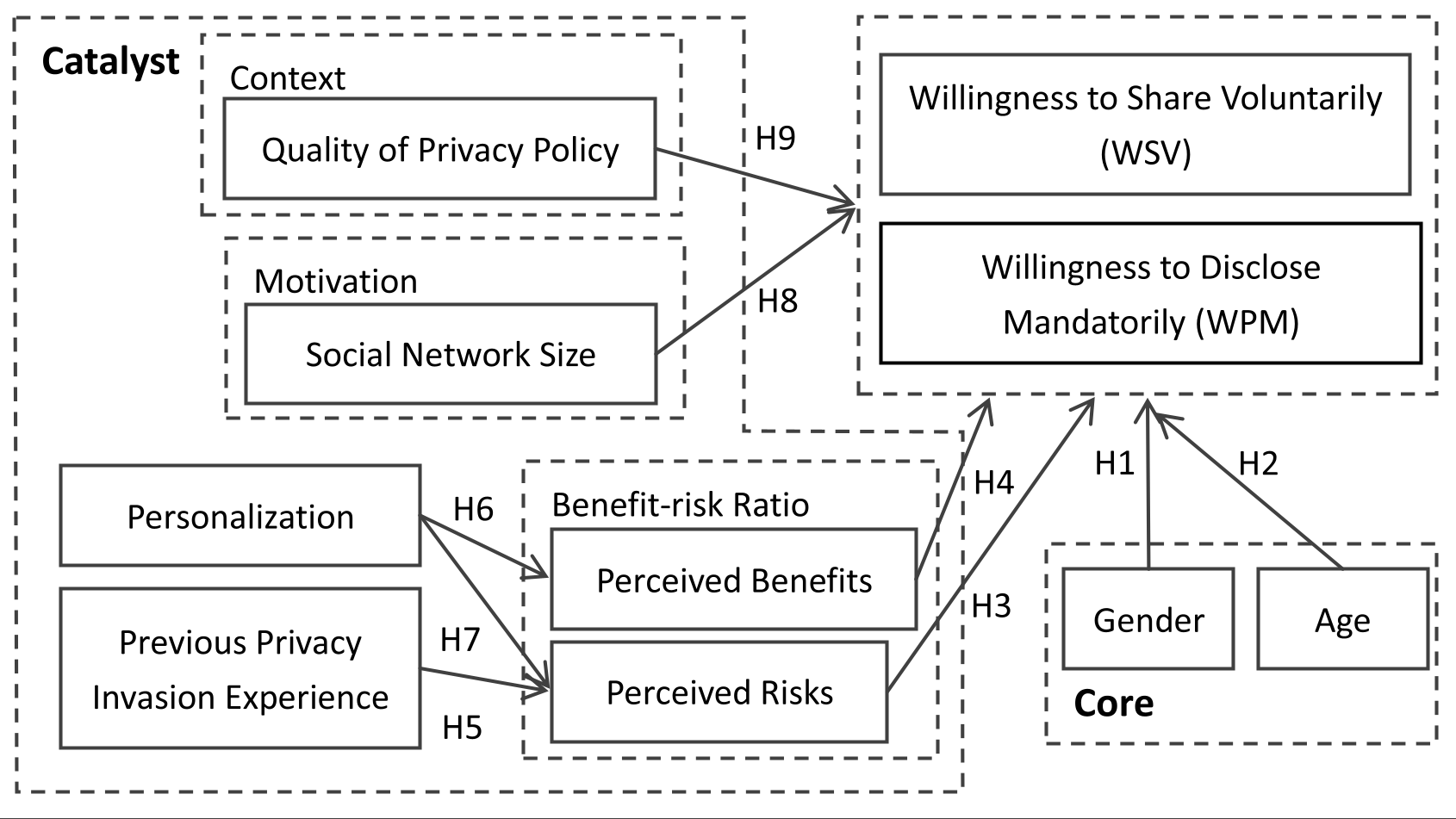 Figure 1: The theoretical model mapping Core and Catalyst criteria to disclosure willingness.
Key Insights and Results
The PLS-SEM analysis produced several counter-intuitive findings that challenge standard privacy assumptions:
- The Risk Sensitivity Gap: Perceived risk is a massive deterrent for mandatory data (β = -0.213) but much less so for voluntary posts (β = -0.075). When users want to share a photo, they downplay the risks.
- The Interaction Pressure: Social network size increases voluntary sharing—a result of "homophily" and the pressure to reciprocate. However, having more friends does nothing to make a user more willing to give their phone number to the platform.
- The Privacy Policy Paradox: Quality privacy policies are far more effective at encouraging mandatory data provision than voluntary sharing. In mandatory scenarios, users are more "vigilant" and actually read/value the safeguards.
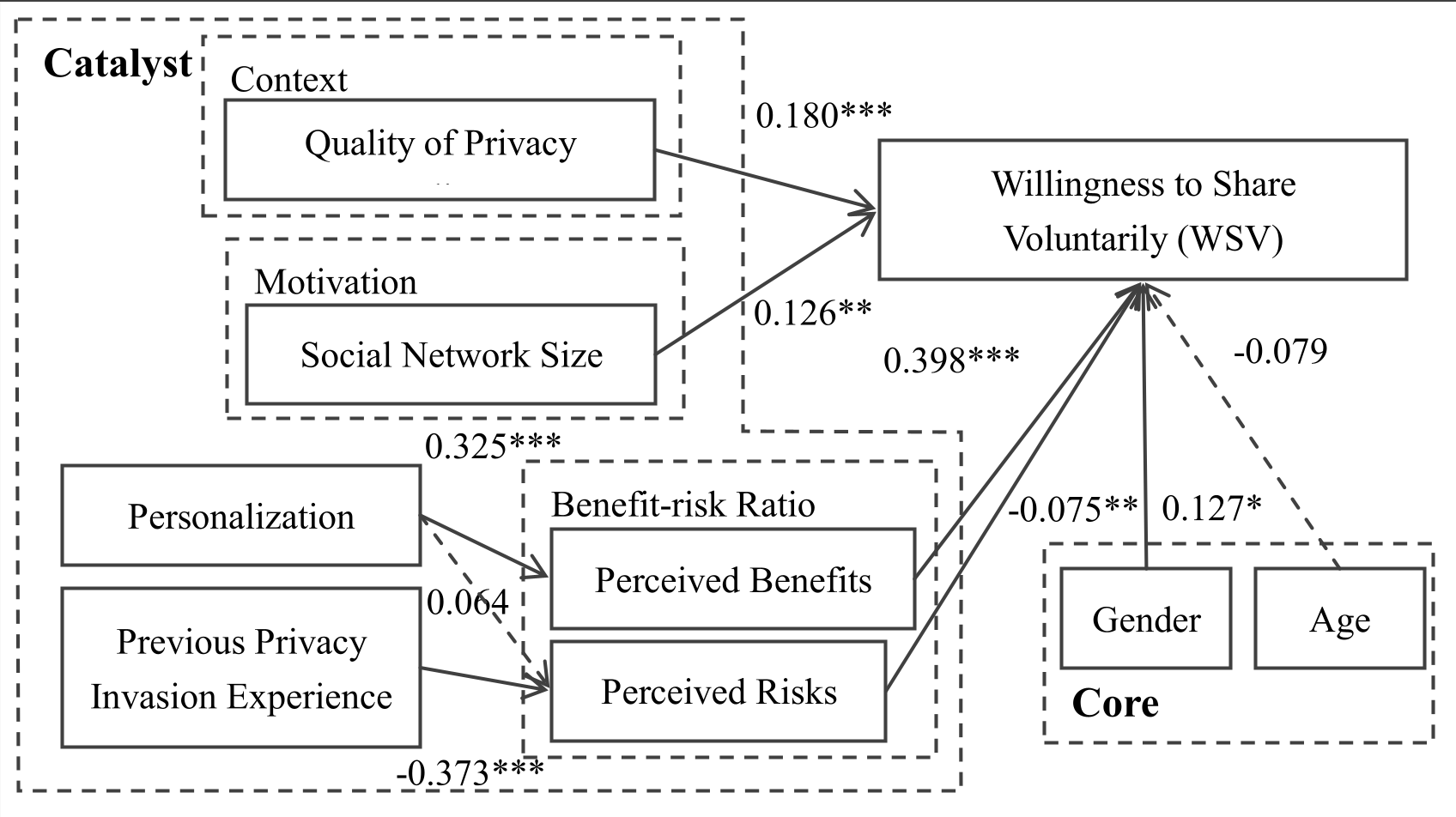 Figure 2: Hypotheses testing for Model 1 (Voluntary Sharing).
Critical Analysis: Why This Matters for the Industry
The "Personalization-Privacy Paradox" suggests users want tailored services but fear data collection. This study clarifies that this paradox is most acute in Mandatory Provision.
Practical Implications for Product Designers:
- For Onboarding: Avoid heavy data requests at registration. Users are hyper-aware of risk at this stage.
- For Engagement: Focus on the "Social Network Size" effect. By building emotional connections and fostering community interaction, platforms naturally lower the perceived risk barriers to voluntary information sharing.
Conclusion and Future Outlook
This paper successfully bridges the gap between CPM theory and practical SNS management. It highlights that the "right to be let alone" (Privacy) is not a static gate but a flexible boundary. Future research should look at how this applies to AI assistants, where the line between voluntary conversation and mandatory data processing is increasingly blurred.
Limitations: The study's sample leaned heavily toward users aged 21-30. Future validation in older demographics, who showed higher risk aversion in this study, is crucial for a global understanding of digital privacy.