
Beyond Access: How Social Capital and "Face" Drive the Educational Digital Divide
Information Seeking Practices of Parents: Exploring Skills, Face Threats and Social Networks
This study investigates the information-seeking practices of parents across different socio-economic statuses (SES), focusing on their pursuit of educational opportunities for children. Through 63 interviews and a national survey of 977 parents, the authors identify how SES influences technical confidence, face-saving concerns, and the use of social networks for "learning brokerage."
TL;DR
Why do free online tools fail to close the achievement gap? This study reveals that the barrier isn't just a lack of devices or internet, but a complex web of perceived technical skill, social network structure, and the psychological fear of "face saving" (embarrassment). While wealthy parents use social networks as "leverage" to find elite opportunities, lower-income parents often limit themselves to school-based "monitoring" to avoid being judged as inadequate.
The "Second Digital Divide": A Problem of Practices
For years, the "Digital Divide" was defined by who had hardware. Today, the focus has shifted to the Second Digital Divide: the inequality in how technology is actually used. Even when education is "free and online," children of highly educated parents continue to reap disproportionate rewards.
The authors argue that parents are the "Learning Brokers." If a parent doesn't feel comfortable navigating a social network or an educational portal, the child never gets to the "start line" of that learning experience.
Why Parents Stay Silent: The Mechanics of "Face" and Skill
The research highlighted two major psychological barriers:
- Technical Self-Efficacy: Lower-SES parents often possess the skills to use Facebook or search the web but do not identify as "tech people." This identity crisis prevents them from exploring complex educational platforms.
- Face Saving: Dealing with schools and teachers can be intimidating. Many lower-income parents fear that asking "the wrong question" or seeking help will make them look inferior or inadequate in the eyes of the community.
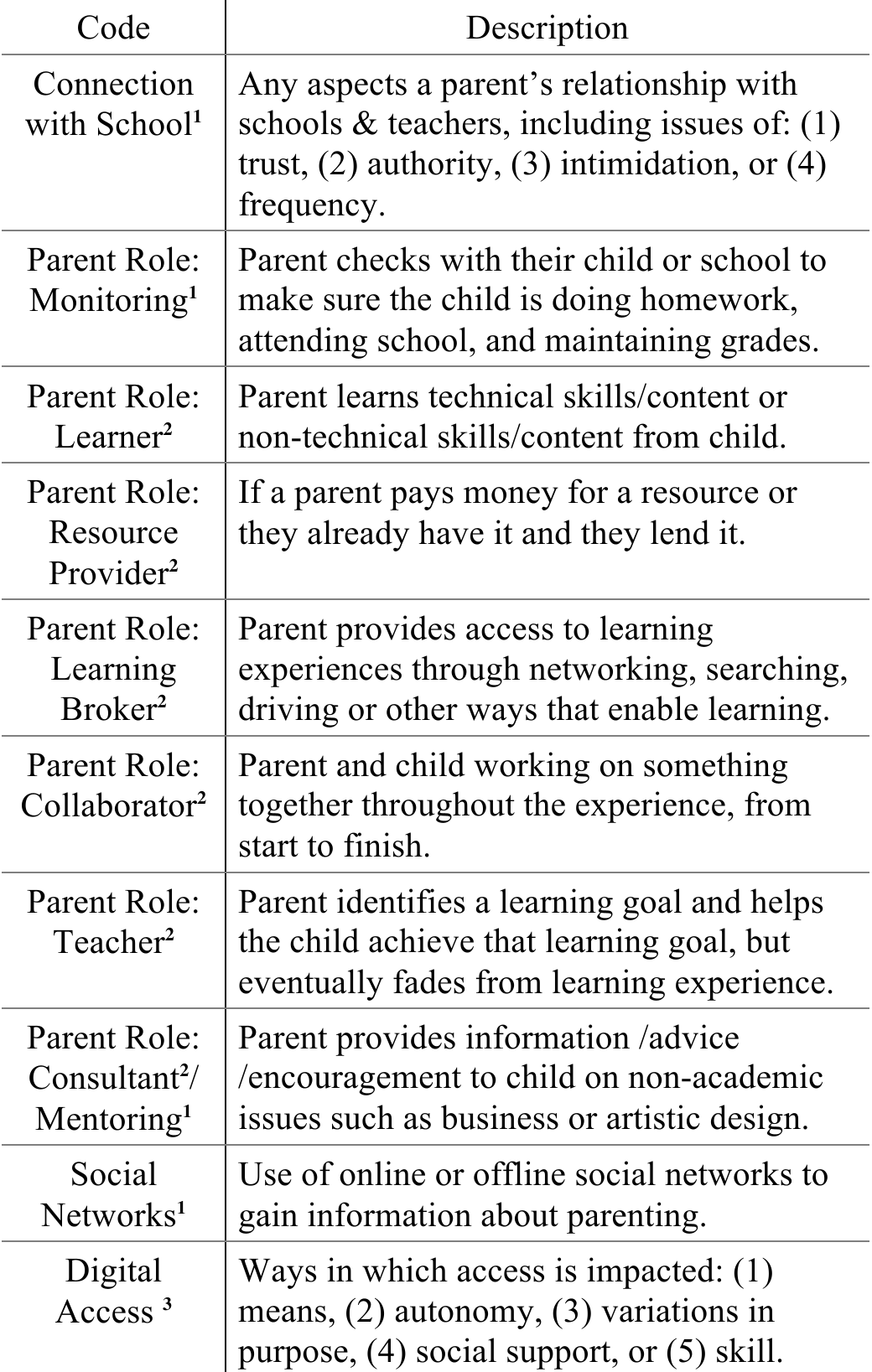 Table 1: The researchers coded for roles like "Monitoring" (checking grades) vs. "Learning Broker" (finding extra-curricular growth).
Methodology: From Interviews to National Data
The study transitioned from deep, qualitative interviews in urban and rural areas to a massive survey of 977 parents. This allowed the team to verify if the "vibe" they caught in interviews—that lower-SES parents were more afraid of social judgment—held up statistically.
Across the board, the survey found a statistically significant correlation (p < 0.01) between higher income and lower "face threat." Essentially, the more money you have, the less you care about what people think when you ask for educational advice.
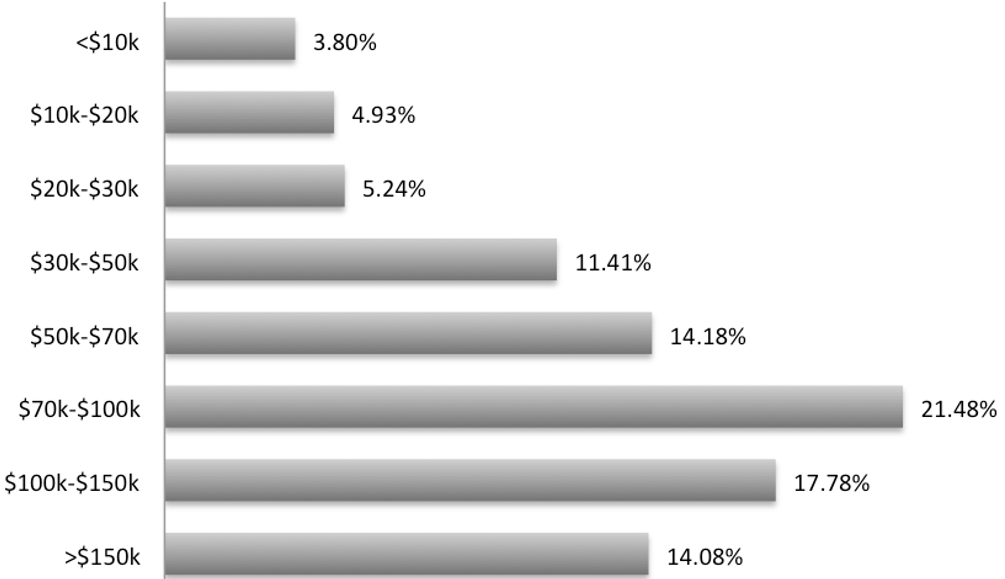 Figure 1: The survey reached a broad demographic, though skewed toward higher-income brackets, providing a comparative baseline for social behaviors.
Key Findings: Brokers vs. Monitors
- The Oracle Effect: Higher-SES parents often have a "weak tie" network—acquaintances, Google Groups, or "the oracle mom"—who provide tips on Governor’s Honors or coding camps.
- The Monitoring Trap: Lower-SES parents, burdened by day-to-day survival, often view their educational role as "Old School" monitoring: checking grades and ensuring homework is done. They lack the "social leverage" (weak ties) to see what exists outside of the school walls.
- The Social Network Paradox: Interestingly, the survey showed lower-SES parents actually reported using online social networks for educational info more than wealthy parents. However, the interviews suggested this info-seeking was often shallow or limited to "strong ties" (close friends/family), who may not have new information to offer.
Deep Insight: Designing for Dignity
The conclusion isn't just "build more apps." It's about designing for dignity.
If we want to close the gap, educational platforms should:
- Reduce Intimidation: Use anonymous forums where parents can ask "stupid" questions without social cost.
- Shift Content: Move beyond academic skill-builders. Parents need tools that help them become "Learning Brokers" (e.g., "How to find a summer camp," not just "How to do math").
- Leverage Existing Trust: Use organizations like the ACT or PTAs to create diverse "weak tie" networks that lower-SES parents can tap into safely.
Takeaway
In the race for educational equity, technology is a tool, but social capital is the engine. Until we design systems that mitigate the social risks of seeking help, the digital divide will continue to widen, regardless of how many "free" resources we put online.