
Beyond the Database: Why Your Social Network is the Ultimate Knowledge Engine
Information seeking in social context: structural influences and receipt of information benefits
This paper investigates information seeking in social networks, identifying five distinct informational benefits: solutions, meta-knowledge, problem reformulation, validation, and legitimation. Using Quadratic Assignment Procedure (QAP) regression on a distributed pharmaceutical R&D group, it reveals how organizational and social structures differentially influence the receipt of these benefits.
TL;DR
In the world of Knowledge Management (KM), we often prioritize databases and wikis. However, this paper by Cross, Rice, and Parker proves that the most valuable information isn't "out there"—it's stored in the complex web of our professional relationships. By breaking "advice" into five specific benefits, the authors show that while task-related needs drive information flow, affective ties like friendship and trust are the secret sauce for high-level cognitive tasks like problem reformulation and validation.
The "Database Fallacy" and the Need for Nuance
For years, organizations believed that if they built a better repository, knowledge sharing would follow. This "database fallacy" ignores the fact that knowledge creation is inherently social. Even when we seek information from people, we aren't just looking for "answers."
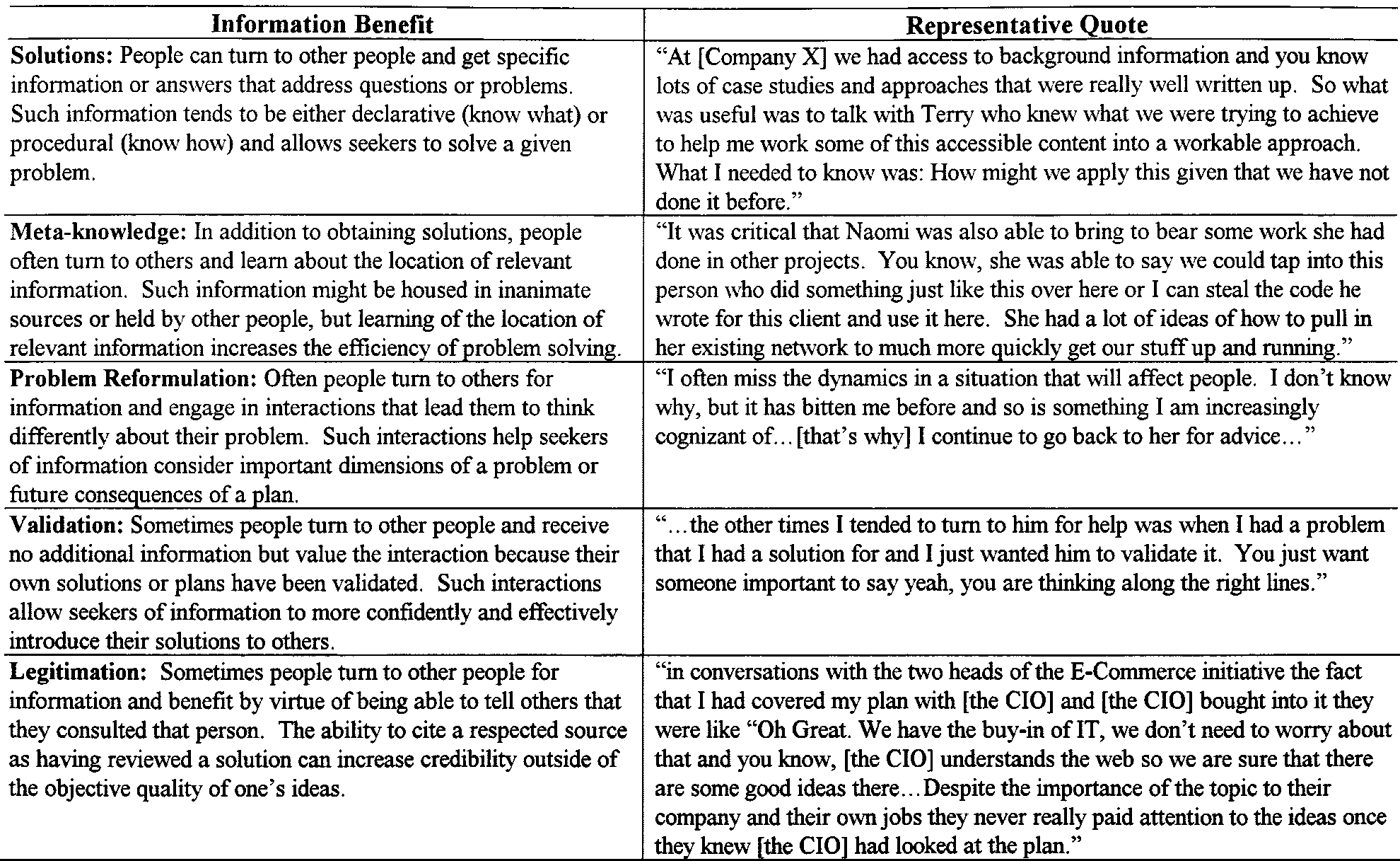
The authors argue that prior research was too blunt, treating all advice-seeking as equal. They propose a more granular lens, identifying five ways we benefit from others:
- Solutions: The "know-what" and "know-how."
- Meta-knowledge: Pointers to where information lives.
- Problem Reformulation: Helping you think differently about the scope.
- Validation: Giving you the confidence that your plan is right.
- Legitimation: The "political weight" of having consulted an expert.
The Research Blueprint: Who Do We Ask and Why?
The study focused on 34 information scientists in a global pharmaceutical firm. These are high-IQ individuals (75% PhDs) working across distributed sites. The authors looked at two types of "pull" forces:
- Organizational Structures: Your department, your floor, your boss, and your task-mates.
- Social Structures: Your friends, people you trust, and people with "clout."
Key Findings: Friendship is More Than "Nice to Have"
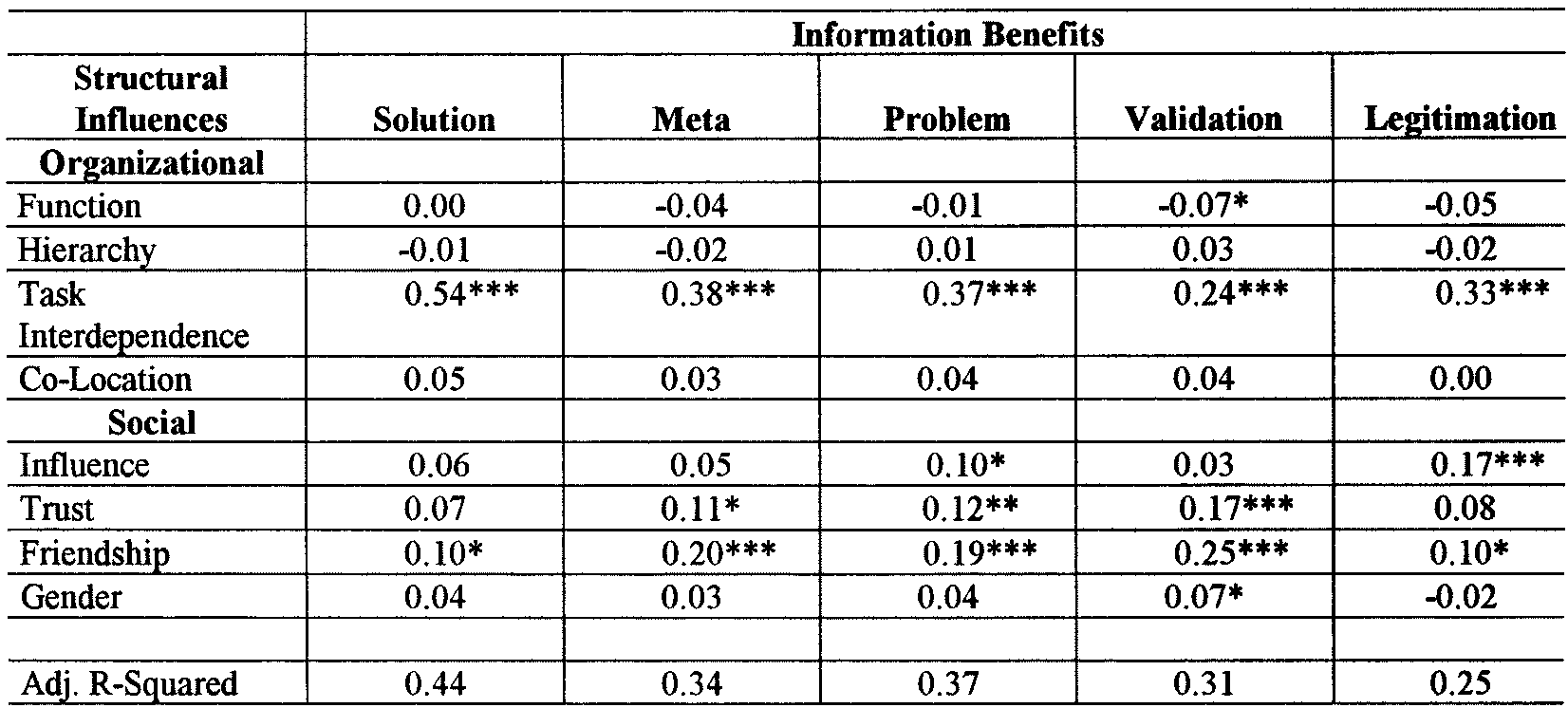
The results, calculated via the Quadratic Assignment Procedure (QAP), offer a masterclass in organizational dynamics:
1. The Supremacy of Task Interdependence
If your jobs are linked, you will share information. This was the strongest predictor for all five benefits. If you want knowledge to flow, design the work so people must rely on each other.
2. The Shift from Instrumental to Affective
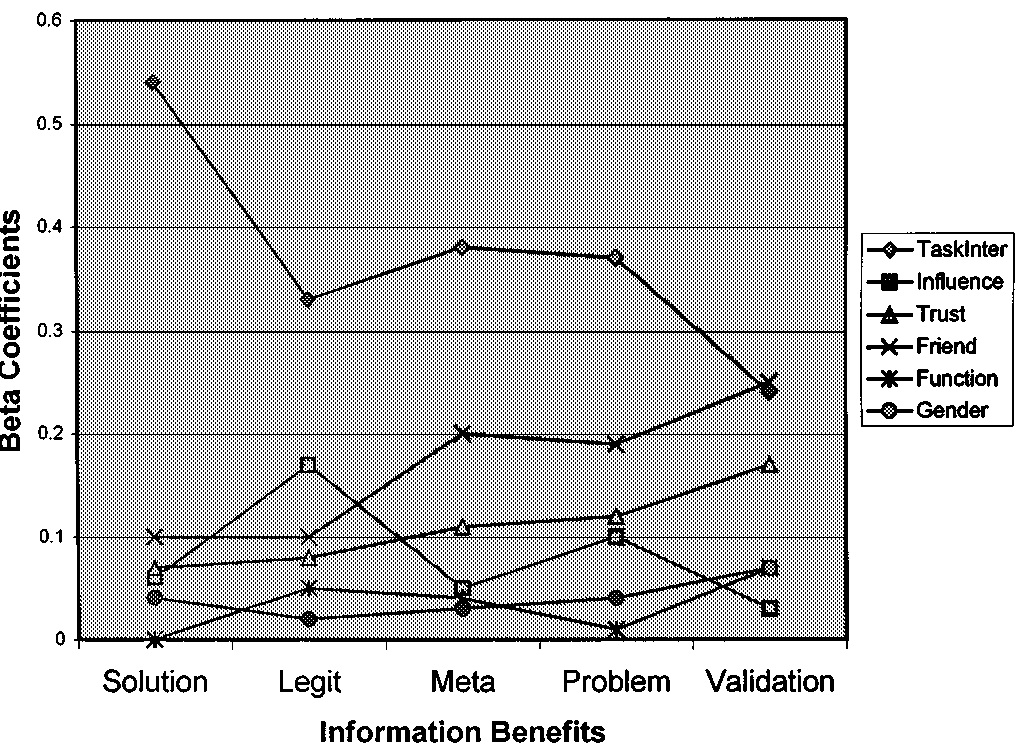
This is the paper's most profound insight. As the type of information moves from a simple "solution" to a "validation of my plan," the importance of formal task-alignment drops, and the importance of Social Capital (trust and friendship) skyrockets.
3. The Validation Bias
Interestingly, the study found that gender similarity and friendship significantly predicted "Validation." We tend to seek the "green light" from people who are like us or who we like. While this builds confidence, it warns of a "Groupthink" risk where we avoid the critical friction necessary for true innovation.
Critical Insight: Exploration vs. Exploitation
The authors draw a vital distinction based on James March’s theories:
- Exploitation (Efficiency): If you just need a quick answer (Solution), the formal structure (Task Interdependence) works fine.
- Exploration (Innovation): If you are experimenting with new alternatives (Problem Reformulation), you need Trust. Without a safe social environment, people won't expose their "ignorance" or share half-baked, innovative ideas.
Conclusion & Future Outlook
This work serves as a reminder to leaders and technologists: Technology is not enough.
While tools like Slack or Databases can bridge the gap for "Solutions" and "Meta-knowledge," they struggle to facilitate "Problem Reformulation" or "Validation." These high-value benefits are resident in the social context. For future R&D success, organizations should spend less time on "knowledge capture" and more time on "relationship architecture"—building the trust and friendships that allow complex knowledge to actually move.
Takeaway for Practitioners: To boost innovation, don't just give employees a search bar; give them a reason (and the space) to become friends.