
Trusted Navigators: Optimizing Information Flow in Multi-Layer Social Networks
Information spread link prediction through multi-layer of social network based on trusted central nodes
This paper proposes a path prediction method for information flow in multi-layer social networks by identifying and leveraging "trusted central nodes." The method integrates a time-varying selection strategy with a feedback mechanism to optimize transmission efficiency and restrain rumor propagation.
TL;DR
Information in modern social networks doesn't just stay in one place—it jumps between platforms and layers. This paper introduces a Time-varying Selection Strategy for Trusted Central Nodes, a framework designed to find the most efficient and secure paths for information spread across multi-layer networks. By combining a dynamic trust feedback loop with cross-layer topology, the authors successfully boosted information reliability to 68.1% while significantly curbing the spread of rumors.
Background: The Chaos of Information Spread
In our connected world, a rumor can circle the globe before the truth has even started. Most existing research treats social networks as flat, single-layer entities. However, real interactions are multi-layered (e.g., the same users interacting on Twitter, Facebook, and LinkedIn). Finding the "central" nodes is easy, but finding nodes that are both central and trustworthy over time is the real challenge.
The Core Insight: Trust Must Evolve
The authors argue that centrality (how connected you are) is not enough. A central node might become a "rumor mill" if its reliability isn't constantly re-evaluated. They propose a three-pillar methodology:
- Comprehensive Centrality: Combining Degree Centrality and Betweenness Centrality to find structural bottlenecks.
- Dual Trust Evaluation: Measuring direct interaction experience and peer recommendations.
- Temporal Feedback: Trust isn't permanent. The system applies a "decay function" to node trust scores, forced to refresh as time slices pass.
Methodology: Bridging the Layers
The paper formalizes how information moves between Layer 1 () and Layer 2 (). They introduce the Vertical Cross-layer Coefficient, which dictates whether it is more "cost-effective" for information to travel within a layer or jump to another.
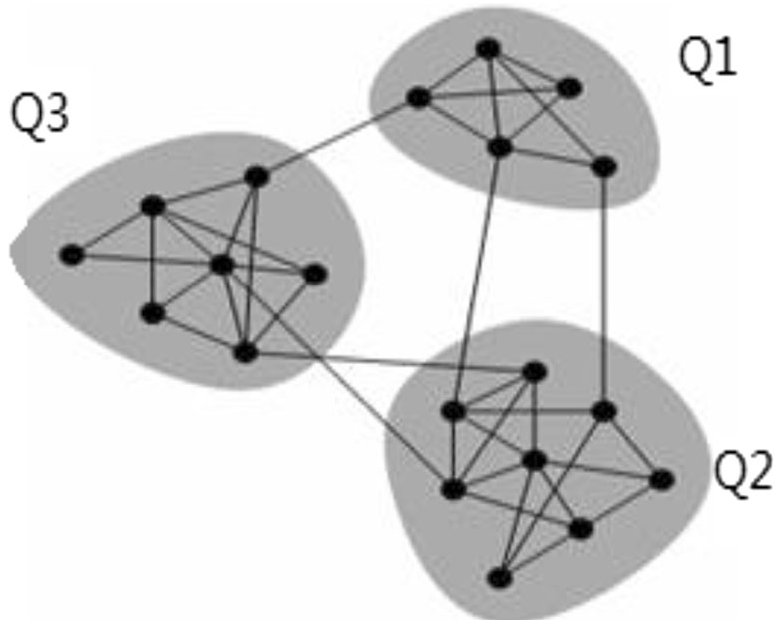 Figure 1: The proposed flowchart for selecting trusted central nodes through iterative refinement.
The model uses an intimacy measure (Jaccard coefficient) and node influence (Eigenvalue-based) to decide the cross-layer path length: where is the vertical cross-layer coefficient. This ensures that information "leaps" through nodes that are highly influential in both domains.
Experimental Results: Killing the Rumor
The authors tested their TFDCS (Trusted dynamic feedback edge division) against static models.
1. Superior Reliability
By allowing trust to fluctuate, they found that the rate of "Regular Information" (valid data) was significantly higher compared to the "Rumor" rate.
- Baseline (TDCS): 41% - 46% efficiency.
- Proposed (TFDCS): 66% - 68% efficiency.
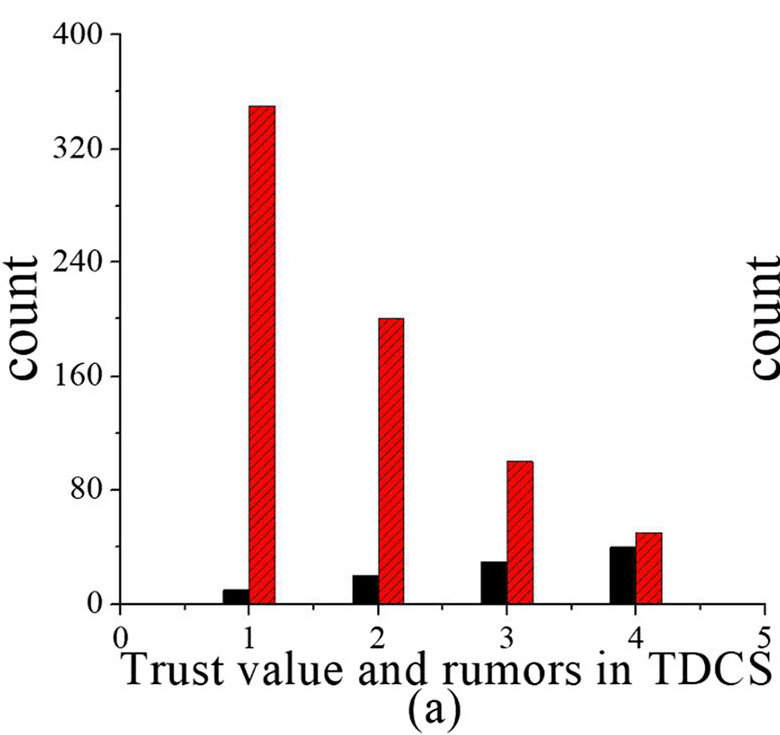 Figure 2: As the average trust increases in the TFDCS model, the number of rumors drops faster than in traditional models.
2. Speed and Coverage
When it comes to spreading valuable information, the multi-layer approach reached 80% coverage in a fraction of the time required by standard random walk algorithms.
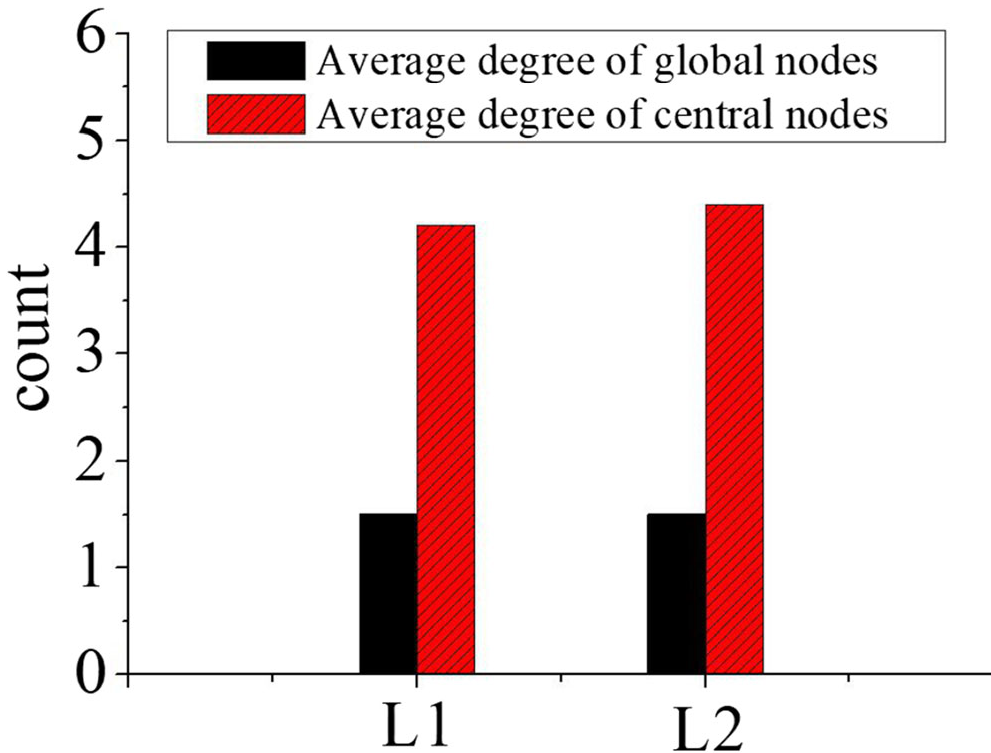 Figure 3: Comparison of information coverage over time steps.
Critical Analysis & Conclusion
Takeaway
The genius of this work lies in the feedback mechanism. By treating trust as a perishable commodity, the network becomes self-cleaning. It identifies "trusted central nodes" that act as high-speed, secure relays between different layers of social interaction.
Limitations & Future Work
While the multi-layer model is robust, the authors acknowledge that real-world factors like packet loss and time-delays in digital infrastructure were not fully modeled. Future research should look into how network jitter impacts the stability of these trust scores.
In summary, this research provides a vital blueprint for future social platform algorithms to prioritize accuracy and speed simultaneously by looking at the multidimensional landscape of human interaction.