
Establishing the Physics of Social Intelligence: An Information-Theoretic Approach to Knowledge Sharing
An Information-Theoretic Model for Knowledge Sharing in Opportunistic Social Networks
This paper introduces a novel information-theoretic framework to define the fundamental performance limits of knowledge sharing in Opportunistic Social Networks (OSNs). By leveraging the concepts of Joint Entropy and Mutual Information, the authors establish the "Knowledge Gain Limit" () and "Knowledge Gain" () to quantify the maximum potential and actual information acquired by users under different sharing policies and network topologies.
TL;DR
How much can you learn from the strangers you pass in a shopping mall or a park? This paper moves beyond qualitative social theories to establish the fundamental mathematical limits of information exchange in Opportunistic Social Networks (OSNs). By treating user experiences as probability distributions, the authors prove that "Forwarding" others' knowledge is the only way to reach the theoretical maximum "Knowledge Gain" in realistic, multi-hop mobile environments.
Background: From Physical to Virtual Handshakes
We often rely on "Homophily"—the tendency of individuals to associate with similar others. In the digital age, this manifests as Opportunistic Recommendation Systems (ORS). However, prior work focused on how to spread data, not how much unique value is actually being spread. This paper asks: What is the upper bound of knowledge a user can reap from an encounter?
Methodology: The Math of "Getting to Know You"
The core insight is treating user knowledge (tips on arts, sports, shopping) as a discrete random variable . If two users meet:
- Knowledge Gain (): The conditional entropy —what knows that doesn't.
- Communication Overhead: The Mutual Information —the redundant stuff both of you already know.
- Knowledge Limit (): The joint entropy of the entire group minus your own baseline.
The authors specifically contrast two strategies:
- SMO (Send Mine Only): Selfish/Simple sharing.
- FMPO (Forward Mine Plus Others): Altruistic/Collaborative sharing.

Experimental Battleground: Single-Hop vs. Multi-Hop
Using data from the LiveLab project (real-world smartphone traces), the researchers simulated these policies.
1. The Single-Hop Scenario (The "Coffee Shop" Model)
In a fully connected room, everyone eventually talks to everyone. Both SMO and FMPO reach the Knowledge Limit. However, FMPO is the clear winner in efficiency, reaching the saturation point in significantly fewer encounters.
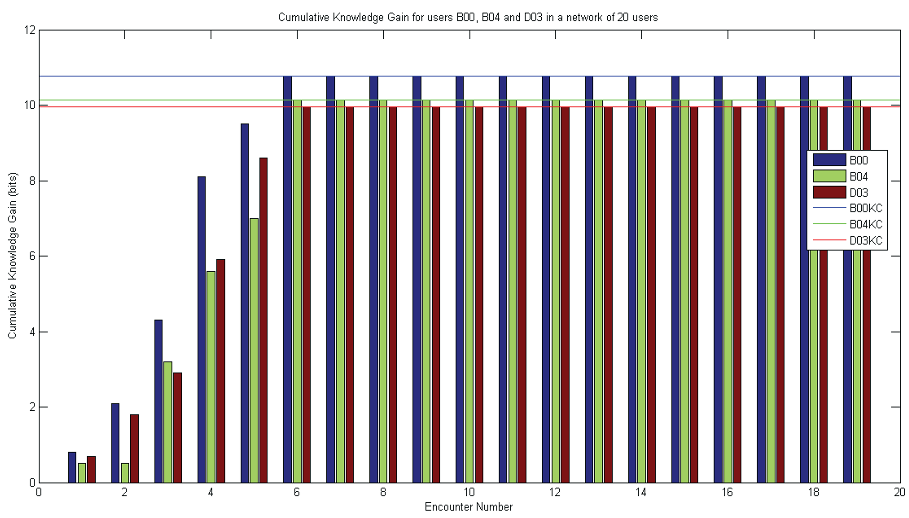 Fig 1: FMPO reaches the horizontal limit line much steeper than SMO.
2. The Multi-Hop Scenario (The "Urban Search" Model)
Real life isn't always a single room. When the network is multi-hop, a "Send Mine Only" policy fails miserably. The authors show that users might only reach 43% of their potential knowledge because they are isolated from nodes just two steps away. FMPO acts as a "knowledge bridge," allowing information to flow through the social graph to reach the theoretical .
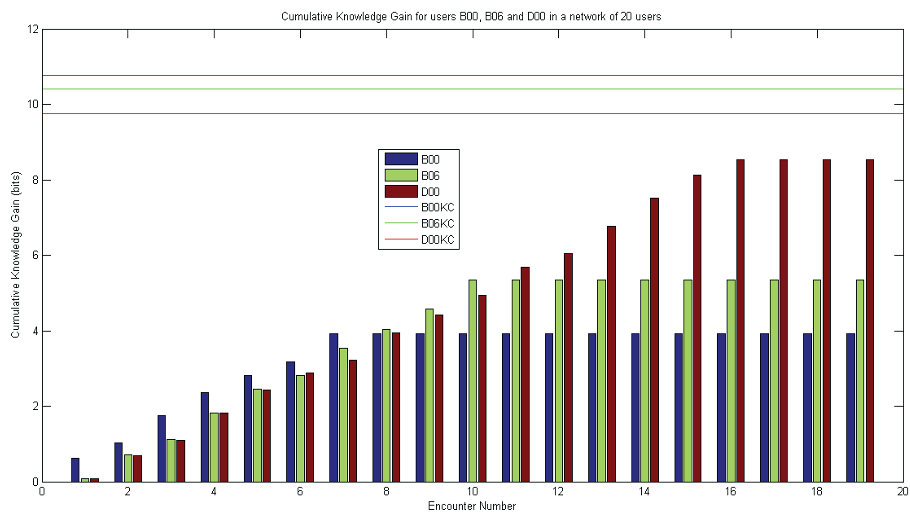 Fig 2: Under SMO, the cumulative gain plateaus far below the Knowledge Limit ().
Critical Insight & Conclusion
The beauty of this work lies in its rigorous proof of a trade-off. Proposition 3 formally demonstrates that while FMPO (forwarding) is necessary to maximize knowledge, it inherently carries a higher communication overhead.
Takeaway: For future developers of decentralized social apps, this paper provides the "Speed Limit" sign. If your app doesn't implement a forwarding mechanism, your users are mathematically guaranteed to miss out on over half of the potential collective intelligence available in their proximity.
Future Work: The model currently assumes "quasi-stationary" users. The next frontier? Integrating temporal dynamics—how knowledge decays or evolves as people move in and out of range over time.