
FTrack: Redefining Vertical Localization Without Infrastructure
Infrastructure-Free Floor Localization Through Crowdsourcing
FTrack is an infrastructure-free floor localization system that identifies a mobile user's floor level using only built-in smartphone sensors (magnetometer and barometer). By leveraging crowdsourcing and Bluetooth-based user encounters, it builds a magnetic field signature mapping table without requiring prior building knowledge or pre-installed hardware like Wi-Fi or GSM beacons.
TL;DR
Determining which floor a user is on in a skyscraper typically requires dense Wi-Fi networks or expensive calibration. FTrack flips this script by using only the smartphone's magnetometer and barometer. It uses crowdsourcing and the "social" behavior of phones (detecting nearby devices via Bluetooth) to automatically build a map of a building's unique magnetic signatures, reaching 96% floor accuracy without ever needing a floor plan.
Background: The Infrastructure Trap
Most indoor positioning systems (IPS) suffer from a "Cold Start" problem. To work, they need a map and a dense grid of Wi-Fi access points or Bluetooth beacons. In developing nations or modern complexes with RF shielding, these signals are often too sparse to distinguish between Floor 4 and Floor 5.
The authors of FTrack identify a key insight: Every stairwell, elevator shaft, and escalator has a unique "magnetic fingerprint" caused by the building's steel structure. If we can map these fingerprints, we can localize users without any external radios.
The Core Challenge: Mapping Without a Map
The hardest part is matching a magnetic reading to a specific floor without knowing the building's layout. FTrack solves this through a three-step methodology:
1. Activity & Signature Detection
Using the barometer, FTrack identifies when a user is moving vertically. While barometers are terrible at giving absolute altitude (weather changes the pressure), they are excellent at detecting relative change. When a crest (going up) or trough (going down) is detected in the pressure derivative, FTrack captures the corresponding MagTrace—the sequence of magnetic field variations during that movement.
2. Crowdsourced Floor Logic
Instead of hiring someone to walk every floor, FTrack uses User Encounters.
- If User A and User B's phones "see" each other via Bluetooth, they are on the same floor.
- By tracking the sequence of these encounters before and after floor-change activities, the system builds a Graph.
- A Merging Algorithm then simplifies this graph, logically sorting groups into a stack of floors.
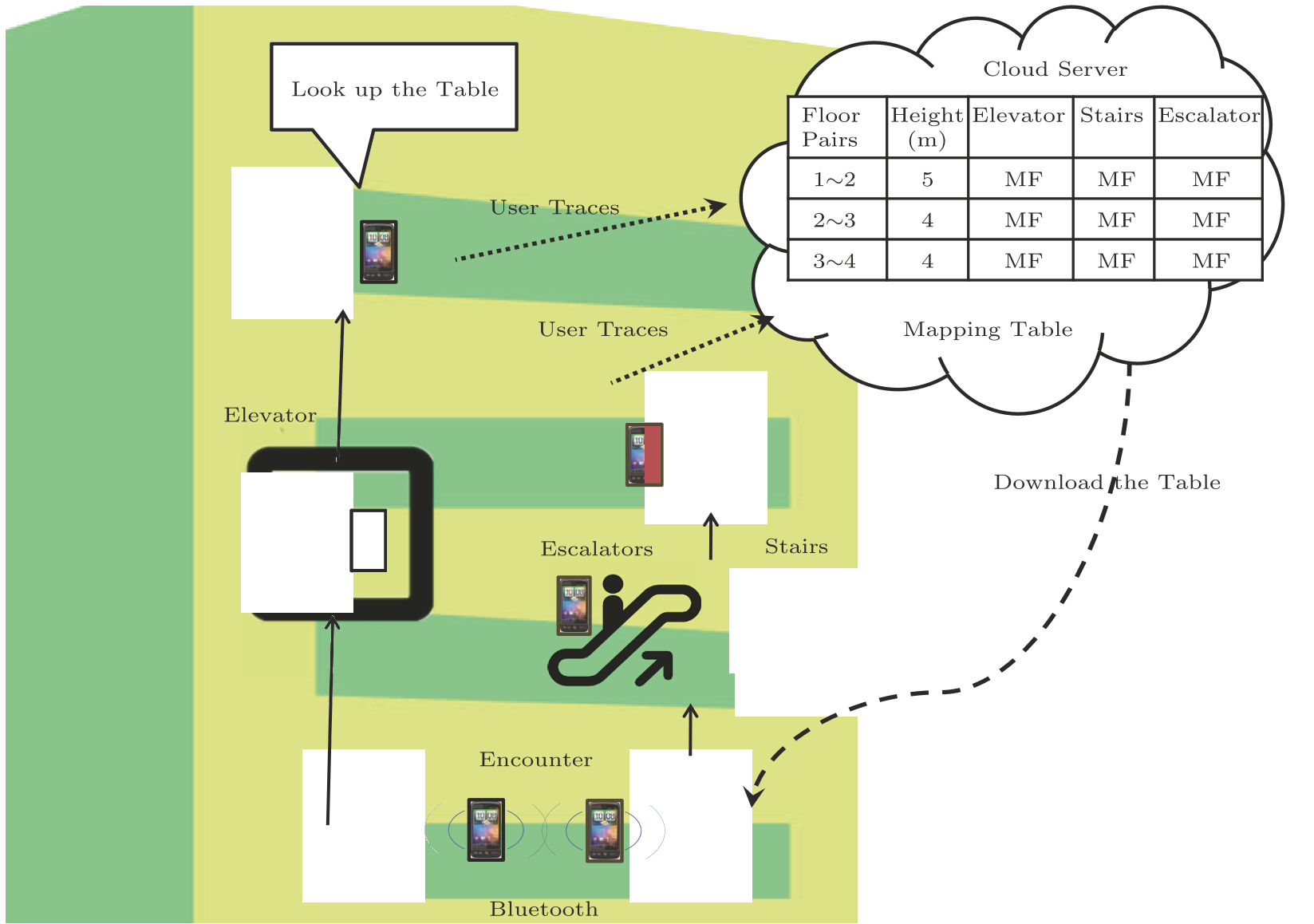 Fig 1: The dual-phase workflow of FTrack: Crowdsourced Mapping vs. Real-time Localization.
3. Robust Pattern Matching with DTW
Because elevators move at different speeds and people walk stairs differently, simple variance checks don't work. FTrack uses Dynamic Time Warping (DTW). This allows the system to compress or stretch time series data to find the best fit between a user's current MagTrace and the stored mapping table.
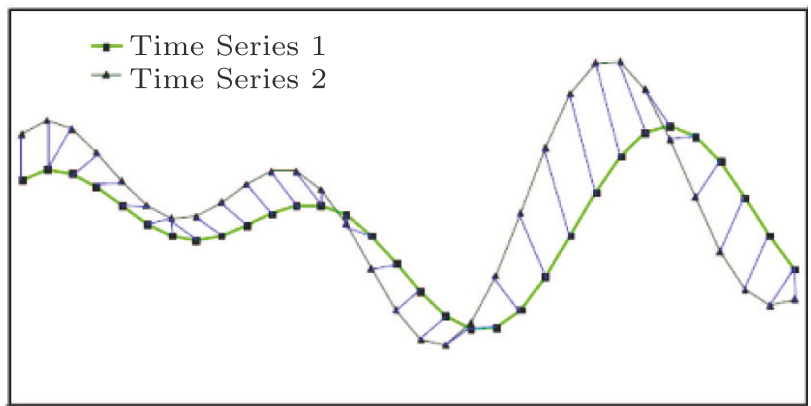 Fig 2: Using Dynamic Time Warping to match magnetic signatures across different movement speeds.
Experimental Results: Beating the Baselines
The researchers tested FTrack in university buildings and shopping malls. The system didn't just work; it outperformed legacy tech:
- Accuracy: 96% (vs. 89% for Wi-Fi-based RADAR and 68% for GSM-based SkyLoc).
- Convergence: In a busy shopping mall simulation, the system "learned" the building's floor map in just 1.5 hours.
- Efficiency: Once the map is built, localization uses only 32mW of power, nearly 50% less than Wi-Fi scanning.
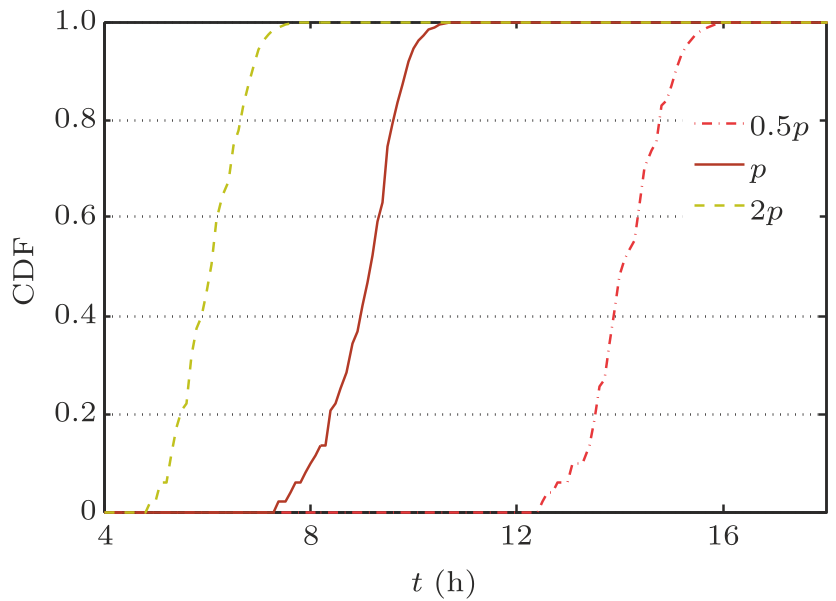 Fig 3: Accuracy vs. Number of collected crowdsourced tuples.
Critical Insight: The "Social" Phone
The genius of FTrack lies in its use of the Inconsistency Detection Rule. By identifying logical floor conflicts (e.g., a user appearing to be on two floors simultaneously due to a false Bluetooth encounter), the system automatically prunes bad data. This "self-healing" nature makes it robust enough for messy, real-world environments.
Conclusion & Future Outlook
FTrack demonstrates that we don't need to "smart" our buildings with expensive hardware. Instead, we can use the latent data already present in the environment (magnetic fields) and the opportunistic interactions between mobile devices. While future work might incorporate gyroscopes for even finer movement tracking, FTrack provides a production-ready blueprint for infrastructure-free vertical positioning.