
From Paper Charts to Ordering Devices: Navigating the Fragility of Healthcare Infrastructuring
Infrastructuring and Ordering Devices in Health Care:Medication Plans and Practices on a Hospital Ward
This paper investigates the transition from paper-based to digital medication plans in a hospital setting through an ethnographic lens. It introduces the concept of "Ordering Devices" to describe how Electronic Medication Modules (EMM) facilitate multi-dimensional coordination and information structuring in complex healthcare infrastructures.
TL;DR
Healthcare digitalization is often framed as a seamless upgrade, but beneath the surface lies a complex web of "infrastructuring." This paper analyzes a critical IT breakdown in an endocrinology ward to reveal how digital medication plans—termed Ordering Devices—do more than store data; they actively reorganize hospital power structures, clinical workflows, and even physical drug storage.
The Invisible Work of Infrastructuring
In the world of Computer-Supported Cooperative Work (CSCW), "infrastructure" isn't just hardware; it's a verb: Infrastructuring. It is the ongoing labor of aligning people, policies, and technologies.
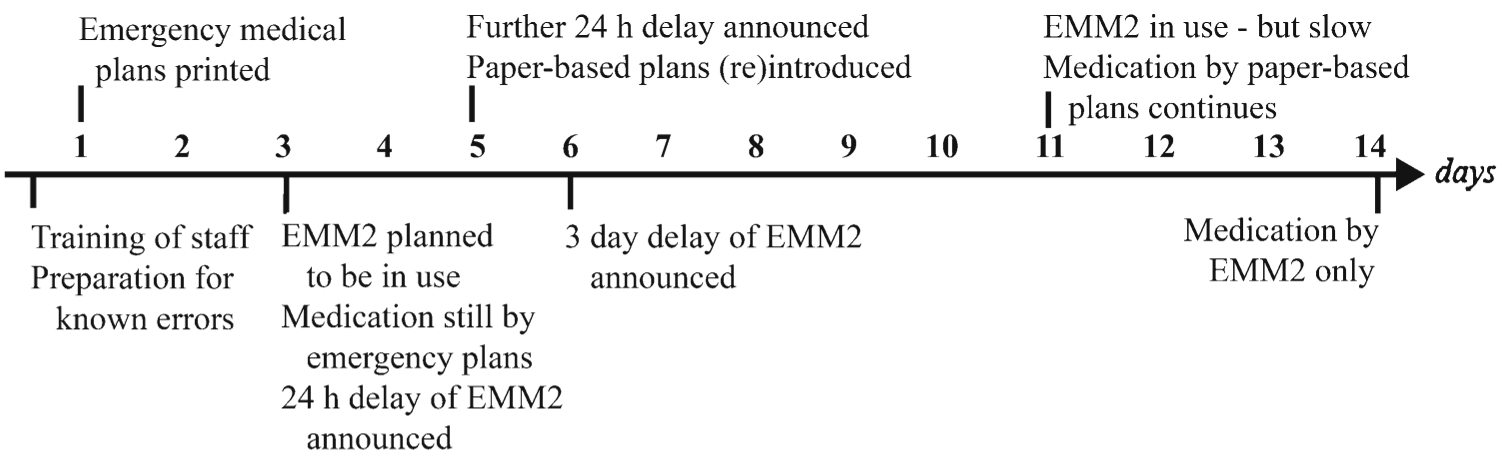
The authors argue that when systems work perfectly, they become "black boxes" (invisible). We only see the true nature of medical coordination when things break. The paper focuses on a 10-day period where a Danish hospital’s Electronic Medication Module (EMM) failed during an upgrade, forcing clinicians to revert to old paper-based plans.
The Evolution of the Medication Plan
The paper provides a fascinating historical trajectory of how functionality has shifted from humans to artifacts:
- Pre-2000 (The Dictation Era): Physicians dictated; secretaries typed. High flexibility and mobility, but high risk of "Factor 10" errors (misreading 5mg as 50mg due to bad handwriting).
- 2000-2003 (The Single-Strand Paper Plan): A unified paper document. It reduced transcription errors but destroyed "micromobility"—nurses couldn't dispense drugs if the doctor had the folder on a round.
- Modern Day (The EMM/Ordering Device): Digital systems that automate accountability via logins and provide dynamic "views" of data.
Methodology: Learning from Breakdown
The core insight of this paper comes from Infrastructural Inversion. By observing the chaos when EMM2 failed to launch, the authors identified how "emergency" paper backups lacked the spatial capacity (the rows and columns) to handle complex changes over several days.
The Core Concept: "Ordering Devices"
The authors propose that digital medication plans are not just "Boundary Objects" (which facilitate communication between groups) but Ordering Devices.
Why the distinction?
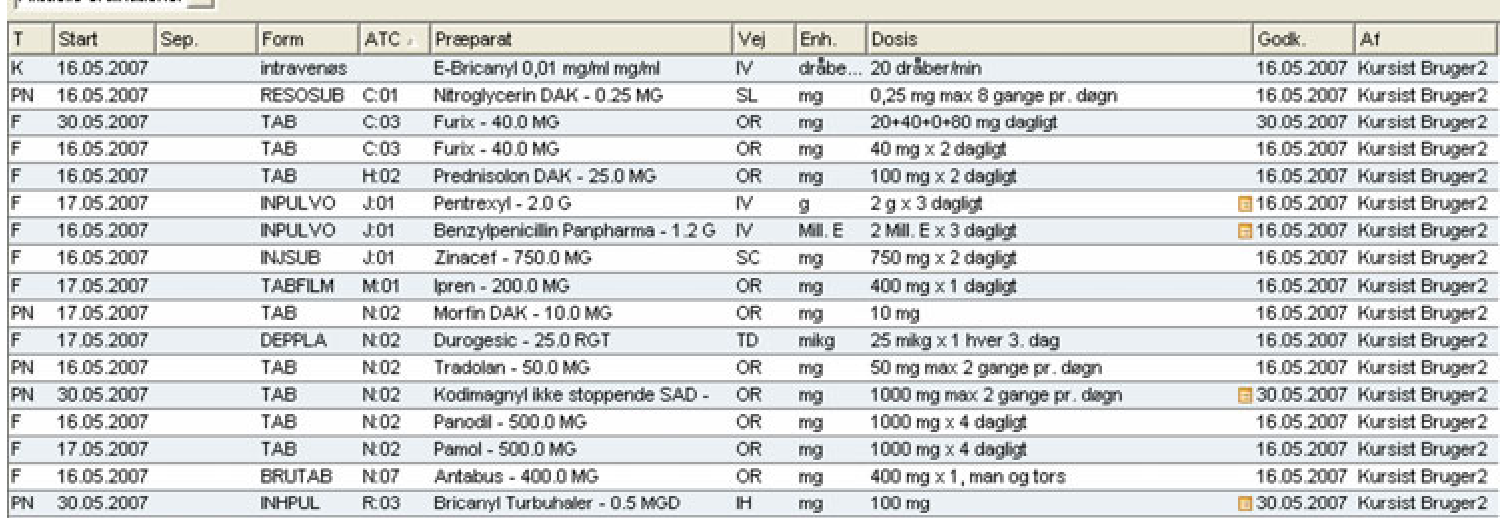
- Dynamic Reordering: A nurse can click a column to see all drugs due at 8:00 AM, while a doctor can click to see all morphine-based drugs via ATC (Anatomical Therapeutic Chemical) codes.
- Composite Ordering: The EMM2's use of ATC codes aligns the digital screen with the physical arrangement of drugs on the pharmacy shelf. This "trans-artefactual" ordering is a massive efficiency boost that paper could never achieve.
Deep Insight: The Price of Precision
The transition to digital "Ordering Devices" is a double-edged sword:
- Gains: Elimination of illegible handwriting, automated stock control for the pharmacy, and a decline in transmission errors.
- Losses: Dependency and Vulnerability. Clinical work now relies on servers located hundreds of miles away. If the network slows down, the entire ward's "working order" collapses. Furthermore, digitalization creates new error types, such as "scrolling errors" where a nurse misses a medication simply because it’s off-screen.
Conclusion
The EMM is a "tangle" of multilinear lines—authority, accountability, clinical care, and logistics. This research challenges us to view IT implementation not as a "switch," but as a continuous process of Ordering. For future hospital tech, the lesson is clear: design for the "breakdown" as much as the "workflow," and ensure that digital "Ordering Devices" respect the physical realities of the ward.