
Inside the Right-Leaning Echo Chambers: A Deep Dive into Gab's Ecosystem
Inside the Right-Leaning Echo Chambers: Characterizing Gab, an Unmoderated Social System
This paper presents a comprehensive characterization of Gab, an unmoderated social network positioned as a "free speech" alternative to Twitter. Utilizing a large-scale crawl of 171k users and 12.8M posts, the study identifies Gab as a right-leaning echo chamber dominated by conservative, male, Caucasian users and popular for disseminating alternative news.
TL;DR
As mainstream social media platforms tighten their moderation policies, fringe networks like Gab have emerged as self-proclaimed "free speech" havens. This paper provides the first empirical measurement of Gab, revealing it to be a highly polarized, right-leaning echo chamber. The community is predominantly white and male, heavily influenced by "alt-right" figures, and thrives on a news diet almost entirely distinct from the mainstream.
The "Free Speech" Problem and Research Motivation
The tension between regulation and freedom of expression reached a breaking point in 2016. As Twitter and Facebook increased removals of hate speech, Gab filled the vacuum.
The authors’ core intuition was that Gab provides a "pure" environment to study the Echo Chamber effect. Unlike Twitter, where users of different ideologies might still occasionally interact (even if contentiously), Gab's lack of moderation creates a "filter bubble" by design. The researchers aimed to answer two vital questions:
- Who are these users? (Demographics and Political Leaning)
- What are they sharing? (Content Toxicity and News Sources)
Methodology: Mapping a Shadow Network
To analyze a closed community, the authors used a multi-pronged technical approach:
- Data Collection: A BFS crawl of 171,920 users and nearly 13 million posts.
- Demographic Inference: Using Face++ (Deep Learning) to categorize gender and race from profile pictures.
- Political Bias Framework: Mapping Gab screen names to Twitter accounts to apply existing ideological scoring metrics.
- Toxicity Analysis: Utilizing Google’s Perspective API to score the "rudeness" or toxicity of the discourse.
Methodology Insights: The Profile of a Gab User
The findings confirm that Gab is not a diverse marketplace of ideas but a concentrated demographic silo.
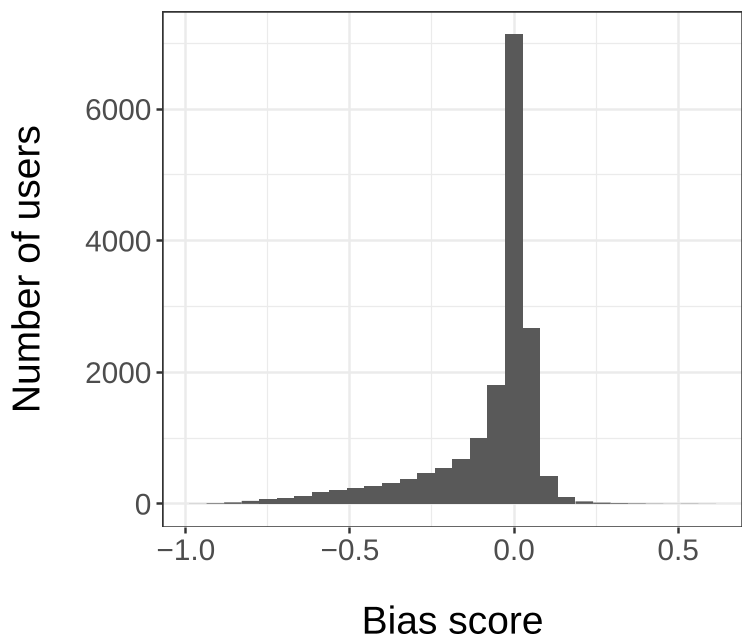
- Political Skew: The ratio of conservatives to liberals on Gab is 2.13, significantly higher than Facebook (0.79).
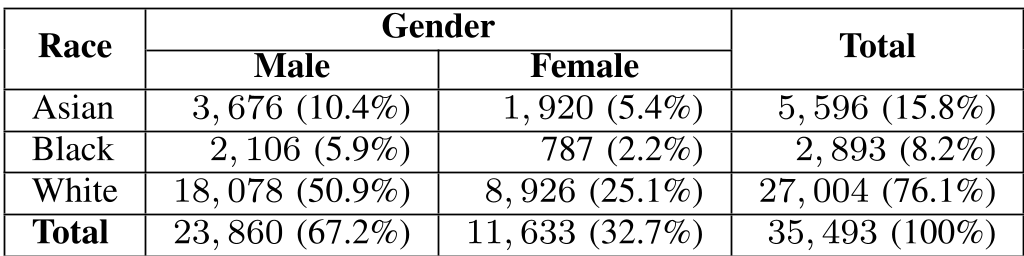
- Demographics: The population is overwhelmingly White (76.1%) and Male (67.2%).
- The Extremist Core: Users identified as extremists by the SPLC or ADL aren't just present; they are vanguard users. They have followers and activity levels two orders of magnitude higher than the average user base.
Experimental Analysis: News and Toxicity
One of the most striking findings involves news dissemination. Gab represents a parallel information universe.
The Alternative News Ecosystem
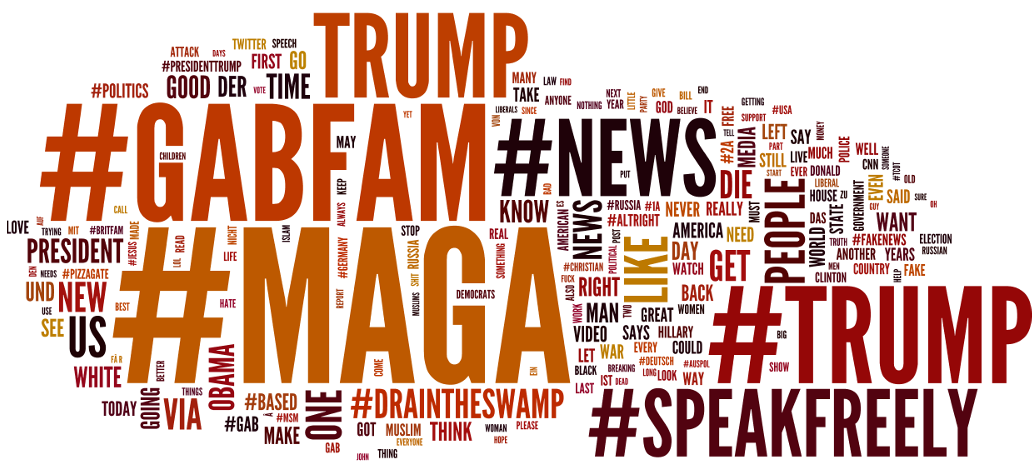
In Gab, the most shared news domain is ussanews.com, followed by breitbart.com and infowars.com. Interestingly, there is zero intersection between the top 30 most shared domains on Gab and the top 10 on Facebook. Gab users rely heavily on YouTube as a news source, often bypassing traditional text-based journalism entirely.
Content Toxicity
While the majority of posts (over 90%) do not cross the extreme toxicity threshold (>0.7), the subset that does is intensely vitriolic. Because moderation is nearly non-existent, these toxic posts (targeting race, religion, and gender) remain visible, setting the cultural tone for the platform.
Critical Analysis & Conclusion
The study concludes that Gab successfully functions as an ideological refuge. Its "success" is defined by its ability to protect users from "cross-ideological" exposure.
Takeaways for the Industry:
- Moderation Backlash: Aggressive moderation on mainstream sites does not eliminate radical discourse; it migrates it to unmoderated "dark" social spaces where it becomes more concentrated and harder to track.
- The Power of Influencers: In unmoderated spaces, a few "banned" celebrities (like Milo Yiannopoulos) dominate the narrative, acting as central hubs for news spreading.
Limitations: The study relies on Gab-to-Twitter mapping for political scores, which only covers ~13% of the user base. Future work should develop "Gab-native" political scoring models based on internal interaction graphs.