
Insiders vs. Outsiders: Why Your Perception of a City Depends on Your Passport
Insiders and Outsiders: Comparing Urban Impressions between Population Groups
This paper investigates the discrepancy in urban perception between local inhabitants and non-local online crowd workers using a mobile crowdsourcing methodology in Guanajuato, Mexico. By comparing ratings across six physical and psychological labels, the authors challenge the assumption that urban perception is independent of an observer's background, establishing that "insiders" and "outsiders" perceive the same environments differently.
TL;DR
Is a narrow Mexican alley a "picturesque historical site" or a "dangerous gang-controlled shortcut"? It depends on who is looking. This paper demonstrates that local residents and online crowd workers (like those on Amazon Mechanical Turk) see two entirely different cities. Locals perceive their environment as dirtier and more dangerous, while outsiders find it more interesting and exotic.
Contextual Blindness: The Flaw in Modern Urban Computing
For years, AI researchers and urban planners have used "the crowd" to rate city safety, beauty, and wealth. Using tools like Google Street View, platforms like Place Pulse have mapped the "vibe" of cities globally. However, most of these studies share a hidden bias: they assume a student in New York and a resident in Guanajuato will see the same image and feel the same way.
The authors of this study argue that background knowledge acts as a filter. A local knows a specific street corner is where robberies happen; a tourist just sees "charming colonial architecture."
Methodology: Capturing Guanajuato’s Reality
To prove this, the researchers focused on Guanajuato, a UNESCO World Heritage site that struggles with social issues like gang activity and alcoholism.
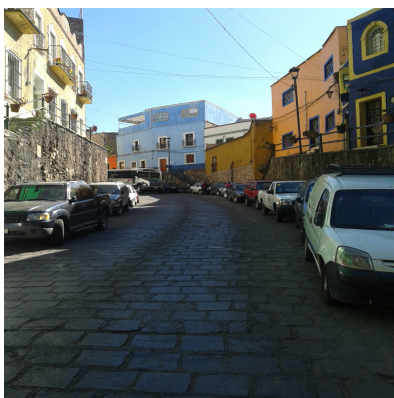
- Image Collection: Instead of relying on Google Street View—which misses 58% of the city's narrow, winding alleys—volunteers manually captured 99 representative images.
- The Two Groups:
- Insiders: Local high school students (ages 16-18) living in or near Guanajuato.
- Outsiders: US-based Mechanical Turk "Masters" who had no prior knowledge of the city.
- The Task: Rate images on a 7-point Likert scale across six labels: Accessible, Dangerous, Dirty, Interesting, Preserved, and Pretty.
Key Findings: The "Tourist Gaze" vs. The "Resident’s Reality"
1. The Danger Gap
Locals rated 87% of the images as more dangerous than the online workers did. While a Turker might see a brick wall and think it looks "warm" or "historical," a local student knows the social context—perhaps that the area is adjacent to a high-crime neighborhood.
2. The Cleanliness Standard
Locals were significantly harsher on cleanliness. The authors hypothesize that local youth have higher expectations for their city's status quo, making them more sensitive to garbage or graffiti that a visitor might overlook as "urban character."
3. The "Exotic" Interest
Interestingly, online workers rated the city as more interesting than the locals did. To a US-based worker, a winding Mexican street is a "picturesque backdrop." To a local, it’s just the daily walk to school.
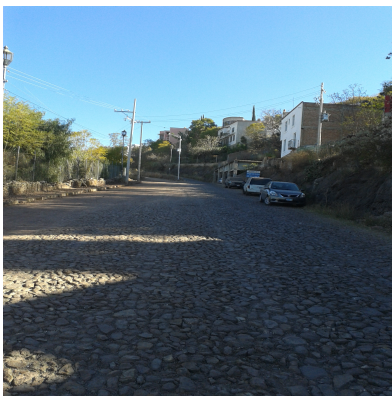
Example: In Figure 5b, locals rated the area as a '5' for danger because it’s near a known high-risk zone. MTurkers rated it a '2', with one commentating: "This area looks moderately well-off... I feel that this area is relatively safe."
Critical Insight: Implications for AI and Tourism
This study serves as a warning for "Data-Driven" urbanism. If we train machine learning models solely on the perceptions of "outsiders" (online crowds), we risk creating city maps that are aesthetically pleasing but functionally dangerous for the people who live there.
Potential Applications:
- Augmented Social Media: Platforms like Instagram or Flickr could integrate "insider" knowledge stickers to warn tourists or provide context that isn't visible to the naked eye.
- Better Safety Routing: Navigation apps should prioritize local sentiment over visual analysis alone.
Conclusion
Familiarity doesn't just breed contempt; it breeds accuracy. The study confirms that the "who" is just as important as the "what" in urban perception. For future research, the challenge lies in bridging the gap between how we look at a city and how we live in it.